Supreme Court rejects Kirti Azad's plea against extortion FIR, allows withdrawal
Synopsis
The Supreme Court shut the door on Kirti Azad's attempt to challenge his extortion FIR at the apex level, pointing him back to the Calcutta High Court where his anticipatory bail plea already sits. With a ₹15 lakh demand allegation, disputed alibi evidence, and CID questioning already on record, the case against the 1983 World Cup hero and TMC MP is far from over.
Key Takeaways
The Supreme Court on 3 November declined to entertain Kirti Azad's petition under Article 32 challenging an extortion FIR by West Bengal Police .
The bench of Justice Dipankar Datta and Justice Sheel Nagu noted his anticipatory bail plea was already before the Calcutta High Court .
The petition was allowed to be withdrawn after senior advocate Vikas Singh made the request.
The FIR involves an alleged demand of ₹15 lakh from a businessman at Azad's Durgapur bungalow on 21 May last year.
The Calcutta High Court granted Azad six months' interim protection from arrest on 15 September ; his anticipatory bail plea remains pending.
Azad appeared before CID at Bhabani Bhavan, Kolkata on 22 September for questioning.
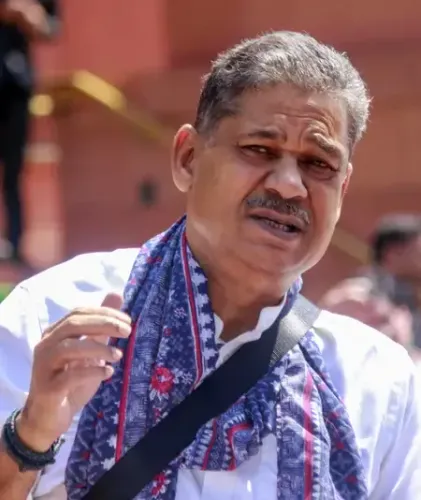
The Supreme Court on Tuesday, 3 November declined to entertain a petition filed by Trinamool Congress (TMC) Lok Sabha MP and former cricketer Kirti Azad, who had challenged an FIR registered against him in an alleged extortion case by the West Bengal Police. The apex court allowed Azad to withdraw the petition after indicating it would not exercise jurisdiction in the matter.
What the Supreme Court Said
A bench comprising Justice Dipankar Datta and Justice Sheel Nagu held that it would not permit Azad to invoke its jurisdiction under Article 32 of the Constitution, given that his anticipatory bail plea was already pending before the Calcutta High Court, which had already granted him protection from arrest. Senior advocate Vikas Singh, appearing on behalf of Azad, then sought permission to withdraw the petition, which the court allowed, dismissing the plea as withdrawn.
Background: The Extortion Allegation
Azad, a member of India's iconic 1983 Cricket World Cup-winning squad and the sitting Lok Sabha MP from Bardhaman-Durgapur, had approached the apex court challenging the FIR filed against him and certain associates by the Criminal Investigation Department (CID) of the West Bengal Police. The FIR stems from a complaint lodged by a local businessman, who alleged that he was summoned to Azad's bungalow in Durgapur on 21 May last year. According to the complaint, an associate of the MP allegedly demanded ₹15 lakh from him, with threats to shut down his cooking gas business if the amount was not paid. The complainant reportedly claimed to possess an audio recording of the incident.
Azad's Defence and the High Court Order
Azad has categorically denied the allegations, calling them a conspiracy aimed at maligning his reputation. He has maintained that he was not present in Durgapur on the date of the alleged incident and submitted flight travel records before the Calcutta High Court in support of this claim. The High Court had earlier granted him interim protection from coercive action, including arrest, for six months, through an order passed by a single-judge bench of Justice Kaushik Chanda on 15 September. The court had also directed the CID to give Azad a minimum of seven days' advance notice before summoning him for questioning.
CID Questioning and What Follows
Following the High Court's directions, Azad appeared before CID headquarters at Bhabani Bhavan in Kolkata on 22 September for interrogation in connection with the case. His anticipatory bail application remains pending before the Calcutta High Court, which continues to be the primary forum for legal proceedings in the matter. With the Supreme Court now out of the picture, the case will continue to be adjudicated at the High Court level, where his interim protection from arrest currently holds.
Point of View
Verifiable defence, and the CID's next steps will determine whether this case has evidentiary substance or is, as Azad alleges, a political fix. Either way, with interim protection intact and the High Court still in play, this is far from a settled matter.
NationPress
3 Nov 2026
Frequently Asked Questions
Why did the Supreme Court decline Kirti Azad's petition?
The Supreme Court declined to entertain the petition because Azad's anticipatory bail application was already pending before the Calcutta High Court, which had granted him interim protection from arrest. The bench held that invoking Article 32 of the Constitution was not appropriate when an adequate alternative remedy was already in progress.
What is the extortion case against Kirti Azad?
A businessman filed an FIR alleging that he was summoned to Azad's bungalow in Durgapur on 21 May last year, where an associate of the MP allegedly demanded ₹15 lakh from him under threat of shutting down his cooking gas business. The complainant claims to have an audio recording of the incident. Azad has denied the allegations entirely.
What protection does Kirti Azad currently have from arrest?
The Calcutta High Court granted Azad six months' interim protection from coercive action, including arrest, through an order by Justice Kaushik Chanda on 15 September. The court also directed the CID to give him at least seven days' advance notice before any summons for interrogation.
Has Kirti Azad been questioned by the CID?
Yes. Following the Calcutta High Court's directions, Azad appeared before CID headquarters at Bhabani Bhavan in Kolkata on 22 September for questioning in connection with the extortion case.
What happens next in the Kirti Azad extortion case?
With the Supreme Court out of the picture, the case returns solely to the Calcutta High Court, where Azad's anticipatory bail plea remains pending. His interim protection from arrest continues for the remainder of the six-month period granted in September, and the CID investigation is ongoing.