Calcutta HC rejects Abhishek Banerjee's plea for blanket FIR protection
Synopsis
The Calcutta High Court has drawn a sharp legal line: Abhishek Banerjee, TMC's second-most powerful figure, cannot get blanket immunity from future FIRs. While the court shielded him from arrest in three post-election cases till 6 August, it firmly ruled that each future FIR must be contested individually — a significant check on a bid for sweeping judicial cover in a politically volatile Bengal.
Key Takeaways
A Calcutta High Court single-judge Bench on 30 July rejected Abhishek Banerjee's plea for blanket protection against all future FIRs.
Justice Saugata Bhattacharyya ruled that each future FIR requires separate supplementary pleadings and impleading of complainants.
The court granted interim protection from arrest in three specific FIRs — filed at Bhabanipur ( 27 May ), Kalitala ( 1 June ), and Bishnupur ( 16 June ) police stations.
The interim protection on the three FIRs holds until the next hearing on 6 August .
Solicitor General Tushar Mehta opposed blanket protection, arguing political vendetta claims cannot justify pre-emptive stays on unregistered FIRs.
All three FIRs were registered after the West Bengal Assembly election results this year.
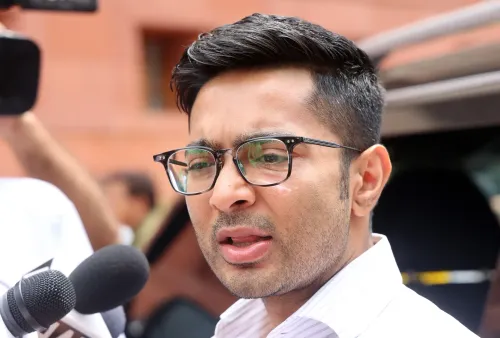
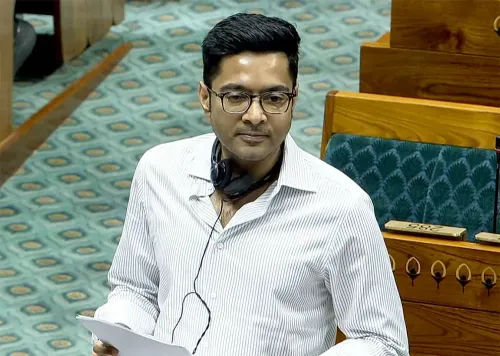
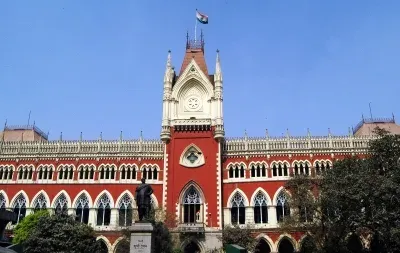
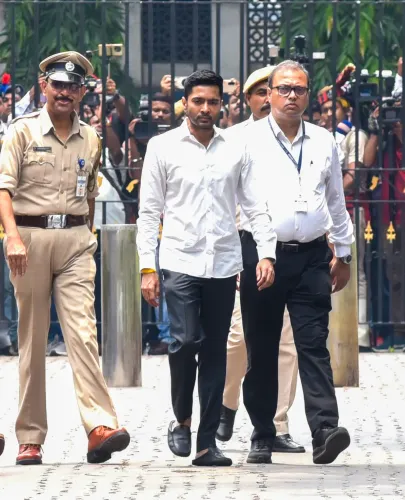
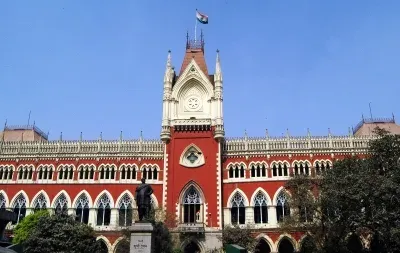
The Calcutta High Court on Thursday, 30 July rejected a plea filed by All India Trinamool Congress (TMC) General Secretary and Diamond Harbour Lok Sabha member Abhishek Banerjee, seeking blanket protection from all future First Information Reports (FIRs) against him. A single-judge Bench of Justice Saugata Bhattacharyya declined the sweeping relief, ruling that each future FIR would require separate supplementary pleadings and impleading of respective complainants.
What the Court Ruled
Justice Bhattacharyya made clear that advance protection against unregistered future FIRs was not legally tenable. The Bench observed that in the event of additional FIRs being filed going forward, Abhishek Banerjee would need to file appropriate supplementary pleadings and ensure that the respective complainants are formally made party to proceedings.
However, the court did grant partial relief. The single-judge Bench extended interim protection from coercive police action — including arrest — in connection with three specific FIRs already on record: the first lodged at Bhabanipur Police Station on 27 May, the second at Kalitala Police Station on 1 June, and the third at Bishnupur Police Station on 16 June. This protection holds until 6 August, the date of the next scheduled hearing.
Justice Bhattacharyya's Observations
The judge noted that all three FIRs were registered after the results of the West Bengal Assembly elections held earlier this year. Pointing to precedent already set in related matters — where the court had granted interim protection while allowing investigations to continue — Justice Bhattacharyya questioned why a similar approach posed any difficulty. 'All these FIRs were registered after the results of the West Bengal Assembly elections this year. In two related matters, the court had already granted interim protection while allowing the investigation in those cases to proceed. If a similar order is passed, where is the difficulty?' the judge said.
Background: Prior Protections and Allegations
Abhishek Banerjee, who is also the nephew of former West Bengal Chief Minister Mamata Banerjee, had earlier been granted interim protection in two ongoing probes by the Criminal Investigation Department (CID) of the West Bengal Police — one related to the TMC legislators' vote-mismatch case, and another involving a hate-speech allegation. He had been accused of making violence-inciting statements and of allegedly threatening Union Home Minister Amit Shah at a campaign rally ahead of the West Bengal Assembly polls.
Centre's Opposition
Solicitor General Tushar Mehta, appearing for the respondents virtually during Thursday's hearing, strongly opposed the prayer for blanket protection. He argued that a claim of political vendetta could not serve as a valid legal basis for pre-emptively cancelling or staying FIRs that had not yet been filed.
What Happens Next
The matter is listed for the next hearing on 6 August. Legal observers note that the ruling draws a firm line between case-specific interim relief — which courts routinely grant — and prospective immunity, which Indian jurisprudence does not recognise. How the court proceeds on the three existing FIRs, and whether further FIRs emerge in the politically charged post-election environment in West Bengal, will be closely watched.
Point of View
Where both ruling and opposition camps weaponise criminal complaints. What the ruling really establishes is that even high-profile political figures must fight each case on its own merits — a principle easier to state than to enforce when the police machinery itself is politically contested.
NationPress
14 Sept 2026
Frequently Asked Questions
What did the Calcutta High Court rule on Abhishek Banerjee's plea?
The court rejected his plea for blanket protection against all future FIRs, ruling that each future case must be addressed through separate pleadings. However, it granted him interim protection from arrest in three specific FIRs till 6 August.
Which three FIRs did the court grant interim protection for?
The court granted protection in FIRs registered at Bhabanipur Police Station on 27 May, Kalitala Police Station on 1 June, and Bishnupur Police Station on 16 June — all filed after the West Bengal Assembly election results.
Why did Solicitor General Tushar Mehta oppose the blanket protection?
Mehta argued that claims of political vendetta cannot legally justify pre-emptive cancellation or stay of FIRs that have not yet been filed, making such advance relief untenable in law.
What is the significance of the West Bengal Assembly election context?
All three FIRs were registered after the West Bengal Assembly election results, and Abhishek Banerjee had previously faced allegations of making violence-inciting statements and threatening Home Minister Amit Shah at a campaign rally. The post-election FIR filings are part of a broader politically charged environment in the state.
When is the next hearing in this matter?
The next hearing is scheduled for 6 August, until which date the interim protection from coercive police action — including arrest — in the three specific FIRs remains in force.