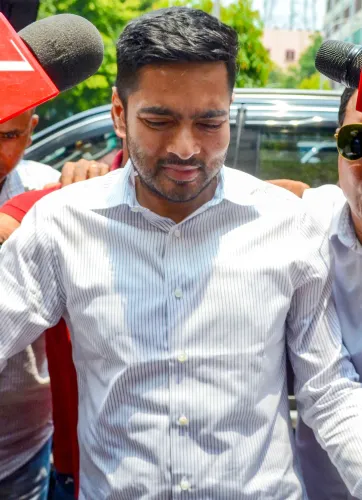
Calcutta HC rejects Abhishek Banerjee's plea to quash FIR, grants conditional protection till July 31

Synopsis
The Calcutta High Court refused to quash the FIR against TMC general secretary Abhishek Banerjee — but shielded him from arrest till 31 July with a foreign travel ban attached. The judge's pointed observation that different election results could have triggered serious violence raises the stakes well beyond a routine pre-trial hearing.
Key Takeaways
Calcutta High Court on 21 May rejected Abhishek Banerjee's plea to quash the FIR registered against him on 15 May .
Justice Saugata Bhattacharya granted conditional interim protection from arrest until 31 July .
Banerjee is barred from foreign travel without prior court permission and must fully cooperate with investigators.
The FIR invokes two non-bailable BNS sections — Section 192 and Section 196 — over alleged incitement and threats against Home Minister Amit Shah .
The court made strong observations that different poll results on 4 May could have caused serious law-and-order deterioration in West Bengal .
Next hearing is scheduled for 30 July .
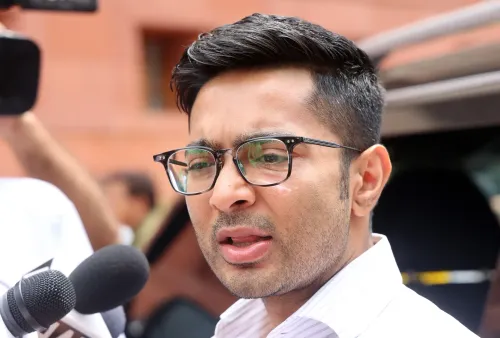
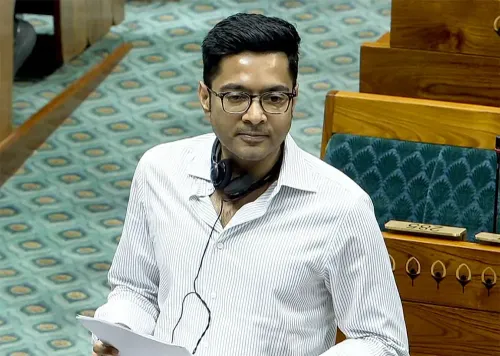
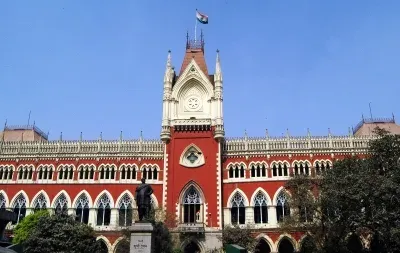
The Calcutta High Court on Thursday, 21 May rejected a plea by Abhishek Banerjee, general secretary of the All India Trinamool Congress (TMC) and three-term Lok Sabha member, seeking the scrapping of a criminal FIR registered against him last week. A single-judge bench of Justice Saugata Bhattacharya declined to quash the case but granted Banerjee conditional interim protection from coercive police action, including arrest, until 31 July.
Key Conditions Imposed by the Court
Justice Bhattacharya attached two significant conditions to the protection order. First, Banerjee has been barred from travelling abroad without prior court permission. Second, he has been directed to fully cooperate with the police investigation. The court additionally instructed investigators to notify it if Banerjee fails to comply. The next hearing in the matter is scheduled for 30 July.
The FIR and Charges Against Banerjee
The FIR was registered on the night of 15 May at the Bidhannagar Cyber Crime Police Station under the Bidhannagar Police Commissionerate in North 24 Parganas district. Banerjee stands accused of allegedly inciting violence and threatening Union Home Minister Amit Shah ahead of the recently concluded West Bengal Assembly elections.
Two non-bailable provisions of the Bharatiya Nyaya Sanhita (BNS), 2023 have been invoked — Section 192 (wantonly giving provocation with intent to cause riot) and Section 196 (promotion of enmity, hatred, or disharmony between groups based on religion, race, place of birth, residence, language, caste, or community). Banerjee had approached the high court on 18 May seeking the FIR's quashing.
Court's Strong Observations
Justice Bhattacharya made pointed remarks about the alleged statements Banerjee made at a pre-election public rally — remarks that formed the basis of the initial complaint and the subsequent FIR. The court questioned how a general secretary of a major political party and a three-time Member of Parliament could make what it characterised as an inciting statement at a public gathering.
Notably, the judge observed that West Bengal has a documented history of post-poll violence, and remarked that had the outcome of the 4 May assembly results been different, the alleged remarks could have led to a serious deterioration in law and order in the state.
Background and What Comes Next
This comes amid heightened political tensions in West Bengal following the assembly election cycle. The case against Banerjee — a senior figure in the ruling TMC and a close associate of Chief Minister Mamata Banerjee — is being closely watched as a test of judicial independence in a state where electoral and political disputes frequently spill into the courts.
With the next hearing set for 30 July and Banerjee's interim protection expiring a day later on 31 July, the outcome of that hearing will determine whether he faces fresh legal jeopardy or receives further relief from the court.
Point of View
The bench has placed the political context squarely on record, constraining any future argument that the FIR is purely motivated by political vendetta. For Banerjee, conditional protection is a temporary reprieve, not a clean chit. The travel ban and cooperation clause are real constraints on a politician who operates at national scale. The July 30 hearing will be the real test of whether this case proceeds to a full trial — or gets quietly defused in the post-election political settlement that Bengal politics often produces.
NationPress
24 Sept 2026
Frequently Asked Questions
Why did the Calcutta High Court reject Abhishek Banerjee's plea?
The court rejected his plea to quash the FIR, finding insufficient grounds to scrap the case at this stage. Justice Saugata Bhattacharya instead granted conditional interim protection from arrest until 31 July while the investigation continues.
What are the charges against Abhishek Banerjee in the FIR?
Banerjee has been charged under two non-bailable sections of the Bharatiya Nyaya Sanhita, 2023 — Section 192 (wantonly giving provocation with intent to cause riot) and Section 196 (promotion of enmity between groups). He is accused of allegedly inciting violence and threatening Home Minister Amit Shah at a pre-election public rally.
What conditions did the Calcutta High Court impose on Abhishek Banerjee?
The court barred Banerjee from travelling abroad without prior court permission and directed him to fully cooperate with the police investigation. Investigators were also told to inform the court if he fails to comply.
When is the next hearing in the Abhishek Banerjee FIR case?
The next hearing is scheduled for 30 July. Banerjee's interim protection from coercive police action expires on 31 July, making the outcome of that hearing critical to his legal status.
What did the Calcutta High Court say about West Bengal's post-poll violence history?
Justice Bhattacharya observed that West Bengal has a documented record of post-poll violence, and remarked that had the 4 May assembly election results been different, the alleged inciting remarks could have led to a serious deterioration in law and order in the state.