SC overturns Calcutta HC, lets Abhishek Banerjee travel abroad for eye treatment
Synopsis
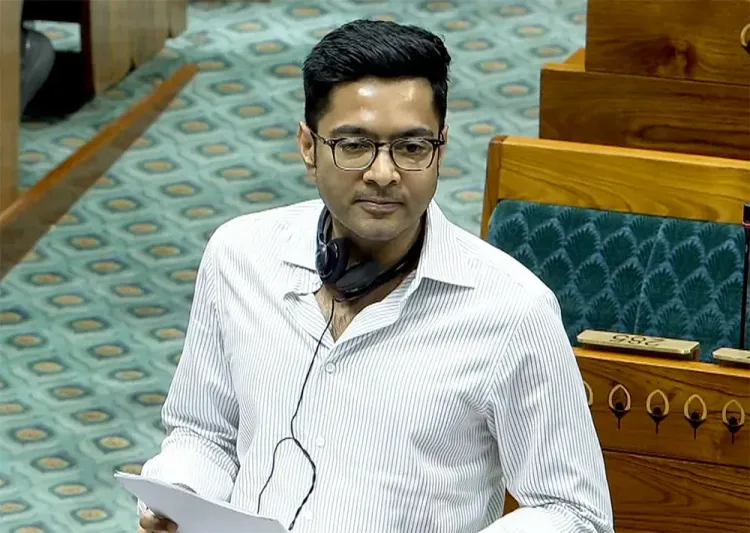
The Supreme Court stepped in where the Calcutta High Court would not — granting TMC's Abhishek Banerjee a three-week window for overseas eye treatment despite state government objections and a pending criminal case. The bench's pointed observation that every individual has the right to travel abroad and choose their treatment signals the court's limits on using travel bans as de facto punitive tools before conviction.
Key Takeaways
The Supreme Court on 10 August allowed Abhishek Banerjee to travel abroad for three weeks for ophthalmic treatment, overturning the Calcutta High Court's refusal.
Banerjee must travel only on his diplomatic passport and share full itinerary, hospital, and flight details with the investigating agency.
The West Bengal government opposed the plea, citing multiple cases against Banerjee and flight risk concerns.
Banerjee has reportedly been receiving treatment in the United States for a serious eye injury sustained in a 2016 road accident in Murshidabad .
The travel ban was originally a condition of his interim protection from arrest in a case linked to alleged violence-inciting remarks during the 2026 West Bengal Assembly election campaign.
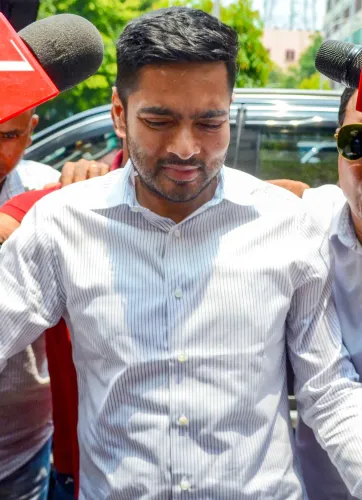
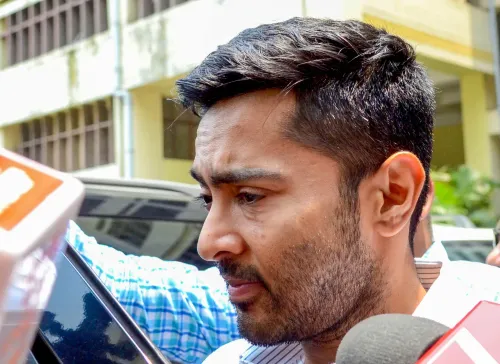
The Supreme Court on Monday, 10 August granted Trinamool Congress general secretary and Diamond Harbour Lok Sabha member Abhishek Banerjee permission to travel abroad for three weeks to receive ophthalmic treatment, setting aside the Calcutta High Court's earlier refusal to ease the foreign travel restriction imposed on him. The ruling comes as part of conditions attached to his interim protection from arrest in a criminal case.
Key Conditions Imposed by the Court
A bench comprising Chief Justice of India Surya Kant, Justice Joymalya Bagchi, and Justice V. Mohana allowed the appeal subject to strict conditions. Banerjee must travel exclusively on his diplomatic passport — issued in connection with Operation Sindoor outreach — and share his full itinerary, place of stay, treating doctors or hospital, period of stay, and flight details with the investigating agency. The court clarified that this information would remain confidential but could be used by investigating agencies for their purposes.
What the West Bengal Government Argued
Additional Solicitor General S.V. Raju, appearing for the West Bengal government, opposed the plea, citing multiple cases registered against Banerjee and raising apprehension that he might not return if allowed to travel overseas. The state government maintained it had no objection to treatment abroad in principle, but argued that a medical evaluation was first needed to confirm whether overseas care was genuinely required. Raju pointed out that Banerjee had declined to appear before a medical board constituted by the Calcutta High Court at the state-run S.S.K.M. Medical College and Hospital in Kolkata, and argued an adverse inference should be drawn from that refusal.
Banerjee's Defence and the Court's Observation
Senior advocate Gopal Sankaranarayanan, appearing for Banerjee, argued that his client — as a sitting Lok Sabha member, general secretary of a national political party, and a family man based in India — had no incentive to abscond. He also noted that embassy monitoring of Banerjee's diplomatic passport movements would provide an additional layer of oversight. The CJI-led bench expressed its disinclination to sustain the West Bengal government's objections, observing that every individual has a right to travel abroad and choose his medical treatment.
Background: The Case and the Travel Restriction
The foreign travel ban on Banerjee was originally imposed as a condition of his interim protection from arrest in a criminal case in which he is accused of making provocative and violence-inciting remarks during campaigning for the 2026 West Bengal Assembly elections. Banerjee first approached the Calcutta High Court on 23 June seeking a seven-day overseas window for ophthalmic care. The High Court dismissed his application on 5 August after his counsel indicated he would not submit to the medical board evaluation. On 3 August, the Supreme Court had disposed of an earlier plea by Banerjee challenging the High Court's initial refusal, directing the High Court to decide expeditiously — which it did, again refusing permission.
The Medical History Behind the Plea
According to submissions before the court, Banerjee sustained a serious eye injury in a road accident in October 2016 while returning to Kolkata from a political programme in Murshidabad district. He has reportedly been receiving treatment in the United States for nearly a decade since the accident, at hospitals both in India and abroad. The Supreme Court's order now clears the path for that treatment to continue, subject to the disclosure and monitoring conditions it has laid down.
The matter will remain subject to judicial oversight, with the investigating agency in possession of Banerjee's travel details throughout the three-week window.
Point of View
In practice, function as punishment before guilt is established. The bench's explicit observation about the right to choose one's medical treatment is a signal that such restrictions require proportionate justification, not merely prosecutorial anxiety. What is notable here is that the West Bengal government — which is also the TMC government — formally opposed the plea of its own party's general secretary, a rare alignment of state machinery against a ruling-party leader that will draw its own scrutiny. Whether the monitoring conditions the court has imposed prove workable in practice will be the real test of this order's effectiveness.
NationPress
24 Sept 2026
Frequently Asked Questions
Why did the Supreme Court allow Abhishek Banerjee to travel abroad?
The Supreme Court allowed Abhishek Banerjee to travel abroad for three weeks to receive ophthalmic treatment, observing that every individual has the right to travel abroad and choose their medical treatment. The court set aside the Calcutta High Court's refusal and imposed conditions including disclosure of his full itinerary to the investigating agency.
What conditions did the Supreme Court attach to Abhishek Banerjee's travel permission?
Banerjee must travel exclusively on his diplomatic passport and furnish details of his itinerary, place of residence abroad, treating doctors or hospital, period of stay, and flight details to the investigating agency. The court specified that this information would remain confidential but could be used by investigating agencies.
Why was there a foreign travel restriction on Abhishek Banerjee in the first place?
The travel restriction was a condition attached to Banerjee's interim protection from arrest in a criminal case in which he is accused of making provocative and violence-inciting remarks during campaigning for the 2026 West Bengal Assembly elections.
Why did the West Bengal government oppose Abhishek Banerjee's travel plea?
The West Bengal government, represented by Additional Solicitor General S.V. Raju, cited multiple cases registered against Banerjee and raised concerns that he might not return if permitted to travel. It also argued that a medical evaluation was needed first to confirm whether overseas treatment was genuinely necessary.
What is the background of Abhishek Banerjee's eye condition?
Banerjee reportedly sustained a serious eye injury in a road accident in October 2016 while returning to Kolkata from a political programme in Murshidabad district. He has since been receiving treatment in the United States for nearly a decade, at hospitals both in India and abroad.