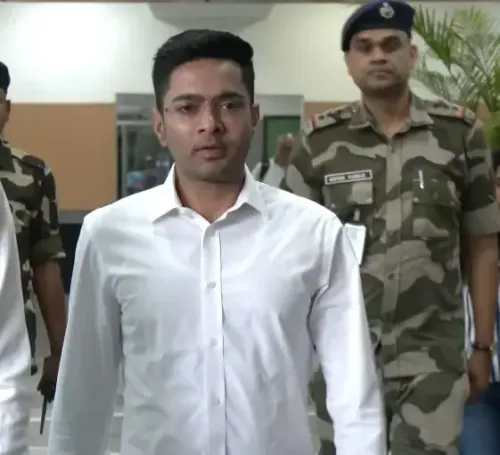
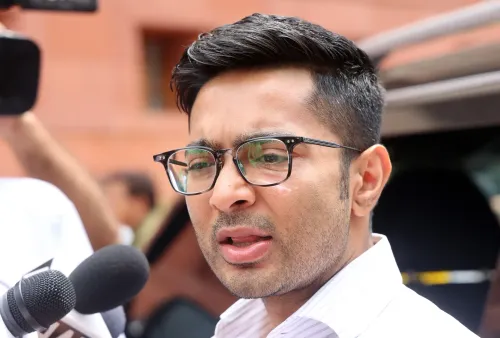
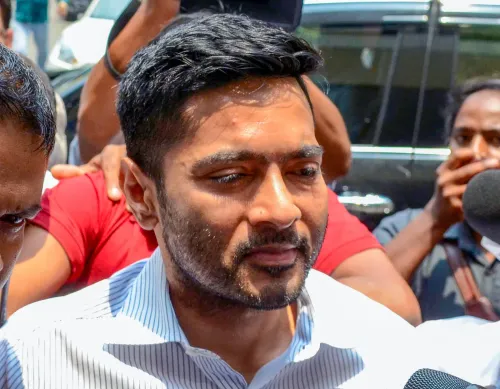
Calcutta HC rejects Abhishek Banerjee's plea for blanket protection in 8 FIRs
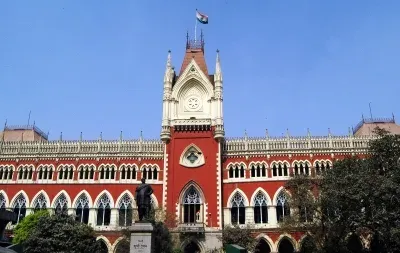
Synopsis
The Calcutta High Court has refused to grant TMC General Secretary Abhishek Banerjee a single sweeping order shielding him from arrest across all eight FIRs lodged against him in West Bengal. The bench's rejection — and its pointed refusal to apply the Suvendu Adhikari precedent — signals that Banerjee's legal team must fight each case individually, raising the political stakes ahead of the 30 July hearing.
Key Takeaways
The Calcutta High Court on 23 July rejected Abhishek Banerjee's plea for blanket protection from coercive police action across 8 FIRs in West Bengal .
Justice Saugata Bhattacharyya said an overall interim protection was 'not possible' without hearing all parties.
Senior advocate Kapil Sibal argued the FIRs amounted to political vendetta and cited the Suvendu Adhikari precedent.
Additional Solicitor General S.V.
Raju opposed the plea, insisting protections must be granted on a case-by-case basis.
The court rejected the Adhikari parallel and fixed the next hearing for 30 July .
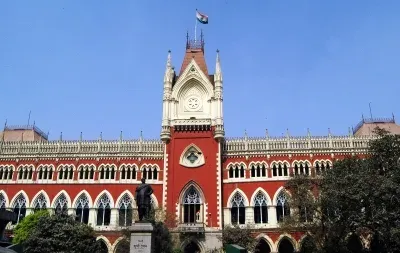
The Calcutta High Court on Thursday, 23 July rejected a plea filed by All India Trinamool Congress (TMC) General Secretary Abhishek Banerjee, seeking a blanket shield from coercive police action — including arrest — across all eight FIRs registered against him at various police stations in West Bengal. The single-judge Bench of Justice Saugata Bhattacharyya verbally observed that granting such sweeping interim protection was not legally tenable at this stage.
What the Court Said
Justice Bhattacharyya made clear that the court could not extend an overall interim stay on coercive action across all FIRs without first hearing all parties concerned. He did, however, leave a narrow window open — stating that if police took any coercive action against Banerjee in any of the eight cases before the next hearing, the matter could be brought immediately to the court's notice. The next date of hearing has been fixed for 30 July.
Arguments from Both Sides
Senior advocate Kapil Sibal, appearing for Banerjee, argued that the FIRs were being registered in rapid succession at different police stations across the state as an act of political vendetta. Sibal contended that his client deserved the same umbrella protection that the court had previously extended to Suvendu Adhikari — currently West Bengal Chief Minister — when Adhikari was the Leader of the Opposition in the West Bengal Assembly. At that time, the court had not only granted overall protection but had also barred the registration of fresh FIRs against Adhikari without prior judicial permission.
The plea was opposed by Additional Solicitor General S.V. Raju, who argued that interim protections must be granted on a case-by-case basis and cannot be extended as an omnibus order covering all FIRs simultaneously.
Court Rejects the Adhikari Precedent
Justice Bhattacharyya explicitly asked Sibal not to draw a parallel with the Adhikari case, signalling that the bench did not consider the two situations comparable for the purpose of granting blanket relief. The court's reluctance underscores the judicial principle that interim protections — particularly those that pre-empt police action across multiple, unrelated cases — require individual scrutiny of each FIR's merits.
What Happens Next
With the next hearing scheduled for 30 July, Banerjee's legal team is expected to press for case-specific interim relief in individual FIRs, given the court's clear signal against an omnibus order. The development is significant for Banerjee, who is among the most prominent second-tier leaders in the TMC and has faced sustained legal pressure from central investigative agencies in addition to the state-level FIRs. How the Calcutta High Court rules on 30 July will closely watched by both the ruling party in West Bengal and its political opponents.
Point of View
But the political subtext is hard to ignore. Abhishek Banerjee's invocation of the Suvendu Adhikari precedent was tactically clever — it forced the bench to either apply the same standard to an opposition-era ruling party leader or explain why it would not. The bench's pointed instruction to 'not draw the example of Adhikari' suggests the court sees material differences between the two situations, but without a written order those reasons remain opaque. The real question is whether the eight FIRs reflect legitimate law enforcement or coordinated political pressure — a question the court will eventually have to engage with case by case, even if it refused the shortcut of a blanket order.
NationPress
21 Oct 2026
Frequently Asked Questions
Why did the Calcutta High Court reject Abhishek Banerjee's plea?
The court rejected the plea because Justice Saugata Bhattacharyya held that granting an overall interim protection from coercive police action across all eight FIRs was not possible without first hearing all parties involved in each case. The court indicated that protections must be assessed on a case-by-case basis.
How many FIRs have been registered against Abhishek Banerjee?
Eight FIRs have been registered against Abhishek Banerjee at various police stations across West Bengal. His counsel argued these were filed in rapid succession as an act of political vendetta.
What is the Suvendu Adhikari precedent that Kapil Sibal cited?
Senior advocate Kapil Sibal referred to a past Calcutta High Court order that granted West Bengal Chief Minister Suvendu Adhikari — then the Leader of the Opposition — blanket protection across all cases and also barred fresh FIRs without prior court permission. Sibal argued Banerjee deserved similar relief, but the court declined to apply the same standard.
When is the next hearing in the Abhishek Banerjee FIR case?
The next hearing has been scheduled for 30 July. The court has also clarified that if police take any coercive action against Banerjee before that date, the matter can be brought immediately to its notice.
Who opposed Abhishek Banerjee's plea in the Calcutta High Court?
Additional Solicitor General S.V. Raju opposed the plea, arguing that interim protections can only be granted on a case-to-case basis and not as a single omnibus order covering all FIRs at once.