Delhi HC denies anticipatory bail to YouTuber Ajeet Bharti in SC/ST Act case
Synopsis
The Delhi High Court has shut the door on anticipatory bail for YouTuber Ajeet Bharti, ruling that casteist remarks allegedly made against Nagina MP Chandra Shekhar Azad on social media — watched by over 23,000 people — prima facie attract the SC/ST Act's strict bar on pre-arrest bail. With no relief from either the trial court or the High Court, Bharti now faces the prospect of arrest.
Key Takeaways
The Delhi High Court on 24 September 2026 dismissed Ajeet Bharti's anticipatory bail plea in an SC/ST Act case.
Justice Saurabh Banerjee held that offences under Sections 3(1)(r) and 3(1)(s) of the SC/ST Act were prima facie established, attracting the statutory bar under Section 18 .
30/2026 at North Avenue Police Station — relates to alleged casteist remarks against Nagina MP Chandra Shekhar Azad and SC community members on social media.
The alleged social media episode had garnered more than 23,000 views , satisfying the 'public view' requirement under the Act.
Bharti's anticipatory bail was earlier rejected by Patiala House Courts on 7 September ; the detailed High Court order is still awaited.
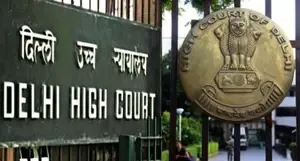
The Delhi High Court on Thursday, 24 September 2026, denied anticipatory bail to YouTuber Ajeet Bharti in connection with an FIR alleging casteist and derogatory remarks against Nagina MP Chandra Shekhar Azad and members of the Scheduled Caste community. A single-judge Bench of Justice Saurabh Banerjee dismissed Bharti's plea, holding that an offence under the Scheduled Castes and the Scheduled Tribes (Prevention of Atrocities) Act was prima facie established against him.
What the Court Held
Justice Banerjee held that offences under Sections 3(1)(r) and 3(1)(s) of the SC/ST Act were prima facie made out, thereby attracting the statutory bar on pre-arrest bail under Section 18 of the Act. The petition was consequently held not maintainable and dismissed. The case is also registered under the Information Technology Act and the Bharatiya Nyaya Sanhita (BNS).
Background: The FIR and Trial Court Order
Bharti had initially moved the Patiala House Courts seeking anticipatory bail against FIR No. 30/2026 registered at North Avenue Police Station. Additional Sessions Judge Saurabh Partap Singh Laler dismissed that plea on 7 September, also invoking the statutory bar under Section 18 of the SC/ST Act. The trial court observed that the material prima facie disclosed an offence under Section 3(1)(r) — which concerns intentional insult or intimidation of a member of a Scheduled Caste or Scheduled Tribe with the intent to humiliate.
The trial court further noted that the alleged remarks contained an express and repeated invocation of caste names, references to caste hierarchy and marriageability, and were published on a publicly accessible social media platform that had garnered more than 23,000 views. It recorded that the requirement of the remarks being made within public view could not be treated as plainly absent at the pre-arrest stage.
Arguments Before the High Court
Bharti's counsel, advocate Jai Anant Dehadrai, argued that the ingredients of the SC/ST Act were not met because the alleged remarks were not made with the intention to insult Azad on account of his caste identity. Dehadrai contended that the remarks arose in the context of alleged comments made about Bharti's sister on social media and that his client had not targeted Azad because of caste. He further submitted that an abusive statement alone would not constitute an offence under the SC/ST Act unless the statutory requirement of caste-based intent was satisfied.
Delhi Police and the complainant opposed the plea, submitting that the alleged remarks were directed against a particular caste, made publicly on social media, and accessed by approximately 23,000 people — thereby satisfying the requirement of being made in a place within public view.
Observations During Hearing
During an earlier hearing on 16 September, Justice Banerjee had remarked that Bharti ought to have been 'circumspect' while making the alleged comments and questioned Delhi Police on why no notice had been issued to him. The court had asked: 'You don't require custodial interrogation?' Delhi Police submitted that the investigating officer had obtained Bharti's address only two days prior and was therefore unable to issue a notice earlier. Justice Banerjee also objected to the manner in which a transcript containing the alleged remarks was placed on record and warned Bharti's counsel of possible contempt proceedings over it.
What Comes Next
With the Delhi High Court's dismissal, Bharti faces immediate exposure to arrest. The detailed order of the High Court is still awaited. The case will now likely proceed before the trial court, with the possibility of Bharti approaching the Supreme Court for relief. This ruling reinforces judicial interpretation that the statutory bar under Section 18 of the SC/ST Act is a high threshold at the pre-arrest stage — particularly when social media content with wide reach is involved.
Point of View
Which sets a precedent with broad implications for content creators. The Bharti case also highlights a growing judicial discomfort with casteist speech online being defended as reactive or contextual: the court's 'circumspect' remark signals that provocation is not a defence the SC/ST Act accommodates easily. What remains untested is whether the detailed High Court order will offer any limiting principle — or simply confirm that scale of reach is sufficient to clear the public view bar.
NationPress
24 Sept 2026
Frequently Asked Questions
Why was Ajeet Bharti denied anticipatory bail by the Delhi High Court?
The Delhi High Court denied anticipatory bail to Ajeet Bharti on 24 September 2026 because it found that offences under Sections 3(1)(r) and 3(1)(s) of the SC/ST Act were prima facie made out against him, attracting the statutory bar on pre-arrest bail under Section 18 of the Act. The petition was therefore held not maintainable and dismissed.
What are the charges against YouTuber Ajeet Bharti?
Ajeet Bharti faces an FIR — No. 30/2026 — registered at North Avenue Police Station under the SC/ST (Prevention of Atrocities) Act, the Information Technology Act, and the Bharatiya Nyaya Sanhita. He is accused of making casteist, derogatory, and humiliating remarks against Nagina MP Chandra Shekhar Azad and members of the Scheduled Caste community during an episode published on social media.
What is Section 18 of the SC/ST Act and why does it matter here?
Section 18 of the Scheduled Castes and Scheduled Tribes (Prevention of Atrocities) Act bars the grant of anticipatory bail when an offence under the Act is prima facie made out. Both the Patiala House Courts and the Delhi High Court held this bar was attracted in Bharti's case, leaving him without pre-arrest protection.
What did Ajeet Bharti's lawyer argue in the Delhi High Court?
Advocate Jai Anant Dehadrai argued that the ingredients of the SC/ST Act were not satisfied because the alleged remarks were not made with the intention to insult Chandra Shekhar Azad on account of his caste. He contended the remarks arose in reaction to comments about Bharti's sister and that a merely abusive statement does not constitute an offence unless caste-based intent is established.
What happens next in the Ajeet Bharti SC/ST Act case?
With both the trial court and the Delhi High Court denying anticipatory bail, Ajeet Bharti is now exposed to arrest. He may seek relief from the Supreme Court. The detailed order of the Delhi High Court is still awaited, and the case will otherwise proceed before the trial court.