Supreme Court Declines Plea for Mandatory Menstrual Leave
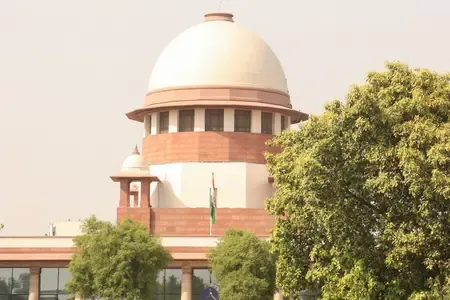
Synopsis
The Supreme Court has dismissed a plea for mandatory menstrual leave for women in India, emphasizing such policies should be developed by the government. The court raised concerns about potential negative impacts on women's employment opportunities.
Key Takeaways
The Supreme Court has ruled against a plea for mandatory menstrual leave.
Concerns were raised about the negative implications for women's employment.
Voluntary menstrual leave policies exist in some states and private sectors.
The government is encouraged to develop appropriate policies after stakeholder consultation.
The court emphasizes the need for policy-level discussions rather than legal mandates.
New Delhi, March 13 (NationPress) The Supreme Court has opted not to entertain a plea advocating for mandatory menstrual leave for women in the workforce and female students throughout the nation, stating that this issue resides within the sphere of government policy.
A bench comprising Chief Justice of India (CJI) Surya Kant and Joymalya Bagchi commented that requests for obligatory menstrual leave could unintentionally foster the perception of women as weak and may negatively influence their job opportunities.
The bench noted that the petitioner had already approached the Union Ministry of Women and Child Development with this representation, indicating that the government might consider developing a suitable policy after engaging with all relevant stakeholders.
Senior advocate M.R. Shamshad, representing the petitioner, pointed out that certain states and organizations have initiated steps in this direction. He mentioned that Kerala has allowed such provisions in schools and that several private firms have voluntarily adopted menstrual leave policies.
In response, the CJI Kant-led bench acknowledged that voluntary initiatives by employers are commendable. However, the apex court warned that enforcing menstrual leave as a legal requirement could lead to unforeseen repercussions.
“If it becomes a legal obligation, employers may become reluctant to hire women in government jobs, litigation, or various sectors. This could ultimately jeopardize women’s careers,” the court stated.
The petition argued that while women are permitted leave during pregnancy, there is no corresponding provision addressing the physical discomfort and health challenges associated with menstruation. It called for directives to the Centre and state governments to establish regulations granting at least two days of menstrual leave monthly.
Previously, the Supreme Court had expressed a similar stance. In July 2024, a bench led by then CJI D.Y. Chandrachud had urged the Centre to explore the viability of a menstrual leave policy after discussions with states and other stakeholders.
In dismissing that petition, the apex court noted that enforcing menstrual leave through judicial measures could dissuade employers from hiring women, emphasizing that such matters are more appropriately resolved at the governmental policy level.
Point of View
The Supreme Court's decision not to mandate menstrual leave raises significant questions about women's health rights and workplace equality. The ruling underscores the need for a balanced approach to policy-making that considers both women's health issues and the potential impacts on employment.
NationPress
29 Sept 2026
Frequently Asked Questions
What did the Supreme Court rule regarding menstrual leave?
The Supreme Court declined to entertain a plea for mandatory menstrual leave, stating it is a matter for government policy.
Why did the court reject the plea for mandatory menstrual leave?
The court expressed concerns that mandatory leave could create perceptions of women as weak and potentially harm their employment opportunities.
Have any states implemented menstrual leave policies?
Yes, some states like Kerala have introduced such policies in schools, and certain private companies have voluntarily adopted menstrual leave.
What were the petitioner's arguments for menstrual leave?
The petitioner argued that while pregnant women receive leave, there is no similar provision for the discomfort and health issues related to menstruation.
What is the broader impact of the court's decision?
The ruling suggests that issues regarding women's health and workplace policies should be addressed through governmental frameworks rather than judicial mandates.