Supreme Court orders Kerala to take custody of elephant Raman, caretaker held in contempt
Synopsis
The Supreme Court has held a Kerala caretaker guilty of contempt for parading elephant Raman at temple festivals in direct violation of a court undertaking — and has now stripped him of custody entirely, ordering the state to house the animal. The case raises sharp questions about how court orders protecting animals are enforced when religious and commercial interests are at stake.
Key Takeaways
The Supreme Court held caretaker Krishnankutty guilty of contempt on 10 June 2025 for using elephant Raman in temple events despite a court undertaking.
The court directed the Kerala government to take temporary custody of Raman and house him in a rescue or rehabilitation centre.
Krishnankutty was fined ₹2,000 , payable to the court registry within four weeks .
A report confirmed Raman was taken to Chavakkad on 3 February 2026 for a temple festival, in breach of the 6 August 2025 undertaking.
The underlying ownership dispute — between Mata Amritanandamayi Mutt and Krishnankutty — remains pending before the apex court.
State authorities were discharged from contempt proceedings after the Bench found no wilful disobedience on their part.
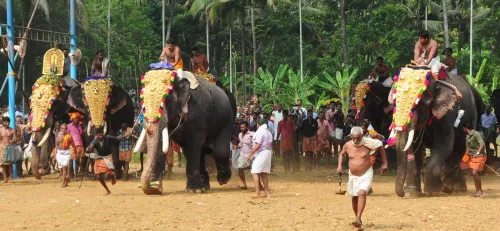
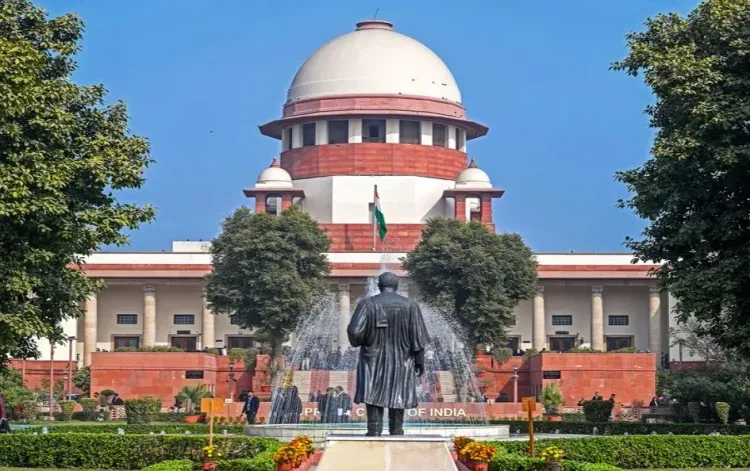
The Supreme Court of India on 10 June 2025 directed the Kerala government to take temporary custody of a captive elephant named Raman, after holding his caretaker, Krishnankutty, guilty of contempt of court for deploying the animal in temple festivals and ceremonial processions in defiance of an undertaking recorded by the apex court. The ruling comes amid a pending ownership dispute over the elephant between Krishnankutty and petitioner Jayakrishna Menon.
Background to the Dispute
The case centres on competing custody claims over Raman, reportedly the tallest elephant in Kerala. Petitioner Jayakrishna Menon contends that the elephant belongs to the Mata Amritanandamayi Mutt and was only temporarily entrusted to Krishnankutty for care and upkeep. The Supreme Court had been hearing pending criminal appeals concerning the elephant's interim custody when the contempt petition was filed.
On 6 August 2025, while directing Kerala's wildlife authorities to inspect Raman's health and well-being, the apex court recorded a formal undertaking from Krishnankutty that the elephant would not be used for any commercial or temple-related activities during the pendency of proceedings. A subsequent order on 21 August 2025 reinforced those directions.
How the Contempt Was Established
Petitioner Jayakrishna Menon later alleged that Raman continued to be paraded at temple festivals, public processions, and other commercial events after the undertaking was given. In support, photographs, posters, social media posts, and promotional materials were placed on record before the court.
Krishnankutty denied the allegations, arguing that the materials either predated the apex court's order or did not conclusively establish Raman's participation in public events after the undertaking. However, he admitted that on one occasion the elephant had been taken to a temple event because another elephant originally scheduled for the ritual was absent. He also tendered an unconditional apology before the court.
A report submitted by Kerala authorities confirmed that Raman had been brought to Chavakkad on 3 February 2026 for participation in a temple festival, following which a detailed veterinary inspection was conducted. Krishnankutty's own written submissions acknowledged that Raman had participated in a temple-linked ritual after emerging from the musth period.
What the Court Said
A Bench of Justice Dipankar Datta and Justice S.C. Sharma found the violation to be wilful and unambiguous. 'Thus, it is evidently clear that the elephant in question, Raman, was indeed taken out and used towards ceremonial processions and rituals in defiance of the undertaking made on behalf of Respondent No. 1 before this Court,' the Bench observed.
The court expressed deep concern over the animal's treatment, noting it was 'unfortunate' that Raman had been subjected to commercial exploitation despite a restraining order. 'We would be failing in our duty towards the voiceless if we turn a blind eye towards such defiance. We cannot be a mute spectator, more so in matters pertaining to voiceless animals, whose well-being is also of paramount importance,' the judgment stated.
Orders Passed and Next Steps
The Justice Datta-led Bench imposed a fine of ₹2,000 on Krishnankutty, directing him to deposit the amount with the court registry within four weeks. The Kerala government was ordered to take over temporary custody of Raman and house the elephant in a suitable rescue or rehabilitation centre, at state expense, in accordance with safeguards under the Wildlife (Protection) Act, 1972.
The court clarified that the custody arrangement is temporary and subject to the final outcome of the pending appeals. State authorities were discharged from the contempt proceedings after the Bench found no wilful disobedience on their part. The contempt petitions were disposed of accordingly.
The ownership dispute between the Mata Amritanandamayi Mutt and Krishnankutty remains pending adjudication, and the Supreme Court's final ruling on custody will determine Raman's long-term future.
Point of View
000 fine is, frankly, nominal — and the court appears to know it, leaning instead on the custody transfer as the real punitive measure. What the judgment does more meaningfully is establish that undertakings given to the Supreme Court in animal welfare cases carry enforceable weight, even when the violations occur in the context of religious practice. The tension between temple tradition and court-mandated animal welfare is not new in Kerala, but having the apex court invoke its 'duty towards the voiceless' in a contempt ruling sets a precedent that wildlife advocates will cite. The harder question — whether the state has the infrastructure to properly rehabilitate a captive elephant of Raman's stature — goes unanswered in the order.
NationPress
20 Sept 2026
Frequently Asked Questions
Why did the Supreme Court hold Krishnankutty in contempt?
The Supreme Court held Krishnankutty in contempt because he used elephant Raman in temple festivals and ceremonial processions after giving a formal undertaking in August 2025 that the animal would not be deployed for any commercial or religious activities during the pendency of the custody dispute. The court found the violation to be wilful and supported by documentary evidence including photographs and veterinary reports.
Who owns elephant Raman — Krishnankutty or the Mata Amritanandamayi Mutt?
That question is still being adjudicated by the Supreme Court. Petitioner Jayakrishna Menon claims Raman belongs to the Mata Amritanandamayi Mutt and was only temporarily entrusted to Krishnankutty for care. The ownership dispute in the pending criminal appeals has not yet been finally decided.
What orders did the Supreme Court pass against Krishnankutty?
The court imposed a fine of ₹2,000 on Krishnankutty, directed him to deposit it with the court registry within four weeks, and ordered the Kerala government to take temporary custody of Raman. Krishnankutty effectively loses custody of the elephant pending the final outcome of the appeals.
Where will elephant Raman be kept now?
The Supreme Court has directed the Kerala government to house Raman in an appropriate rescue or rehabilitation centre at state expense, in accordance with the Wildlife (Protection) Act, 1972. The arrangement is temporary and will be reviewed once the ownership dispute is finally adjudicated.
What is the significance of this ruling for animal welfare in India?
The ruling reinforces that undertakings given to the Supreme Court in animal welfare cases are strictly enforceable, even when violations occur in a religious context. By invoking its 'duty towards the voiceless,' the court signals that captive animals' welfare can override customary temple practices when a court order is in force.