Did Sensex and Nifty Overcome Their Two-Day Decline?
Synopsis
On February 16, the Indian stock market experienced a significant turnaround, with the Sensex and Nifty indices rebounding after a two-day dip. This resurgence was primarily driven by strong buying in banking stocks, indicating a positive shift in market sentiment. Explore the details of this market recovery and its implications.
Key Takeaways
Sensex ended 650.39 points higher at 83,277.15.
Nifty increased by 211.65 points to close at 25,682.75.
Banking stocks led the recovery during the latter half of the session.
Tech Mahindra and Maruti Suzuki stocks faced losses .
Rupee traded flat at around 90.62 .
Mumbai, February 16 (NationPress) The Indian stock market indices experienced a robust late-session surge on Monday, effectively ending a two-day decline, propelled by strong buying activity in banking stocks that boosted overall market sentiment.
The 30-share Sensex concluded the day at 83,277.15, gaining 650.39 points, equivalent to 0.79 percent. The wider Nifty index climbed 211.65 points, or 0.83 percent, finishing at 25,682.75.
Experts analyzing the Nifty's technical outlook noted that the market structure appears favorable as long as the support zone between 25,500 and 25,400 is maintained.
“Immediate resistance is identified in the 25,700 to 25,800 range. A decisive breakout above this could lead to increased momentum towards the 25,900 to 26,000 area,” stated an analyst.
Banking and financial stocks spearheaded the recovery during the latter half of the trading session. Among the top gainers in the Sensex, stocks such as Power Grid, HDFC Bank, Axis Bank, NTPC, ITC, and Asian Paints surged by up to 4.5 percent.
Conversely, stocks like Tech Mahindra, Maruti Suzuki, Bajaj Finance, M&M, and Trent faced declines, dropping by as much as 1.3 percent.
Shares related to capital markets faced downward pressure following revised norms from the Reserve Bank of India concerning capital market exposure.
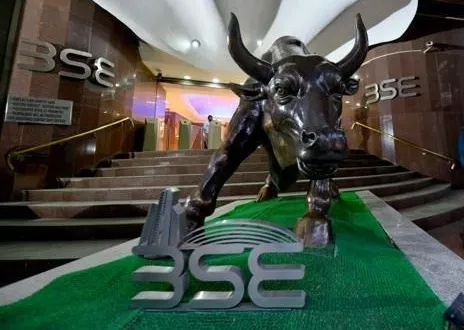
Companies like BSE, Angel One, and MCX saw their shares tumble by up to 10 percent during the session.
In the broader market, the Nifty MidCap index rose by 0.48 percent, while the Nifty SmallCap index saw a more modest increase of 0.11 percent.
From a sectoral perspective, strong buying interest was observed in real estate, PSU banks, private banks, and pharmaceutical stocks. However, automobile and metal stocks remained under pressure.
Analysts indicated that despite ongoing global uncertainties and regulatory adjustments, domestic purchasing of banking stocks was instrumental in enabling the indices to recover sharply and close positively.
The rupee traded relatively unchanged at around 90.62, as market participants exercised caution. The recovery in the secondary market following a weak start helped stabilize the currency.
“The general market tone appears range-bound, with immediate resistance around 90.25 and support near 90.90,” an expert commented.
Point of View
I observe that the recent recovery in the Indian stock market reflects a resilient investor sentiment amidst ongoing global challenges. The banking sector's robust performance plays a pivotal role in shaping market dynamics, and it is crucial for investors to stay informed about these developments.
NationPress
2 Oct 2026
Frequently Asked Questions
What caused the recent rise in Sensex and Nifty?
The recent rise in Sensex and Nifty was primarily driven by strong buying in banking stocks, which significantly boosted market sentiment.
What are the support and resistance levels for Nifty?
The support zone for Nifty is between 25,500 and 25,400, while immediate resistance is seen in the 25,700 to 25,800 range.
Which sectors saw gains during this market rally?
Sectors such as real estate, PSU banks, private banks, and pharmaceuticals observed strong buying interest during the market rally.
How did the broader market perform?
In the broader market, the Nifty MidCap index gained 0.48 percent, while the Nifty SmallCap index increased by 0.11 percent.
What impact do regulatory changes have on capital market stocks?
Regulatory changes from the Reserve Bank of India have led to downward pressure on capital market-related stocks, causing significant declines in companies like BSE and MCX.