South Korea urges US to honour tariff deal amid Section 301 forced labour probe
Synopsis
Seoul is pushing back early. With the USTR floating a 12.5 percent forced-labour tariff on 54 economies, South Korea's trade minister flew to Paris to remind Washington of the deal already on the table — 15 percent reciprocal tariffs in exchange for a US$350 billion investment pledge. Any new levy, Seoul argues, breaks that bargain.
Key Takeaways
South Korean Trade Minister Yeo Han-koo met USTR Jamieson Greer in Paris on 4 June on the sidelines of the OECD Ministerial Council Meeting.
The USTR has proposed tariffs of 10 percent or 12.5 percent on goods from 60 economies over forced-labour enforcement failures.
South Korea , China and Japan are among 54 economies facing the 12.5 percent levy under Section 301.
The 2024 Korea-U.S. deal cut reciprocal tariffs to 15 percent from 25 percent in exchange for Seoul's US$350 billion investment pledge.
Supreme Court struck down country-specific reciprocal tariffs in February , pushing Washington toward Section 301 probes.
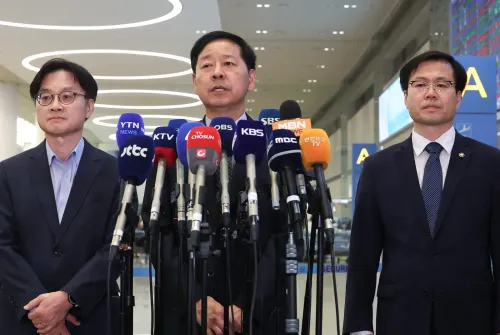
South Korean Trade Minister Yeo Han-koo on 4 June urged the United States to resolve pending bilateral trade issues — including the recently announced results of the Section 301 probe into imports tied to forced labour — strictly within the framework of the Korea-U.S. tariff agreement finalised late last year. The appeal came during a meeting with U.S. Trade Representative Jamieson Greer on the sidelines of the OECD Ministerial Council Meeting in Paris.
What prompted the meeting
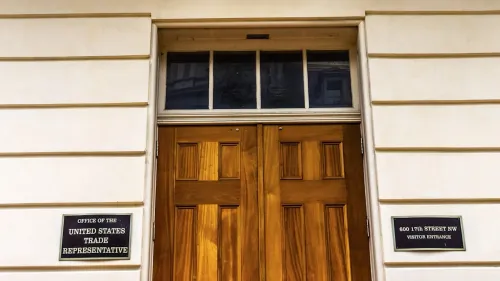
The talks took place shortly after the Office of the USTR proposed slapping tariffs of 10 percent or 12.5 percent on imported goods from 60 economies over their alleged failure to enforce an import ban on goods produced with forced labour. South Korea, along with China and Japan, is among 54 economies that could face the steeper 12.5 percent levy under the Section 301 finding, according to reports citing Yonhap news agency.
What Seoul told Washington
‘I made it clear that not only the outcomes of the latest Section 301 probe but also other future bilateral trade issues should be addressed within the framework of the Korea-U.S. tariff agreement rather than through the imposition of new tariffs,’ Yeo said in a press release issued by the Ministry of Trade, Industry and Resources. He added that Greer reaffirmed Washington's intention to uphold the bilateral trade deal.
The tariff deal at stake
Under the agreement finalised late last year, the U.S. agreed to lower its reciprocal tariffs on South Korean goods to 15 percent from 25 percent, in exchange for Seoul's US$350 billion investment pledge in the American economy. Any fresh duties layered on top of that framework would, Seoul argues, undercut the bargain.
The broader US trade offensive
South Korea is also caught in a separate USTR investigation targeting what Washington calls ‘unfair’ trade practices linked to ‘structural’ excess capacity and production, alongside China, Japan and 13 other economies. The U.S. has been opening these probes to replace country-specific reciprocal tariffs that were struck down by the Supreme Court in February. Section 301 of the 1974 Trade Act allows the USTR to investigate alleged unfair foreign trade practices on a country-by-country basis.
What's next
‘We will continue to work closely with the U.S. side and respond calmly to the remaining Section 301 procedures to ensure that bilateral trade issues are managed in a stable and constructive manner,’ Yeo added. Seoul is expected to engage Washington through technical channels as the comment and consultation phase of the forced-labour tariff proposal advances.
Point of View
Not confrontation. By framing every new tariff as a breach of the 15-percent deal, Yeo is trying to lock Washington into a single negotiating channel before Section 301 mutates into a multi-front trade squeeze. The risk: the U.S. is increasingly using Section 301 precisely because the Supreme Court closed the reciprocal-tariff door in February — meaning the legal architecture, not goodwill, will decide whether the bilateral deal holds.
NationPress
18 Oct 2026
Frequently Asked Questions
What is the US Section 301 forced labour probe?
It is an investigation by the Office of the U.S. Trade Representative under Section 301 of the 1974 Trade Act, examining whether 60 economies are adequately enforcing bans on imports made with forced labour. The USTR has proposed tariffs of 10 percent or 12.5 percent on goods from these economies based on the probe's findings.
Why is South Korea concerned about the proposed tariffs?
South Korea is among 54 economies that could face the higher 12.5 percent tariff, which Seoul says would violate the bilateral trade deal finalised late last year. Under that agreement, the U.S. cut reciprocal tariffs on Korean goods to 15 percent from 25 percent in return for a US$350 billion Korean investment pledge.
What did Yeo Han-koo discuss with USTR Jamieson Greer?
Yeo urged Greer to handle the Section 301 outcomes and all future bilateral trade issues within the existing Korea-U.S. tariff framework rather than through new tariffs. The meeting took place on the sidelines of the OECD Ministerial Council Meeting in Paris.
Why is the US relying on Section 301 probes now?
The U.S. Supreme Court struck down country-specific reciprocal tariffs in February, prompting Washington to shift to Section 301 investigations, which allow the USTR to act against individual countries based on alleged unfair trade practices. A separate Section 301 probe is also examining structural excess capacity in South Korea, China, Japan and 13 other economies.