South Korea weighs countermeasures against US forced labour tariffs
Synopsis
The US is proposing 12.5% tariffs on South Korea — one of its closest allies — over alleged failures to ban forced-labour goods. Seoul's inter-ministerial response and the USTR chief's public spat with the Washington Post reveal just how politically charged this trade action has become, blurring the line between labour rights enforcement and geopolitical leverage.
Key Takeaways
Trade Minister Yeo Han-koo chaired an inter-ministerial meeting in Seoul on 16 June to discuss countermeasures against proposed US forced labour tariffs.
The USTR has proposed tariffs of 10% or 12.5% on imports from 60 economies over alleged failures to enforce bans on forced-labour goods.
South Korea is among 54 economies facing the steeper 12.5% levy, alongside China and Japan .
Seoul pledged to prioritise national interests, boost business competitiveness, and diversify export markets.
USTR chief Jamieson Greer wrote to the Washington Post rebutting its 3 June editorial that called the tariffs a 'pretext for protectionism.' Talks on accelerating a free trade agreement with Mongolia and services negotiations with China were also reviewed at the meeting.
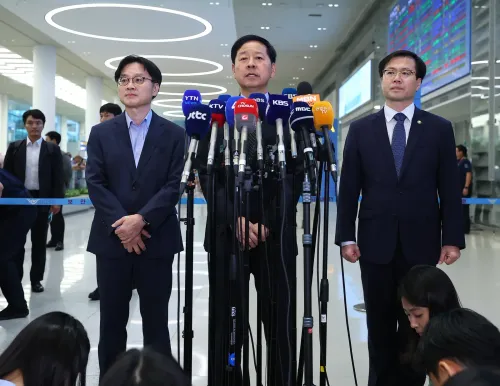
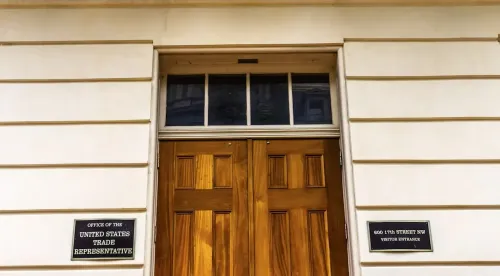
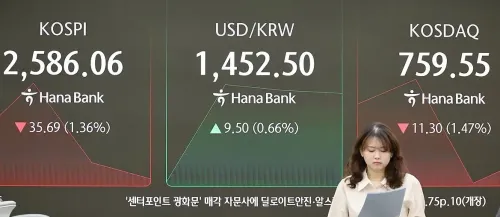
South Korea's Trade Minister Yeo Han-koo on Tuesday, 16 June convened an inter-ministerial meeting in Seoul to assess countermeasures against proposed US tariffs targeting economies allegedly failing to enforce import bans on goods produced through forced labour. The meeting follows a move by the Office of the US Trade Representative (USTR) to impose additional levies of 10 percent or 12.5 percent on imports from 60 trading partners, with South Korea among the 54 economies facing the steeper 12.5 percent rate.
What the Meeting Covered
According to the Ministry of Trade, Industry and Energy, participants reviewed the progress of Seoul's ongoing talks with Washington on the forced labour tariff issue and discussed follow-up measures, though the ministry did not elaborate on specifics. The meeting also assessed the status of trade deals currently under negotiation, with participants pledging to accelerate discussions with Mongolia and to advance services and investment talks under the bilateral free trade agreement with China.
South Korea's Official Position
Trade Minister Yeo was quoted by the ministry as saying: 'The government will work closely with related ministries, with national interests as the top priority, while enhancing the competitiveness of our businesses and diversifying export markets.' The statement signals that Seoul is pursuing a dual track — diplomatic engagement with Washington while simultaneously hedging through market diversification.
USTR Pushes Back on Critics
US Trade Representative Jamieson Greer separately wrote a letter to the Washington Post editorial board rebutting its 3 June editorial, which had characterised the new tariff announcement as a 'pretext for protectionism.' The newspaper had also argued that if the tariffs were genuinely about forced labour enforcement, China would not face the same rate as allies such as South Korea, Japan, and Switzerland. Greer reportedly attributed the editorial's stance to its 'antipathy' toward President Donald Trump, according to the USTR office.
Broader Context and Stakes
The USTR's forced labour tariff proposal is among the more unusual trade actions in recent memory — it targets not just geopolitical rivals but close US allies simultaneously. South Korea, Japan, and Switzerland are all treaty allies or major economic partners of Washington, making the proposed 12.5 percent levy diplomatically sensitive. This comes amid an already fraught global trade environment shaped by successive rounds of US tariff actions since 2018. For South Korea — Asia's fourth-largest economy and a major exporter of semiconductors, automobiles, and steel — the stakes are considerable. Notably, the USTR has not publicly detailed which specific product categories or supply chains triggered each country's inclusion on the list.
What Happens Next
Seoul's inter-ministerial coordination suggests the government is preparing both a negotiated response and contingency trade diversification measures. The outcome of bilateral talks with Washington, alongside the trajectory of South Korea's FTA discussions with China, will shape how exposed Korean exporters remain to the proposed levies. Industry bodies and exporters are reportedly monitoring developments closely as the USTR's proposal moves through its review process.
Point of View
Japan, and Switzerland into the same forced labour tariff bracket as China is the detail that most mainstream coverage glosses over. These are US treaty allies with functioning labour inspection regimes — their inclusion suggests the forced labour rationale may be as much a legal mechanism for broad-based tariff action as a targeted enforcement tool. Seoul's measured, inter-ministerial response reflects a country that has learned from past trade shocks: engage diplomatically, but hedge aggressively. The Washington Post spat is a sideshow, but Greer's decision to engage publicly signals the USTR is sensitive to the 'protectionism pretext' charge — which means the legal and reputational framing of this action is still being contested, not settled.
NationPress
15 Sept 2026
Frequently Asked Questions
Why is the US proposing tariffs on South Korea over forced labour?
The USTR has proposed tariffs of 12.5% on South Korea, citing its alleged failure to effectively enforce import bans on goods made with forced labour. South Korea is among 54 of the 60 targeted economies facing the higher rate, alongside China and Japan.
What did South Korea's trade minister say about the proposed tariffs?
Trade Minister Yeo Han-koo said the government would 'work closely with related ministries, with national interests as the top priority, while enhancing the competitiveness of our businesses and diversifying export markets.' He chaired an inter-ministerial meeting on 16 June to coordinate Seoul's response.
Which countries are affected by the USTR's forced labour tariff proposal?
The USTR has proposed additional tariffs on 60 trading partners in total. Of these, 54 — including South Korea, China, Japan, and Switzerland — face the steeper 12.5% rate, while others face a 10% levy.
What did the Washington Post editorial argue, and how did the USTR respond?
The Washington Post's 3 June editorial argued that the tariff announcement was a 'pretext for protectionism,' pointing out that China faced the same rate as US allies like South Korea. USTR chief Jamieson Greer wrote to the newspaper's editorial board to rebut the piece, reportedly attributing its stance to 'antipathy' toward President Donald Trump.
What other trade issues did South Korea discuss at the inter-ministerial meeting?
Beyond the US tariff issue, participants reviewed progress on trade deals under negotiation, pledging to accelerate talks with Mongolia and to advance services and investment discussions under the bilateral free trade agreement with China.