Amit Shah at Gujarat Vidyapith: Gandhi's reconstruction vision links to India@2047
Synopsis
At Gandhi's own institution, Amit Shah recast the Modi government's India@2047 ambition in Gandhian language — arguing that 'reconstruction,' not 'new construction,' is the true inheritance of the independence movement. The speech is a pointed effort to claim ideological continuity with Gandhi at a moment when the ruling dispensation's relationship with that legacy remains politically contested.
Key Takeaways
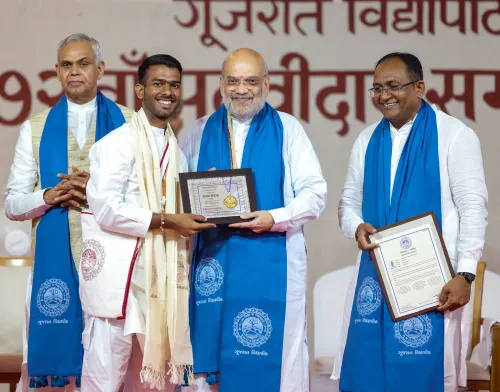
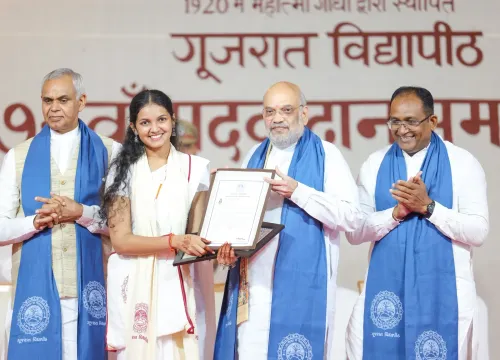
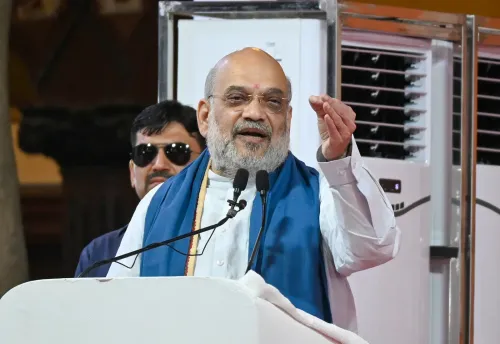
Amit Shah addressed Gujarat Vidyapith's 72nd convocation in Ahmedabad on 27 August .
He linked Gandhi's concept of 'reconstruction' to the Modi government's India@2047 vision of global leadership.
Shah connected Gram Swaraj , village prosperity, and cooperation — Gandhi's pillars — to current Union government priorities.
He described 2014–2026 as a period of national reconstruction guided by strength, self-reliance, and moral leadership.
The National Education Policy 2020 was cited as aligned with Gujarat Vidyapith's founding Gandhian educational principles.
Gujarat Vidyapith was established on 18 October 1920 ; past Chancellors include Sardar Patel , Rajendra Prasad , and Morarji Desai .
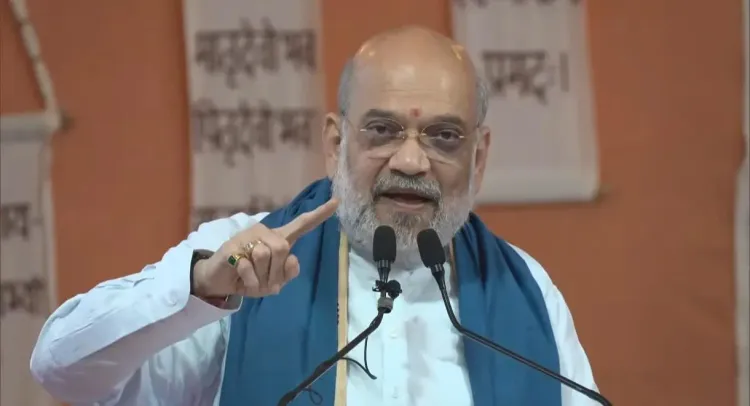
Union Home and Cooperation Minister Amit Shah on Thursday, 27 August drew a direct line between Mahatma Gandhi's philosophy of national reconstruction and the Narendra Modi government's ambition of positioning India among the world's foremost nations by 2047, the centenary of independence. Addressing graduates at Gujarat Vidyapith's 72nd convocation in Ahmedabad, Shah told the young audience that they would be the generation to witness that historic milestone.
Gandhi's 'Reconstruction' — Not a New Build
Shah drew attention to a deliberate word choice by Gandhi, noting that the Mahatma had spoken of 'reconstruction' rather than 'new construction' for the nation. The distinction, Shah argued, carries enduring relevance: India does not need to discard its foundational principles in the pursuit of modernity.
'The principles will remain the same as they have been for thousands of years. We will become modern and undertake reconstruction,' Shah said, addressing the graduating students. He emphasised that India should modernise while preserving its civilisational foundations — not by importing an identity from outside.
Gandhi's Vision and Modi Government's Priorities
Shah connected Gandhi's framework of Gram Swaraj, village prosperity, and cooperation directly with the current Union government's policy priorities. 'Gandhi's vision included Gram Swaraj, village prosperity and cooperation. The Narendra Modi government is also working on these three areas,' he said.
He described the period from 2014 to 2026 as one of national reconstruction, guided by five principles: national strength, prosperity, security, self-reliance, and morality in leadership. This trajectory, he said, feeds into the government's larger vision for 2047, when India completes 100 years of independence.
A Message to the Graduating Generation
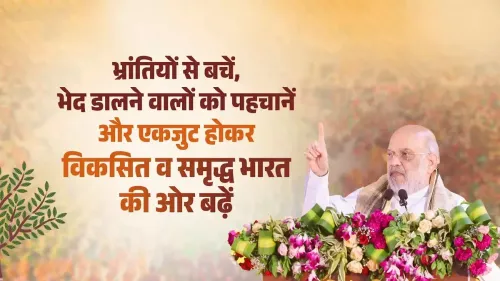
Shah told the students that many senior figures on stage might not be present to see 2047, but the young graduates before him would be. 'You are the fortunate people who will witness the centenary of the country's independence,' he said, adding that India should be number one in the world in every field by then.
Notably, Shah cautioned against a narrow interpretation of this ambition. 'We will be number one, but we will not think only of ourselves; we will think of the welfare of the entire universe. India would be powerful but should use its strength with wisdom, while its prosperity should benefit the country, its citizens and people suffering around the world,' he emphasised.
National Education Policy and Gujarat Vidyapith's Legacy
Shah linked the National Education Policy (NEP), 2020 to Gandhi's educational philosophy, describing it as built around five pillars: mother tongue, skills, multidisciplinary education, the Indian knowledge tradition, and holistic personality development. He said these pillars closely mirror the educational principles established at Gujarat Vidyapith.
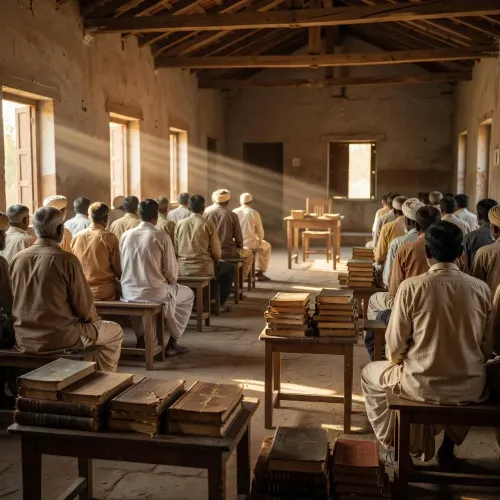
Gujarat Vidyapith was founded on 18 October 1920 as part of Gandhi's broader effort to build an Indian system of education and lay the groundwork for Swaraj. Gandhi served as its founding Chancellor; subsequent Chancellors included Sardar Vallabhbhai Patel, Rajendra Prasad, and Morarji Desai. Shah praised the continuation of this 'Acharya tradition' under current Chancellor Acharya Devvrat.
What This Signals
The address comes at a moment when the Union government is actively framing its long-term policy agenda around the Viksit Bharat 2047 goal. By anchoring that vision in Gandhian language at a Gandhi-founded institution, Shah's remarks represent a deliberate effort to position the ruling dispensation as the inheritor of the independence movement's unfinished project. How that framing lands with political opponents — and with younger voters — will be closely watched in the run-up to upcoming state elections.
Point of View
'reconstruction' — are not incidental. The BJP has long navigated a complicated relationship with the Gandhian legacy, and this address is a calibrated attempt to resolve that tension by presenting the Viksit Bharat agenda as the fulfilment, not the rejection, of Gandhi's unfinished project. The argument is rhetorically coherent but politically loaded: critics will note that Gram Swaraj and village-first economics sit uneasily with the government's urban infrastructure and manufacturing-led growth model. Whether the ideological bridge Shah is building holds up to scrutiny depends on outcomes in rural welfare and cooperative sector reform — areas where the record is mixed.
NationPress
12 Oct 2026
Frequently Asked Questions
What did Amit Shah say at Gujarat Vidyapith's convocation?
Amit Shah linked Mahatma Gandhi's concept of national 'reconstruction' to the Modi government's India@2047 vision at Gujarat Vidyapith's 72nd convocation in Ahmedabad on 27 August. He told graduating students that they would be the generation to witness India's centenary of independence in 2047 and urged the country to become number one in the world by then.
What is the significance of Gandhi's 'reconstruction' idea that Shah referenced?
Gandhi deliberately used the word 'reconstruction' rather than 'new construction' to signal that India should modernise while preserving its foundational civilisational principles. Shah argued this distinction remains relevant today, and that India does not need to import an identity from elsewhere to achieve modernity.
How did Shah connect Gandhi's vision to current government policy?
Shah said Gandhi's framework of Gram Swaraj, village prosperity, and cooperation directly mirrors three areas the Modi government is currently working on. He also described the National Education Policy 2020 as built on Gandhian educational pillars, including mother tongue, skills, and holistic personality development.
What is Gujarat Vidyapith and what is its historical significance?
Gujarat Vidyapith is an institution founded by Mahatma Gandhi on 18 October 1920 as part of his effort to establish an Indian system of education and strengthen the foundations of Swaraj. Its past Chancellors include Sardar Vallabhbhai Patel, Rajendra Prasad, and Morarji Desai.
What is the India@2047 vision Shah referred to?
India@2047 refers to the Union government's stated goal of positioning India as a global leader across all fields by 2047, when the country completes 100 years of independence. Shah said India should be number one in the world by then, but stressed this must be accompanied by a commitment to global welfare, not just national self-interest.