Padma Bhushan for Shibu Soren: President Murmu honours JMM founder posthumously
Synopsis
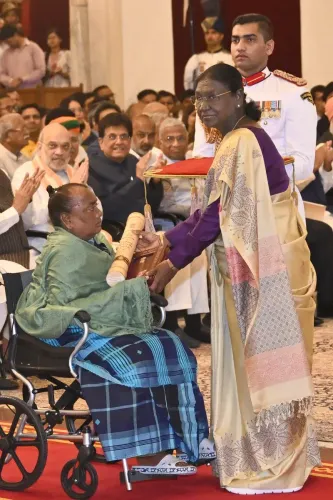
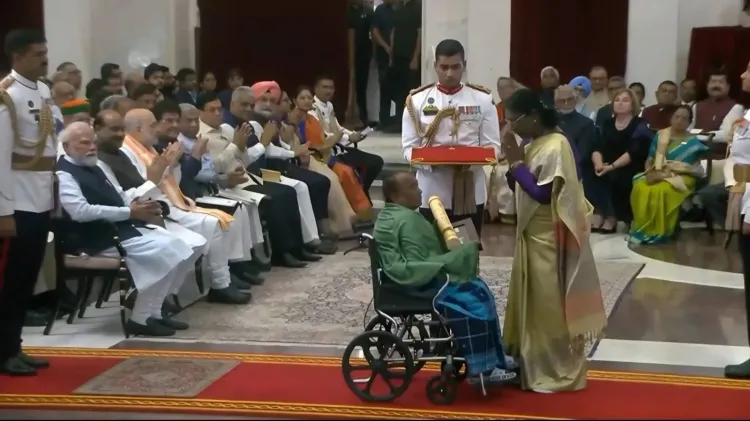
President Droupadi Murmu stepped off the stage to personally hand the Padma Bhushan to Rupi Soren — seated in a wheelchair — in one of the ceremony's most striking moments. The honour recognises Shibu Soren's nearly three-decade struggle that created Jharkhand in 2000, a movement rooted in tribal rights over water, forest, and land.
Key Takeaways
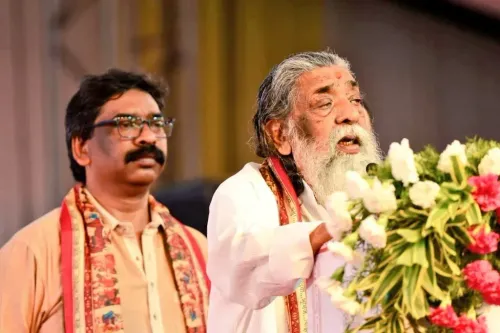
Shibu Soren , founder of the Jharkhand Mukti Morcha (JMM) , was conferred the Padma Bhushan posthumously on 23 June at Rashtrapati Bhavan .
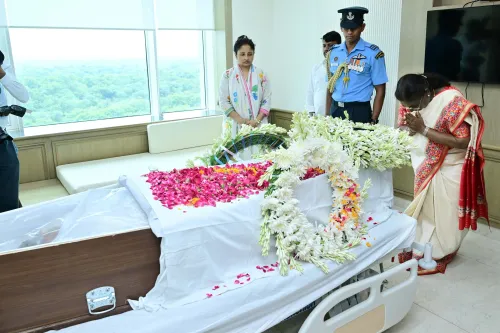
His wife Rupi Soren received the award from President Droupadi Murmu , who stepped off the stage to honour her as she attended in a wheelchair.
Prime Minister Narendra Modi and Home Minister Amit Shah were present at the ceremony.
Soren co-founded the JMM in 1972 and led the statehood movement for nearly three decades , resulting in the creation of Jharkhand on 15 November 2000 .
He served three terms as Jharkhand Chief Minister and was elected multiple times to the Lok Sabha from Dumka .
Jharkhand Mukti Morcha (JMM) founder and former Jharkhand Chief Minister Shibu Soren was conferred the Padma Bhushan posthumously at a ceremony held at Rashtrapati Bhavan, New Delhi, on Tuesday evening, 23 June. His wife, Rupi Soren, received the honour from President Droupadi Murmu in the presence of Prime Minister Narendra Modi and Union Home Minister Amit Shah.
A Poignant Moment at Rashtrapati Bhavan
In a gesture that drew widespread attention, President Murmu stepped down from the stage to personally present the award to Rupi Soren, who attended the ceremony in a wheelchair. The moment was widely seen as a mark of deep respect for the late tribal leader's decades-long contributions to India's political and social fabric.
The Man Behind the Movement
Born on 11 January 1944, in Nemra village of Ramgarh district (then part of Bihar), Shibu Soren was profoundly shaped by his father Sobaran Soren's activism against exploitative moneylenders — a struggle that ultimately cost his father his life. That formative experience set Soren on a lifelong path of advocacy for tribal rights.
In the 1970s, he launched sustained movements across the Santhal Pargana and North Chotanagpur regions, challenging usury, land grabbing, and the systemic oppression of tribal communities. Through the 'Dhan Katni' movement, he led efforts to reclaim agricultural land for tribal farmers. Simultaneously, he established night schools in the Tundi region to promote education and self-reliance — earning him the enduring title of 'Guruji' among local communities.
The Jharkhand Statehood Struggle
In 1972, Soren co-founded the Jharkhand Mukti Morcha (JMM) and launched an organised campaign for a separate state built on the principles of tribal identity and rights over 'jal' (water), 'jungle' (forest), and 'zameen' (land). For nearly three decades, he remained the most prominent face of the movement, which culminated in the creation of Jharkhand on 15 November 2000 — widely regarded as the crowning achievement of his political life.
Political Legacy and Public Life
Shibu Soren served three terms as Jharkhand Chief Minister and was elected multiple times to the Lok Sabha from Dumka. He also served as Union Coal Minister. Yet, despite these offices, his most enduring identity remained that of a grassroots advocate for tribal communities, preferring village meetings and public gatherings over formal political theatre.
Revered across Jharkhand as 'Dishom Guru' and 'Guruji', Soren built a support base that endured for decades through direct engagement with people at the ground level. The Padma Bhushan — India's third-highest civilian honour — now formally recognises a life dedicated to one of independent India's longest-running statehood movements.
Point of View
Soren's recognition arrives decades after the Jharkhand movement succeeded, raising the question of why India's civilian honours system so often catches up with tribal leaders only posthumously. The real tribute to his legacy would be measurable progress on the 'jal, jungle, zameen' rights he spent his life fighting for — rights that remain contested in Jharkhand even today.
NationPress
22 Sept 2026
Frequently Asked Questions
What is the Padma Bhushan and why was Shibu Soren awarded it?
The Padma Bhushan is India's third-highest civilian honour, awarded for distinguished service of a high order. Shibu Soren received it posthumously in recognition of his lifelong struggle for tribal rights and his central role in the creation of Jharkhand as a separate state in 2000.
Who received the Padma Bhushan on behalf of Shibu Soren?
His wife, Rupi Soren, received the award at Rashtrapati Bhavan on 23 June. President Droupadi Murmu stepped down from the stage to personally present the honour to Rupi Soren, who attended the ceremony in a wheelchair.
What was Shibu Soren's role in the creation of Jharkhand?
Soren co-founded the Jharkhand Mukti Morcha (JMM) in 1972 and led the organised movement for a separate state for nearly three decades. Jharkhand was formally carved out on 15 November 2000, and is widely regarded as the defining achievement of his political life.
What were Shibu Soren's key contributions beyond statehood?
Beyond statehood, Soren championed tribal rights over water, forests, and land — encapsulated in the 'jal, jungle, zameen' slogan. He launched the 'Dhan Katni' movement to reclaim land for tribal farmers and set up night schools in the Tundi region to promote education and self-reliance among marginalised communities.
What offices did Shibu Soren hold during his political career?
Soren served three terms as Jharkhand Chief Minister, was elected multiple times to the Lok Sabha from Dumka, and served as Union Coal Minister. Despite these offices, he was best known as a grassroots tribal leader rather than a conventional politician.