Sikh heritage crisis in Pakistan: Maharani Moran's grave lies in ruins
Synopsis
Pakistan's Sikh heritage crisis goes far deeper than one crumbling grave. From Maharani Moran's neglected tomb in Lahore to the illegal demolition of a 125-year-old gurdwara in Farooqabad — where state institutions acted only after ordinary Sikhs took to the streets — the pattern reveals a structural failure that Pakistan's showcase sites like Kartarpur cannot conceal.
Key Takeaways
The grave of Maharani Moran , queen of Maharaja Ranjit Singh , lies in disrepair at Miani Sahib Cemetery in Lahore ; she died in 1867 .
Over 400 historic Sikh gurdwaras linked to the Sikh Gurus are located in Pakistan, many in ruins across Balochistan , Sindh , and Khyber Pakhtunkhwa .
The 125-year-old Gurdwara Sri Guru Singh Sabha Sahib in Farooqabad was demolished on 24 June by a local businessman without legal clearance or a court order.
Pakistani authorities acknowledged the Farooqabad demolition only after local Sikh residents staged street protests.
The Evacuee Trust Property Board , mandated to protect Sikh religious property, did not intervene in the Farooqabad demolition.
Pakistani Sikh leaders reportedly raise funds from the global Sikh diaspora annually to maintain gurdwaras, as state support for lesser-known sites remains inadequate.
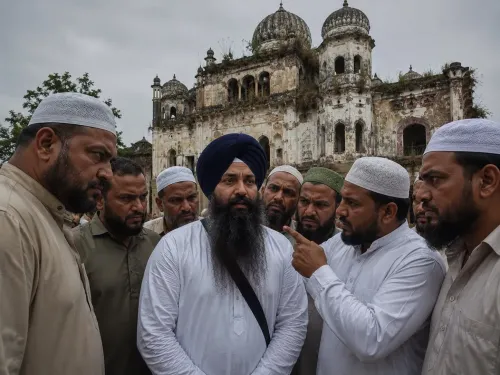
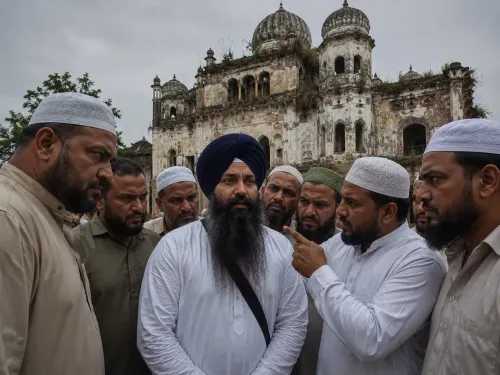
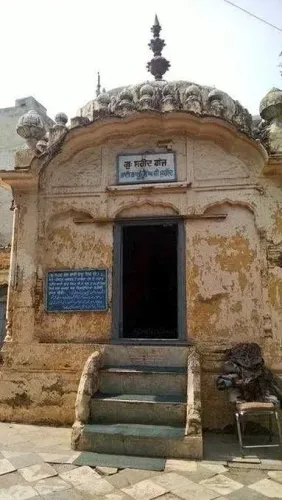
The crumbling grave of Maharani Moran, queen of Maharaja Ranjit Singh, stands as a stark symbol of the systemic neglect of Sikh heritage in Pakistan — a crisis that advocates say has deepened over decades. Located inside Miani Sahib Cemetery in Lahore, the grave is marked by decaying walls and overgrown vegetation, raising sharp questions about whether Pakistan's stated commitment to preserving Sikh history extends beyond its most internationally visible sites.
A Pattern of Neglect Across Pakistan
Maharani Moran died in 1867, and her resting place in Lahore's Miani Sahib Cemetery has since fallen into disrepair. According to a report by Khalsa Vox, her grave is not an isolated case but emblematic of a far wider pattern. More than 400 historic Sikh gurdwaras linked to the lives of Guru Nanak Dev and other Sikh Gurus are located in Pakistan, yet many have either disappeared or lie in ruins across provinces including Balochistan, Sindh, and Khyber Pakhtunkhwa.
Sites associated with legendary Sikh warriors — including Hari Singh Nalwa, Akali Phula Singh, and Sardar Sham Singh Attariwala — have reportedly fallen victim to encroachment, illegal construction, and prolonged neglect, according to the report. 'The memories of great Sikh warriors such as Hari Singh Nalwa, Akali Phula Singh, Sardar Sham Singh Attariwala, and many others remain rooted in this land. Unfortunately, many monuments associated with them have fallen victim to neglect, encroachments, illegal construction, and the natural decay of time,' the report noted.
The Farooqabad Demolition: A Flashpoint
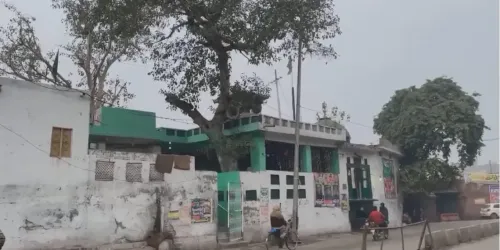
The most dramatic recent incident occurred on the night of 24 June, when the 125-year-old Gurdwara Sri Guru Singh Sabha Sahib in Farooqabad, Pakistan, was demolished. A local businessman allegedly carried out the demolition without any legal clearance or court order. By morning, large portions of the historic shrine had been reduced to rubble.
Crucially, it was not the heritage department or the Evacuee Trust Property Board — the institution specifically created to protect Sikh religious property — that intervened. It was ordinary Sikh residents of Farooqabad who took to the streets in protest before any authority acknowledged the destruction. An official subsequently admitted that the department had failed to take notice until local Sikhs forced a public confrontation.
'What happened next says everything about what it costs, in Pakistan today, to be a religious minority guarding your own history. It wasn't the heritage department that stopped the bulldozers. It wasn't the Evacuee Trust Property Board... It was ordinary Sikh residents of Farooqabad who had to pour into the streets,' the Khalsa Vox report stated.
Pakistan's Showcase Sites vs. the Ground Reality
Pakistan frequently cites Gurdwara Janam Asthan Nankana Sahib and Gurdwara Darbar Sahib Kartarpur as proof of its commitment to preserving Sikh heritage on the global stage. Critics argue, however, that these high-profile sites mask a far grimmer reality for lesser-known monuments. Each year, Pakistani Sikh leaders reportedly raise funds from the global Sikh diaspora to maintain gurdwaras in Pakistan, while the condition of numerous historically significant but less prominent sites continues to deteriorate.
What the Crisis Signals
Advocates say the pattern — neglect of sites, demolition without legal process, and state response only after minority communities protest — reflects a structural failure in how Pakistan's institutions treat Sikh religious and cultural property. The Evacuee Trust Property Board, mandated to safeguard such heritage, has drawn particular criticism for its inaction in the Farooqabad case. With the global Sikh diaspora watching closely, pressure is mounting on Pakistani authorities to move beyond symbolic gestures and implement enforceable protections for all Sikh heritage sites, not just the internationally prominent ones.
Point of View
The very body created to prevent such erasure, did nothing until a minority community risked public confrontation. That is not a heritage policy; it is a diaspora optics strategy. The global Sikh community funds what the Pakistani state neglects, and the state takes credit for what the diaspora preserves. That contradiction deserves far more scrutiny than it currently receives.
NationPress
18 Sept 2026
Frequently Asked Questions
Who was Maharani Moran and where is she buried?
Maharani Moran was a queen of Maharaja Ranjit Singh , the founder of the Sikh Empire. She died in 1867 and is buried at Miani Sahib Cemetery in Lahore , Pakistan. Her grave has fallen into significant disrepair, with decaying walls and overgrown vegetation, according to recent reports.
What happened to the gurdwara in Farooqabad, Pakistan?
The 125-year-old Gurdwara Sri Guru Singh Sabha Sahib in Farooqabad was demolished on the night of 24 June by a local businessman who allegedly acted without legal clearance or a court order. Large portions of the shrine were reduced to rubble by morning. Pakistani authorities acknowledged the demolition only after local Sikh residents staged street protests.
How many Sikh heritage sites are located in Pakistan?
More than 400 historic Sikh gurdwaras linked to Guru Nanak Dev and other Sikh Gurus are located in Pakistan. However, many have either disappeared or lie in ruins across provinces including Balochistan , Sindh , and Khyber Pakhtunkhwa , according to reports.
What is the Evacuee Trust Property Board and what is its role?
The Evacuee Trust Property Board is a Pakistani institution specifically created to protect Sikh and other minority religious properties. In the Farooqabad demolition case, it drew sharp criticism for failing to intervene before or during the destruction of the 125-year-old gurdwara.
Why do critics say Pakistan's commitment to Sikh heritage is selective?
Critics argue that Pakistan promotes high-profile sites like Gurdwara Janam Asthan Nankana Sahib and Gurdwara Darbar Sahib Kartarpur internationally while allowing hundreds of lesser-known Sikh monuments to decay. Pakistani Sikh leaders reportedly raise funds from the global Sikh diaspora each year to maintain gurdwaras that the state does not adequately support.