Sitharaman challenges Rahul Gandhi: Debate in Parliament, not on social media
Synopsis
Finance Minister Nirmala Sitharaman has turned Rahul Gandhi's public-debate challenge back on him with a pointed question: if he is so eager to debate, why does the Opposition keep walking out of Parliament? The exchange lays bare a deeper battle over who controls the narrative on democratic accountability — and whether social media or the House floor is the real arena.
Key Takeaways
Finance Minister Nirmala Sitharaman on 4 November challenged Rahul Gandhi to debate in Parliament rather than on social media.
Sitharaman noted that Home Minister Amit Shah had already offered a special Parliament session to discuss EVM functioning and the Special Intensive Revision (SIR) of electoral rolls.
She accused Gandhi and the INDIA alliance of repeatedly walking out of the House when the government was responding to their allegations.
Sitharaman criticised a recent Congress 'mock Parliament' event, calling it a 'mockery of Parliament.' She urged Gandhi to bring evidence-backed allegations and stay to hear the government's responses, invoking his own slogan: 'Daro mat.'
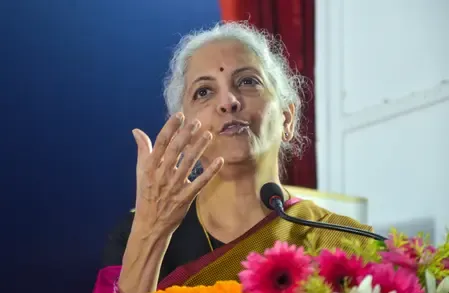
Union Finance Minister Nirmala Sitharaman on Tuesday, 4 November sharply rebuked Leader of Opposition Rahul Gandhi for demanding a public debate with Prime Minister Narendra Modi, asserting that Parliament — where Gandhi serves as Leader of the Opposition — is the proper and already-available venue for such exchanges.
Sitharaman's Direct Challenge
Responding to Gandhi's public debate challenge via her X account, Sitharaman said: “Rahul ji, you ask the Prime Minister to choose a venue for a debate. There is already one: Parliament, where you happen to be the LoP.” She pointedly asked why Gandhi could not channel the same energy he directs at social media challenges toward the floor of the House.
The Finance Minister also noted that Home Minister Amit Shah had, only a day earlier, offered a special session of Parliament to discuss the Special Intensive Revision (SIR) of electoral rolls and the functioning of Electronic Voting Machines (EVMs) — an offer she suggested the Opposition had not yet accepted.
Walkouts and Disruptions: The Government's Argument
Sitharaman accused Gandhi and the INDIA alliance of repeatedly walking out of the House whenever the government sought to respond to their allegations. “Demanding answers also carries an obligation to hear them,” she said. She elaborated: “There have been several occasions when you and your party have walked out of Parliament while the government was responding to your allegations. How do you claim to be so eager for a debate when you don’t even stay to hear the other side?”
The Finance Minister further criticised the Opposition for disrupting parliamentary proceedings, resulting in entire sittings being washed out. “If you are so keen on debating, why not allow Parliament to function in the first place?” she questioned.
'Mockery of Parliament': Sitharaman on the Congress Event
Sitharaman also took direct aim at a recent “mock Parliament” organised by the Indian National Congress (INC) at the residence of the party president. “Frankly, that was more a ‘mockery of Parliament’ than a ‘mock Parliament’. You found the time and enthusiasm for that exercise. Surely, the real Parliament deserves at least as much,” she said.
The Accountability Argument
Calling on Gandhi to uphold democratic institutions, Sitharaman argued that those who speak endlessly about protecting democracy and the Constitution must show equal respect for the institutions those very documents establish. She urged the Leader of Opposition to bring specific allegations backed by evidence rather than, as she put it, “frivolously” assembling long lists of accusations.
“You say, ‘Daro mat.’ Then bring the facts, face the scrutiny and stay to hear the answers. In the House, uphold the standards of debate you demand from others,” she concluded.
Context and What It Signals
This exchange is the latest flare-up in the ongoing political sparring between the ruling Bharatiya Janata Party (BJP) and the Congress-led opposition bloc. Gandhi's call for a public debate with Modi has been a recurring theme in the Opposition's communications strategy, framing the Prime Minister as unwilling to face direct questioning. The government's counter — redirecting the challenge back to Parliament — is equally consistent, positioning the Opposition's walkouts and disruptions as evidence of bad faith. Notably, the EVM and SIR issues have been live flashpoints in recent weeks, making the offer of a special session a politically loaded one. How the Opposition responds to that specific offer will likely define the next round of this exchange.
Point of View
But it sidesteps a real question: why has the government not proactively sought more parliamentary debate time on the very issues — EVMs, electoral rolls — that are fuelling public distrust? Redirecting Gandhi to Parliament is legitimate, yet the ruling side has also presided over sessions where Bills were passed with minimal discussion. The walkout charge cuts both ways; disruption is a two-party sport in the current Lok Sabha. What is missing from both sides is a concrete commitment to structured, time-bound debate with full attendance — the kind of accountability that would actually serve voters rather than social media timelines.
NationPress
4 Nov 2026
Frequently Asked Questions
What did Nirmala Sitharaman say to Rahul Gandhi about the debate challenge?
Sitharaman said Parliament is the already-available venue for debate and pointed out that Gandhi, as Leader of the Opposition, has the platform there. She questioned why he directs his debate energy at social media rather than the House floor.
What special session did Amit Shah offer and on what issues?
Home Minister Amit Shah offered a special session of Parliament to discuss the Special Intensive Revision (SIR) of electoral rolls and the functioning of Electronic Voting Machines (EVMs), according to Sitharaman's statement on 4 November.
Why did Sitharaman accuse the Opposition of not being serious about debate?
She cited instances where the Congress and the INDIA alliance walked out of Parliament while the government was responding to their allegations, and accused them of disrupting proceedings so severely that entire sittings were washed out.
What was the 'mock Parliament' event Sitharaman criticised?
Sitharaman referred to a mock Parliament event organised by the Indian National Congress at the party president's residence, calling it a 'mockery of Parliament' and contrasting the enthusiasm shown there with the Opposition's disruptive behaviour in the real House.
What is the broader political context of this exchange?
The BJP-Congress battle over a public debate with PM Modi is a recurring flashpoint. The government consistently redirects such challenges back to Parliament, while the Opposition frames the PM's non-participation as an avoidance of accountability. The EVM and SIR issues form the current substantive backdrop.