Sitharaman: India stayed world's fastest-growing economy despite West Asia crisis
Synopsis
With a West Asia crisis threatening import bills and foreign exchange reserves, Finance Minister Sitharaman distilled India's response into three words — fuel, fertiliser, foreign exchange. Her Le Figaro interview reveals how the Centre balanced farmer subsidies, gold import curbs, and a landmark EU trade deal to keep India the world's fastest-growing major economy.
Key Takeaways
Finance Minister Nirmala Sitharaman confirmed India remained the world's fastest-growing major economy despite the West Asia crisis that began on 28 February .
The government's response centred on the 'three Fs' — fuel, fertiliser, and foreign exchange — as summarised by Sitharaman in her Le Figaro interview.
Fertiliser subsidies were maintained, keeping the farmer price at ₹300 per bag against a market cost of ₹3,000 , with the government absorbing the difference in foreign currency.
PM Narendra Modi on 10 May urged citizens to defer gold purchases, avoid international travel, and reduce car and cooking oil use to conserve foreign exchange.
The EU-India free trade agreement , signed last January, is expected to have 'a considerable impact on global trade,' according to Sitharaman.
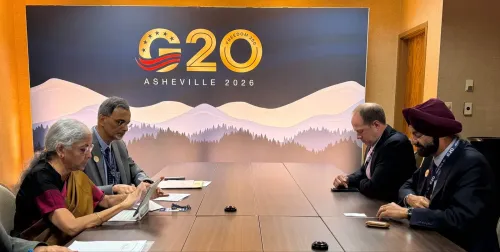
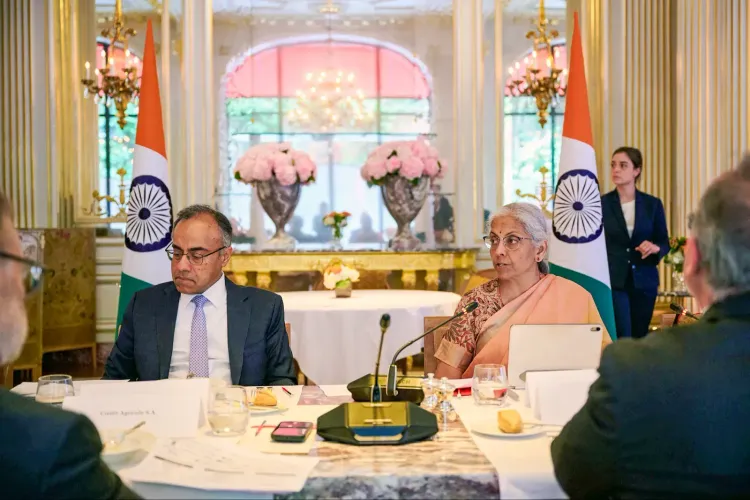
Sitharaman co-chaired the India-France Economic and Financial Dialogue (EFD) in Aix-en-Provence , covering critical minerals and financial-sector cooperation.
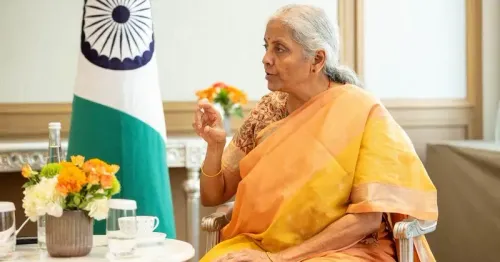
Finance Minister Nirmala Sitharaman has said India successfully navigated the economic fallout of the West Asia crisis — which began on 28 February — and continued to hold its position as the world's fastest-growing major economy, driven by strong growth, new free trade agreements, and resilient domestic consumption. Sitharaman made these remarks in an interview with leading French newspaper Le Figaro, speaking to Fabrice Node-Langlois, Editor-in-Chief (Economics).
The Three Fs: India's Crisis Management Formula
Sitharaman outlined a concise framework that guided the government's response to the crisis. 'I've taken to summarising the Prime Minister's advice with a simple formula: preserve the three Fs, for fuel (meaning oil and gas), fertiliser, and foreign exchange,' she was quoted as saying.
On 10 May, Prime Minister Narendra Modi had urged citizens to avoid international travel, defer gold purchases for a year, and reduce car use and cooking oil consumption. Sitharaman explained the rationale: 'All imports, not just essential goods, are paid for in foreign currency, such as the dollar. By encouraging carpooling, for example, we preserve foreign exchange reserves.'
Fertiliser Subsidies and the Farmer Shield
The Finance Minister highlighted that the government had maintained fertiliser subsidies to protect farmers from global price shocks. 'We have maintained subsidies on fertiliser purchases, which can amount to 2,700 rupees (25 euros) on a bag costing 3,000 rupees (28 euros). We haven't increased the price paid by farmers, but this comes at a cost in foreign currency,' she said.
This commitment to farm-gate price stability, even as global commodity markets remained volatile, reflects the Centre's strategy of absorbing import costs rather than passing them on to agricultural households.
Gold Imports and the Foreign Exchange Equation
Sitharaman also addressed the politically sensitive appeal to reduce gold imports. 'Gold is sacred to Indian families. It is offered in temples, it is kept for the daughters of the family. And yet, we had to explain to households, who accumulate large quantities of gold, that importing it requires paying in foreign currency,' she said.
India is among the world's largest consumers of gold, and the metal represents a persistent pressure on the current account. The government's appeal to defer purchases was framed as a collective fiscal responsibility rather than a restriction.
EU-India FTA and the Trade Dividend
On the trade front, Sitharaman highlighted the significance of the free trade agreement signed between India and the European Union last January, following protracted negotiations. She told Le Figaro the deal 'will have a considerable impact on global trade itself' and noted that 'the Indian middle class is a powerful driver of consumption' — a key draw for EU exporters and investors.
India-France Economic Dialogue in Aix-en-Provence
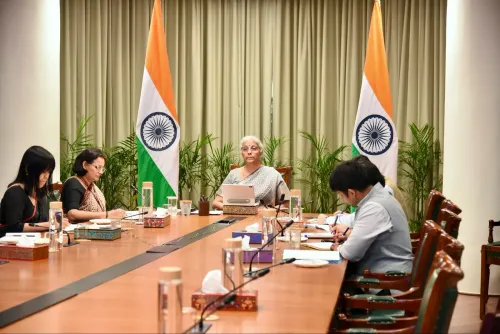
On the sidelines of her European visit, Sitharaman co-chaired the India-France Economic and Financial Dialogue (EFD) in Aix-en-Provence alongside Roland Lescure, France's Minister of Economy, Finance, Industrial, Energy, and Digital Sovereignty. The two sides discussed greater bilateral cooperation in critical minerals, economic sovereignty, security policies, and deepening financial-sector linkages.
An official statement noted that 'resuming high-level exchanges on international outlook, bilateral cooperation and outcome-oriented solutions had become essential' as the economic relationship between India and France deepens within their special global strategic partnership. With the EU-India FTA now in place and the India-France dialogue institutionalised, New Delhi's economic diplomacy is set to intensify through the remainder of 2025.
Point of View
But the harder question is whether the policy mix held up structurally. Maintaining fertiliser subsidies at ₹2,700 per bag while global commodity prices spiked is fiscally expensive — and the foreign exchange cost Sitharaman herself flags is real. The gold-import appeal, meanwhile, asks households to absorb macro risk that is not of their making. India's fastest-growing tag remains defensible on GDP growth figures, but the West Asia crisis stress-tested the current account in ways that deserve more granular disclosure than a ministerial interview can provide. The EU-India FTA is the genuine bright spot — if implementation matches ambition, it could structurally reduce India's dependence on crisis-vulnerable trade corridors.
NationPress
3 Oct 2026
Frequently Asked Questions
How did India manage the economic impact of the West Asia crisis?
Finance Minister Nirmala Sitharaman says India focused on preserving the 'three Fs' — fuel, fertiliser, and foreign exchange. Measures included maintaining fertiliser subsidies for farmers, urging citizens to defer gold imports, and encouraging fuel conservation to protect foreign exchange reserves.
What is the 'three Fs' formula Sitharaman mentioned?
The 'three Fs' stand for fuel (oil and gas), fertiliser, and foreign exchange — a formula Sitharaman used to summarise PM Modi's 10 May advisory to citizens. It guided the government's import-management strategy during the West Asia crisis.
What did PM Modi ask citizens to do during the West Asia crisis?
On 10 May, PM Narendra Modi urged Indians to avoid international travel, postpone gold purchases for a year, and reduce car use and cooking oil consumption — all aimed at conserving foreign currency reserves under crisis conditions.
What is the significance of the EU-India free trade agreement?
The EU-India FTA, signed last January after prolonged negotiations, is expected to have 'a considerable impact on global trade,' according to Sitharaman. It opens a major new market for Indian goods and services and strengthens India's trade diversification away from crisis-prone regions.
What was discussed at the India-France Economic and Financial Dialogue?
Finance Minister Sitharaman and French Economy Minister Roland Lescure co-chaired the India-France Economic and Financial Dialogue (EFD) in Aix-en-Provence, covering critical minerals cooperation, economic sovereignty, security policies, and deeper financial-sector linkages between the two countries.