Is the Centre Bulldozing MGNREGA? Sonia Gandhi Warns of Catastrophic Fallout
Synopsis
Sonia Gandhi's fierce critique of the BJP-led government highlights the alarming changes to MGNREGA, warning of severe implications for India's rural workforce. As the new VB-G RAM G Bill takes effect, the Congress leader emphasizes the importance of safeguarding employment rights amidst growing centralization and bureaucratic control.
Key Takeaways
Sonia Gandhi criticizes the dismantling of MGNREGA.
New VB-G RAM G Bill replaces statutory employment guarantees.
Concerns over centralization and bureaucratic control persist.
Potential devastating impact on rural employment.
Call for unity to safeguard employment rights.
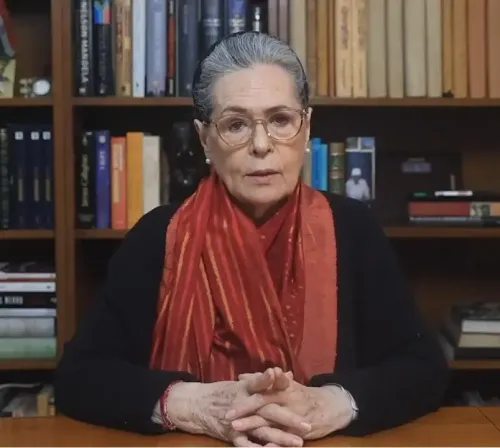
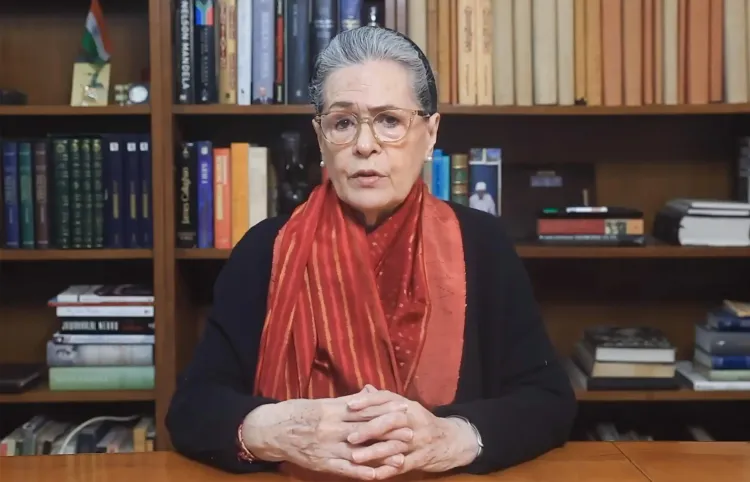
New Delhi, Dec 22 (NationPress) Sonia Gandhi, the chairperson of the Congress Parliamentary Party (CPP), sharply criticized the BJP-led government on Monday, accusing it of systematically dismantling the Mahatma Gandhi National Rural Employment Guarantee Act (MGNREGA). She warned that the act's replacement would lead to catastrophic consequences for the rural populace of India.
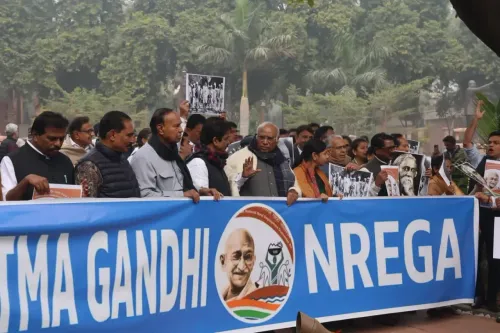
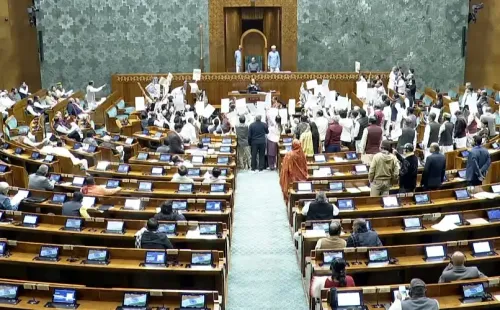
Her comments came shortly after the Parliament passed the Viksit Bharat Guarantee for Employment and Livelihood Mission (Rural) Bill, known as the VB-G RAM G Bill, amidst strong opposition protests.
In an article published in a prominent national newspaper, Sonia Gandhi pointed out that MGNREGA, established in 2005 under the UPA as a rights-based law ensuring the constitutional right to work, is being eroded without discussion, consultation, or adherence to parliamentary norms.
She indicated that the removal of Mahatma Gandhi's name is merely the tip of the iceberg, symbolizing a deeper structural annihilation of the world's largest social security program.
Sonia Gandhi noted that the attempt to “throttle” MGNREGA has been ongoing, with the ruling BJP employing a “death by a thousand cuts” strategy over the years, gradually undermining the program through stagnant budgets, delayed payments, and what she called “disenfranchising technology”, making it less effective on the ground.
Alongside other opposition parties, Congress had called for the Bill to be sent to a standing committee and later demanded its withdrawal.
Despite these protests, the legislation was approved by both Houses after opposition MPs staged a walkout. The Bill received the assent of President Droupadi Murmu and became law on Sunday.
Sonia Gandhi claimed that the new Act substitutes a statutory employment guarantee with what she termed a “bureaucratic, discretionary program”, fundamentally altering rural employment support.
She stated, “Demand-driven, uncapped employment has been replaced by fixed budget caps set by the Union government,” arguing that this change undermines the foundational promise of MGNREGA.
Sonia Gandhi also pointed out provisions that, as she claimed, would end year-round work, introduce up to 60 “no-work” days during peak agricultural seasons, and significantly raise the states' funding share from 10 percent to 40 percent.
She warned, “By transferring a significant portion of the expense onto the states, the Modi government is discouraging implementation,” claiming that already strained state finances would be “further devastated.”
Criticizing the Centre for excessive centralization, Sonia Gandhi asserted that the new framework marginalizes gram sabhas and panchayats, replacing decentralized planning with a top-down approach linked to the PM GatiShakti National Master Plan.
She remarked, “This is centralization with a vengeance.”
Rejecting the government's assertion that the revamped scheme would guarantee up to 125 days of employment, Gandhi labeled the claim “misleading and unachievable.”
Sonia Gandhi emphasized MGNREGA's crucial role in improving rural wages, reducing distress migration, and enhancing local self-governance, highlighting that during the Covid-19 pandemic, it remained one of the few mechanisms through which aid reached the poorest households.
She warned, “The demolition of the right to work must not be seen in isolation,” linking it to a broader attack on rights-based laws, including those concerning information, education, forest rights, and land acquisition.
Sonia Gandhi concluded, “MGNREGA realized the Mahatma's vision of Sarvodaya, or welfare of all, and gave effect to the constitutional right to work. Its demise is our collective moral failure, with financial and human consequences for crores of India's working people for years to come. It is essential, now more than ever, to unite and protect the rights that safeguard us all.”
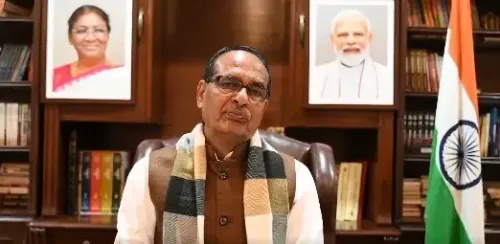
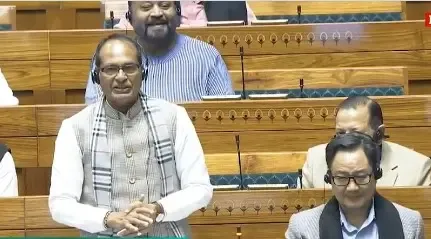
Meanwhile, following President Murmu's assent to the VB-G RAM G Bill, the legislation has officially taken effect. In response, Union Minister for Rural Development and Agriculture and Farmers' Welfare, Shivraj Singh Chouhan, issued a statement outlining the features of the ‘Viksit Bharat: G Ram G Act’ and countering claims he described as misconceptions surrounding the new law.
The Union Minister claimed there was a deliberate attempt to mislead the public regarding MGNREGA. He stated, “Rumors are being spread, whereas the truth is that the ‘Viksit Bharat: G Ram G Yojana’ is a progressive step forward from MGNREGA.”
He maintained that the new program offers a statutory guarantee of 125 days of employment, an increase from the previous 100 days.
Chouhan added, “The provision for unemployment allowance in case of non-availability of work has also been further strengthened. Additionally, if there is a delay in payment of wages, there is now a provision for additional compensation,” asserting that the updated law enhances both coverage and accountability.
Point of View
It is crucial to recognize the significance of Sonia Gandhi's statements regarding MGNREGA and the new VB-G RAM G Bill. While the government asserts that these changes will enhance employment opportunities, the concerns raised about centralization and the potential erosion of rights must be taken seriously. It is imperative to watch how this legislation impacts India's rural economy and employment landscape.
NationPress
27 Sept 2026
Frequently Asked Questions
What changes are being made to MGNREGA?
The new VB-G RAM G Bill is said to replace the statutory employment guarantee of MGNREGA with a bureaucratic program, potentially limiting access to work.
Who is Sonia Gandhi?
Sonia Gandhi is the chairperson of the Congress Parliamentary Party and a prominent political figure in India, known for her leadership within the Congress party.
What are the potential consequences of the new law?
Sonia Gandhi warns that the replacement of MGNREGA could lead to catastrophic outcomes for the rural workforce, including reduced employment opportunities.
How does the new bill affect state funding?
The VB-G RAM G Bill increases the share of funding that states must contribute, which could strain state finances and affect the implementation of rural employment programs.