Why is Congress Launching a National Protest Against the G-RAMG Act?
Synopsis
The Congress party is gearing up for a nationwide protest against the G-RAMG Act, claiming it threatens the foundation of rural employment rights established by MNREGA. This agitation is set to start on January 8 and aims to protect the livelihood of millions in rural India.
Key Takeaways
The Congress party is initiating a protest against the G-RAMG Act.
The aim is to safeguard MNREGA and the rights of rural workers.
The campaign will unfold at various levels including state, district, and panchayat.
Concerns about the centralization of employment decisions are a focal point.
The protest begins on January 8 and lasts for 45 days.
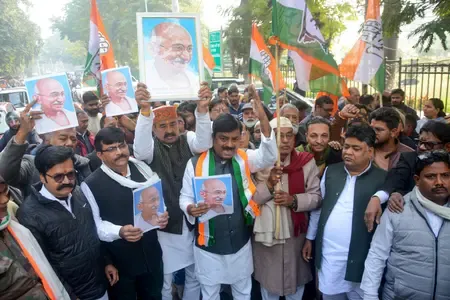
New Delhi, Jan 3 (NationPress) The Congress party declared a nationwide protest against the G-RAMG Act starting January 8, accusing it of “quietly undermining” the Mahatma Gandhi National Rural Employment Guarantee Act (MNREGA) and threatening the legal right to work for rural residents.
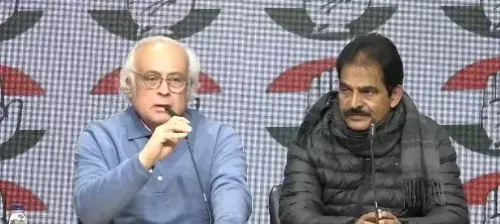
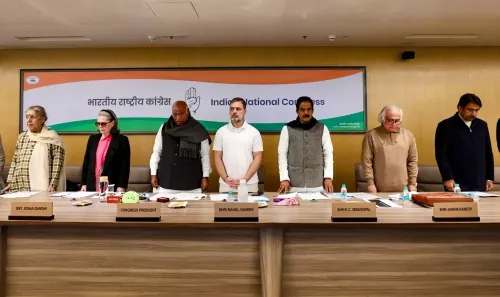
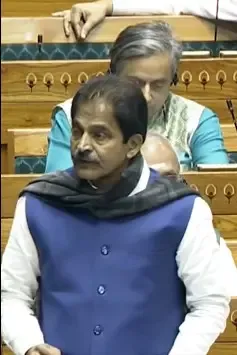
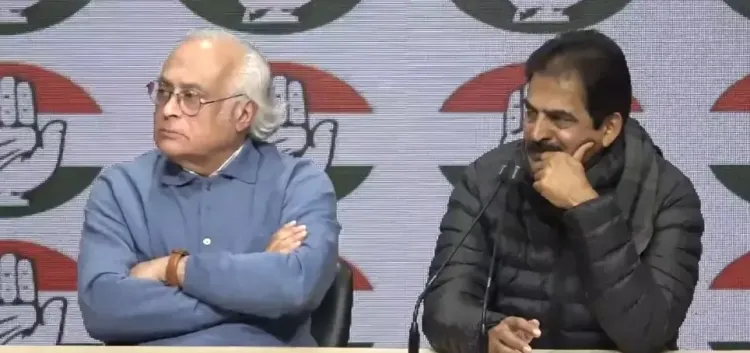
This announcement was made during a press conference held at the Congress headquarters in New Delhi, featuring party general secretary K. C. Venugopal and senior leader Jairam Ramesh.
During his address, Venugopal stated that the Congress has developed a comprehensive strategy to safeguard MNREGA with a nationwide initiative named ‘MNREGA Bachao Abhiyan’. He remarked, “The G-RAMG Act is legislation introduced by the Indian government. A serious discussion took place regarding our future actions against this law, and the Congress National Committee has resolved to initiate a vigorous campaign across the nation to preserve MNREGA.
Describing the new legislation as detrimental, Venugopal asserted, “This law aims to eliminate MNREGA. Thanks to MNREGA, instances of hunger diminished, migration decreased, and infrastructure such as roads, canals, and dams were constructed. During the COVID-19 pandemic and the economic downturn, MNREGA served as a safety net for the citizens of this nation.”
He further contended that under the G-RAMG framework, employment ceases to be a guaranteed right. “Employment will no longer be assured under G-RAMG. Work will be allocated solely through panchayats and not by the government. MNREGA was driven by demand, whereas G-RAMG incorporates budget limitations. It quietly eliminates the legal right to work,” Venugopal expressed.
Jairam Ramesh cautioned that the decentralised aspect of MNREGA is being dismantled. “The MNREGA program was decentralised. Now, all decisions will be made in Delhi, and rural areas will suffer. Numerous panchayats may receive no funding,” he added.
Ramesh claimed that the law infringes upon constitutional provisions. “Article 258 of the Constitution states that this formula should be established after consultation between the state and central governments. However, they bypassed this process and made decisions independently. This is a violation of the Constitution,” he stated.
Comparing it to the farmer protests, Ramesh noted, “The protests against the three farm laws were centred in Delhi, but the MNREGA Bachao Abhiyan will not be limited to Delhi. It will unfold at the state, district, block, and panchayat levels.”
He recalled that MNREGA was enacted in 2005 with broad political support and thorough committee review. “In this new legislation, it’s not about Viksit Bharat, but Vinash Bharat. We demand the reinstatement of MNREGA, to safeguard rural India,” Ramesh declared.
Outlining the campaign's roadmap, he mentioned that activities would commence on January 8 and continue for 45 days. “This will be a national movement. If necessary, we will pursue legal action. The outcome will mirror that of the three controversial farm laws,” he concluded.
Point of View
It is essential to approach this situation with a balanced perspective. The Congress party's actions reflect a significant concern over rural employment and legal protections. Their planned protest highlights the ongoing struggle for equitable rights for all citizens, particularly in rural areas. It’s vital to remain informed and engaged with the implications of such legislation on the grassroots level.
NationPress
23 Sept 2026
Frequently Asked Questions
What is the G-RAMG Act?
The G-RAMG Act is a new legislation introduced by the Indian government that has been criticized for undermining the Mahatma Gandhi National Rural Employment Guarantee Act (MNREGA) and the legal right to work for rural citizens.
When will the nationwide protest begin?
The nationwide protest against the G-RAMG Act is scheduled to begin on January 8.
What is the purpose of the MNREGA Bachao Abhiyan?
The MNREGA Bachao Abhiyan is a campaign launched by the Congress party aimed at protecting and preserving the rights and benefits provided by MNREGA for rural employment.
How long will the protest last?
The protest campaign is set to last for 45 days, starting from January 8.
What are the main concerns regarding the G-RAMG Act?
Concerns include the potential elimination of guaranteed employment, budget restrictions on work provision, and the centralization of decision-making away from local panchayats.