Sonia Gandhi's defence of Rahul cannot mask Congress's 30-year decline
Synopsis
Sonia Gandhi's claim that the BJP controls institutions and denies Congress a level playing field has been made before — after every major loss since 2014. But the data is unsparing: from 206 Lok Sabha seats in 2009 to just four state governments today, the Congress decline predates most of the institutional complaints, and arguably tracks closer to the party's own leadership choices.
Key Takeaways
Sonia Gandhi has alleged a BJP 'stranglehold' over institutions, including the Election Commission , as the reason for Congress's losses since 2014 .
Congress won 206 Lok Sabha seats in 2009 but has declined sharply since, with the party now governing only four states , down from 11 in 2014 .
Since Rahul Gandhi began influencing party decisions from around 2009 , Congress has reportedly lost 71 of 83 Assembly elections.
Rahul resigned as Congress president after the 2019 Lok Sabha loss, accepting moral accountability, but remains the party's de facto decision-maker.
Critics argue Congress has lacked a positive governance narrative, with political strategy centred largely on attacking Prime Minister Narendra Modi rather than presenting an alternative model.
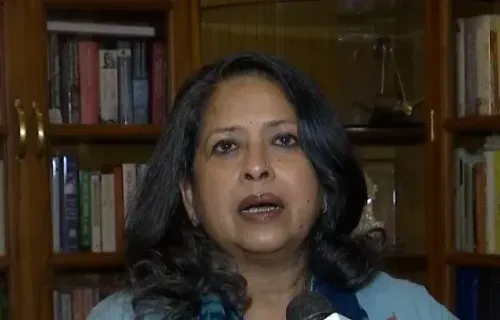
Sonia Gandhi's recent assertion that the Congress and other Opposition parties have faced an uneven playing field since 2014 has reignited debate over who bears responsibility for the grand old party's prolonged electoral decline. Critics argue the claim reads more as a mother shielding her son than as a credible political diagnosis — and the numbers tell a starkly different story.
A Record of Retreating Numbers
When Rahul Gandhi entered active politics in 2004, contesting and winning from Amethi in Uttar Pradesh, Congress held 145 of 543 Lok Sabha seats with a vote share of 26.53% (10.34 crore votes). By 2009 — the party's last genuine high-water mark — that tally climbed to 206 seats and a vote share of 28.55% (11.91 crore votes), with Manmohan Singh continuing as Prime Minister under the UPA-II dispensation.
The slide that followed has been steep and largely unbroken. Congress lost power at the Centre in 2014, and when the defeat was repeated in 2019, Rahul resigned as party president, citing accountability. He acknowledged in a four-page open letter that the Congress Working Committee (CWC) needed to find a successor. Yet his grip on the party's decision-making has remained firm, with no major decision reportedly taken without his involvement.
State-Level Rout
The erosion at the Centre mirrors a dramatic retreat in the states. From commanding governments in 11 states in 2014, the party is reportedly down to four today. According to available data, since Rahul began exercising considerable influence over party direction — roughly from 2009 onwards — Congress has reportedly lost 71 of the 83 Assembly elections it has contested. These figures, if accurate, represent a structural collapse, not a temporary setback.
The Legacy He Inherits — and Falls Short Of
The weight of political lineage makes the comparison sharper. Jawaharlal Nehru's Congress was the uncontested national force that shaped independent India's early decades. Indira Gandhi won three Lok Sabha elections, two by sweeping majorities, and presided over Congress governments in more than two-thirds of Indian states. Even Sonia Gandhi, who took charge as party president in 1998 after the assassination of Rajiv Gandhi in Tamil Nadu on 21 May 1991, achieved a near-impossible comeback — steering Congress back to power at the Centre in 2004 after eight years in opposition.
By contrast, Rahul Gandhi was appointed Congress Vice-President on 19 January 2013 and took over as party president in December 2017. Despite two decades in active politics, a credible electoral turnaround has not materialised.
What the Opposition Blames — and What It Avoids
Sonia Gandhi has alleged that the Bharatiya Janata Party (BJP) holds a 'stranglehold' over institutions, particularly the Election Commission of India (ECI), and that money power, media control, and the exploitation of religion have distorted the democratic contest. These are not new allegations — versions of them have surfaced after every major Congress defeat since 2014.
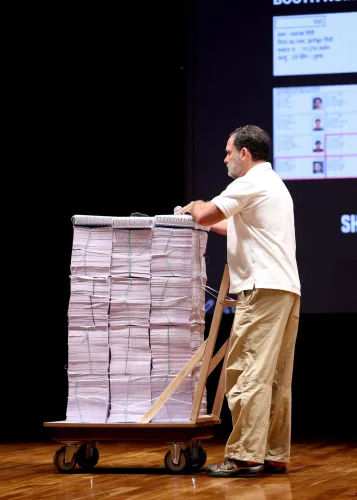
The party has also leaned heavily on the 'SIR' (Systematic Institutional Replacement) and 'vote chori' (vote theft) narratives, pressing them in Bihar and West Bengal without the electoral traction Rahul had hoped for. Critics argue that a party cannot build a winning coalition primarily on the premise that the system is rigged against it — at some point, voters expect an alternative vision of governance.
What Needs to Change
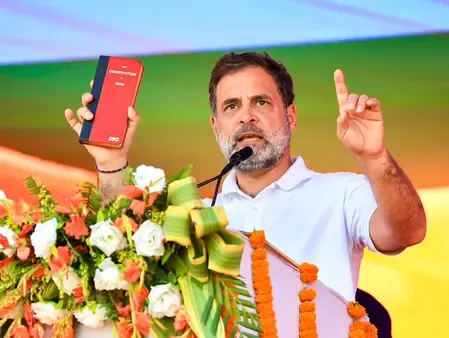
The absence of a coherent, positive political programme is a consistent refrain among observers of the Congress revival debate. Rahul Gandhi's public interventions have often centred on personal attacks on Prime Minister Narendra Modi, questioning Indian democratic institutions on foreign soil, and meetings with figures critics describe as holding anti-India positions — all of which have drawn blowback rather than broad political support.
For the party to reverse course, analysts suggest it needs more than a change in messaging — it may require a structural rethink of leadership, candidate selection, and coalition strategy. Sonia Gandhi, still a towering figure within the organisation, is arguably better placed than anyone to initiate that reckoning. Whether she will is the question the party's rank and file are watching closely.
Point of View
The 2009 peak notwithstanding. The harder question — why the party has failed to produce a credible alternative programme even after losing two back-to-back national mandates — remains unanswered. Rahul Gandhi's political identity has been defined almost entirely by opposition to Modi, which is a tactic, not a strategy. A party that cannot articulate what it would do differently in government will continue to find that voters are unmoved by its grievances, however sincerely held.
NationPress
8 Nov 2026
Frequently Asked Questions
What has Sonia Gandhi said about Congress's electoral losses?
Sonia Gandhi has claimed that Congress and other Opposition parties have not had a level playing field since 2014, alleging that the BJP holds a 'stranglehold' over institutions including the Election Commission and that money power, media control, and religious polarisation have distorted electoral outcomes. Critics argue these explanations do not account for the party's decline well before 2014.
How many states does Congress currently govern?
Congress is reportedly down to governing four states, a sharp fall from the 11 states where it held power in 2014. This state-level retreat mirrors its losses at the Centre in the 2014 and 2019 Lok Sabha elections.
What is Rahul Gandhi's electoral record since entering politics?
Rahul Gandhi entered active politics in 2004, winning from Amethi in Uttar Pradesh. Since he began exercising considerable influence over Congress from around 2009, the party has reportedly lost 71 of 83 Assembly elections it contested. He resigned as party president after the 2019 Lok Sabha defeat but remains the party's principal decision-maker.
How does Rahul Gandhi's performance compare to his political ancestors?
Jawaharlal Nehru's Congress was the dominant national force in independent India's early decades. Indira Gandhi won three Lok Sabha elections, two by large majorities, and governed more than two-thirds of Indian states. Even Sonia Gandhi steered Congress back to power in 2004 after eight years in opposition. By contrast, Rahul Gandhi has not led the party to a Lok Sabha majority in two decades of active politics.
What do critics say Congress must do to reverse its decline?
Critics and political analysts argue that Congress needs to move beyond institutional-blame narratives and develop a coherent, positive governance programme. They contend that a strategy built primarily around attacking Prime Minister Narendra Modi, without presenting an alternative model of governance, has failed to generate broad electoral support.