Rahul Gandhi Declares Modi 'India's Past' in Sharp Political Attack
Synopsis
Congress leader and Leader of the Opposition Rahul Gandhi declared Prime Minister Narendra Modi 'India's past' on 25 July 2026, asserting that 'the past can never fight the future' — a sharp political salvo that signals an intensifying Congress offensive ahead of upcoming state and national electoral contests.
Key Takeaways
Rahul Gandhi posted on X on 25 July 2026 declaring Narendra Modi to be 'India's past.' The statement frames the Congress as the forward-looking alternative to the BJP-led government.
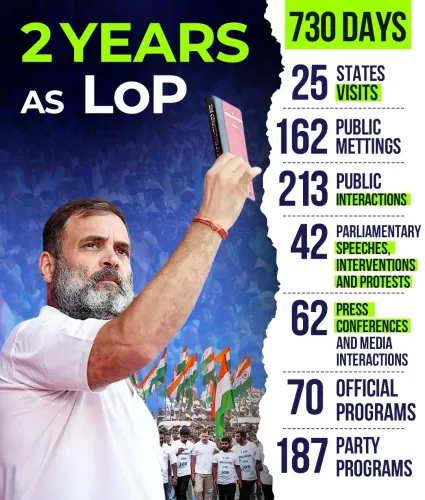
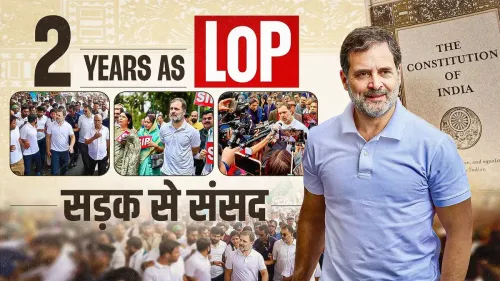
Gandhi has served as Leader of the Opposition since the 2024 Lok Sabha elections , giving his political statements a formal parliamentary weight.
The BJP-led NDA has won three consecutive general elections — in 2014 , 2019 , and 2024 .
The 'past versus future' framing is part of a long-running rhetorical contest between Congress and BJP over which party represents India's direction.
Upcoming state assembly elections in 2026 are likely to determine whether this marks the start of a sustained Congress campaign theme.
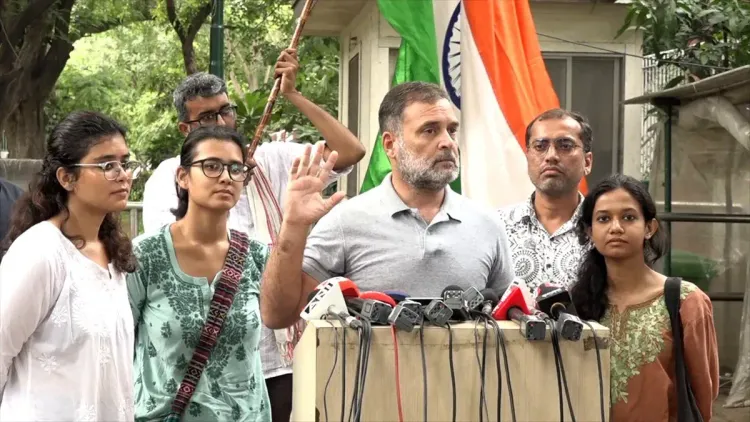
Congress leader and Leader of the Opposition Rahul Gandhi launched a pointed political salvo on Saturday, 25 July 2026, declaring Prime Minister Narendra Modi to be 'India's past' and asserting that 'the past can never fight the future' — a statement that signals an intensifying opposition offensive ahead of upcoming electoral contests.
Context
The post, shared on X (formerly Twitter), is brief but deliberately crafted. In full, it reads: 'Narendra Modi is India's past. The past can never fight the future.' The framing positions the Indian National Congress and its leadership as the forward-looking alternative to the Bharatiya Janata Party-led government, a rhetorical strategy the party has deployed with growing frequency since the 2024 Lok Sabha elections.
Gandhi, who represents Rae Bareli in the Lok Sabha, was elevated to the role of Leader of the Opposition after Congress improved its seat tally in the 2024 general elections, even as the BJP-led National Democratic Alliance secured a third consecutive term for Modi. That result gave Gandhi a formal parliamentary platform that has amplified the weight of such statements.
Policy Backdrop
The rhetorical contest between Congress and BJP over which party represents continuity versus change has been a defining feature of Indian politics since 2014, when Modi first came to power. The BJP has consistently campaigned on a narrative of decisive governance and national development; Congress has countered by framing the ruling establishment as stagnant and exclusionary.
Gandhi's use of the 'past versus future' binary is a compressed version of a broader opposition argument — that after more than a decade of BJP rule, voters are ready for political renewal. Such messaging typically intensifies ahead of state assembly elections or during periods of parliamentary mobilisation, and 2026 carries several such triggers on the electoral calendar.
Stakeholders and Impact
The statement is aimed squarely at Indian voters, particularly younger and first-time electors who have only known a Modi-led central government. By invoking 'the future', Gandhi is implicitly making a generational appeal — a line of attack Congress strategists have tested in multiple state campaigns.
For the BJP, the challenge is familiar: the party will likely counter by pointing to its three successive Lok Sabha victories in 2014, 2019, and 2024 as evidence that voters have repeatedly endorsed Modi's leadership as the country's present and future, not its past. The exchange underscores how both parties are already in campaign mode well ahead of the next national election cycle.
What's Next
Whether Saturday's post marks the opening line of a sustained opposition campaign will become clearer as state assembly elections and parliamentary sessions unfold through the remainder of 2026. Gandhi's track record suggests the 'past versus future' formulation will recur in rallies, press briefings, and social-media posts as Congress seeks to consolidate its position as the credible alternative to the ruling dispensation.
The political temperature in New Delhi is likely to rise further as both parties position themselves for the battles ahead — making statements like this one early indicators of the larger narrative war to come.
Point of View
Stripping away policy detail in favour of a single generational verdict. It fits a pattern in which the Congress, energised by its improved 2024 performance and Gandhi's formal role as Leader of the Opposition, is trying to shift the dominant political narrative from governance delivery to political fatigue. The BJP's three-election winning streak is simultaneously its greatest asset and the very thing Congress is betting voters will eventually tire of. How the ruling party responds — and whether Congress can sustain this messaging with substantive policy alternatives — will define the opposition's credibility heading into the next electoral cycle.
NationPress
23 Oct 2026
Frequently Asked Questions
What did Rahul Gandhi say about Narendra Modi on 25 July 2026?
Rahul Gandhi posted on X that 'Narendra Modi is India's past' and added that 'the past can never fight the future,' positioning Congress as the forward-looking alternative to the BJP-led government.
Why is Rahul Gandhi called Leader of the Opposition?
Rahul Gandhi was appointed Leader of the Opposition in the Lok Sabha after the 2024 general elections, in which the Indian National Congress improved its seat tally, qualifying the party for the formal opposition leader role.
How many times has Narendra Modi won a general election?
Narendra Modi has led the BJP-led NDA to victory in three consecutive Lok Sabha general elections — in 2014, 2019, and 2024 — serving as Prime Minister since May 2014.
What does 'India's past' mean in Rahul Gandhi's post?
By calling Modi 'India's past', Gandhi is arguing that the Prime Minister and his party represent a chapter that voters should move beyond, framing Congress as the party of India's future.
Is Congress planning a campaign against Modi in 2026?
While no formal campaign has been announced, Gandhi's statement on 25 July 2026 is consistent with a pattern of heightened opposition messaging that typically precedes state assembly elections or major parliamentary sessions.