Rahul Gandhi Marks 2 Years as Leader of Opposition
Synopsis
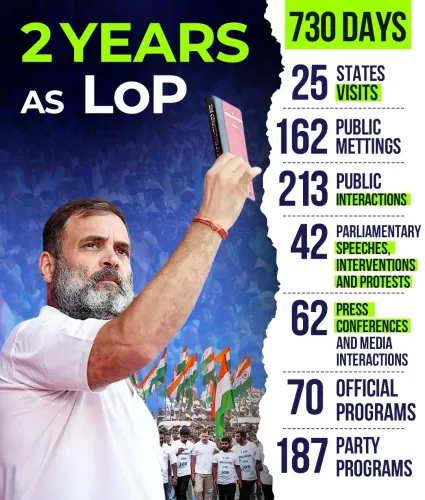
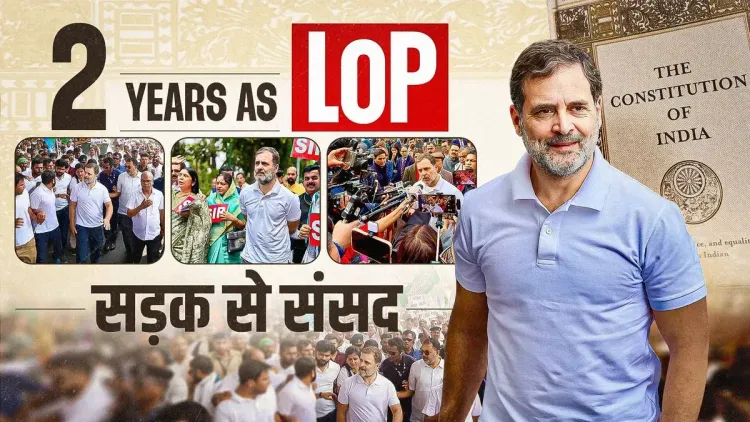
Rahul Gandhi marked two years as Leader of the Opposition in the Lok Sabha on 26 June 2026, citing his focus on NEET student grievances, electoral integrity, and constitutional defence as the defining themes of his tenure.
Key Takeaways
26 June 2026 marks exactly two years since Rahul Gandhi assumed the post of Leader of the Opposition in the Lok Sabha .
Gandhi identified NEET student grievances, alleged electoral malpractice, and constitutional defence as the three defining themes of his two-year tenure.
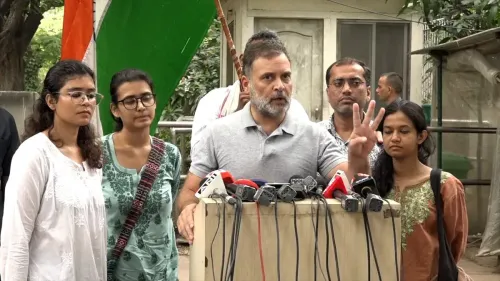
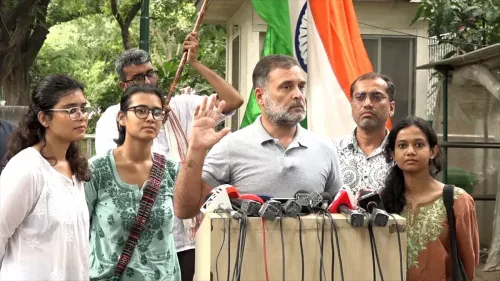
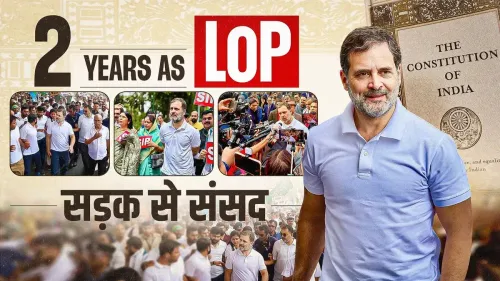
The post was accompanied by a video, with Gandhi indicating it was recorded 'from the street', emphasising a ground-level outreach approach.
The Indian National Congress claimed the Leader of the Opposition post after the 2024 Lok Sabha elections , the first time the role was formally occupied in a decade.
Gandhi pledged continued engagement on all three issues, framing his role as a permanent commitment to citizens rather than a time-bound political position.
Congress leader Rahul Gandhi, serving as Leader of the Opposition in the Lok Sabha, marked two years in the role on Friday, 26 June 2026, reflecting on his tenure with a post on X that reaffirmed his commitment to amplifying citizens' voices in Parliament.
Context
In the post, written in Hindi, Gandhi stated: 'लोकसभा में नेता प्रतिपक्ष के रूप में आज दो साल पूरे हुए' ('Today marks two years as Leader of the Opposition in the Lok Sabha'). He described every day of the past two years as devoted to a single purpose — carrying the voice of every Indian to those in power. The post accompanied a video, which Gandhi indicated was recorded 'from the street', suggesting a ground-level outreach format.
Gandhi specifically cited three areas of focus during his tenure: the fight by NEET students over examination irregularities, efforts to expose alleged electoral malpractice, and the defence of constitutional values. 'I stood with you on every front, I do today, and I always will,' he wrote.
Policy Backdrop
Gandhi formally assumed the post of Leader of the Opposition on 26 June 2024, after the Indian National Congress crossed the threshold required to claim the statutory role following the 2024 Lok Sabha elections. The position carries formal recognition, dedicated speaking time, and a seat on key parliamentary committees.
The three themes Gandhi highlighted — NEET examination integrity, electoral-roll transparency, and constitutional safeguards — have been recurring pillars of the opposition's parliamentary strategy since mid-2024. The Congress and allied parties have raised these issues through parliamentary questions, public campaigns, and legal interventions across successive sessions.
The NEET controversy, centring on alleged irregularities in the undergraduate medical entrance examination, drew sustained parliamentary attention and student protests. Opposition parties, including Congress, used it to question the integrity of national examination systems.
Stakeholders and Impact
The post directly addresses two key constituencies: students who participated in the NEET agitation, and voters who raised concerns about electoral rolls. By naming these groups explicitly, Gandhi frames his two-year record as responsive to citizen-led demands rather than party-driven priorities.
As Leader of the Opposition, Gandhi's role carries institutional weight beyond party politics — the position entitles him to be consulted on appointments to constitutional bodies and grants him a formal platform during every sitting of the Lok Sabha. His post signals that the opposition intends to sustain pressure on these issues heading into future parliamentary sessions.
What's Next
With the Monsoon Session of Parliament approaching, opposition interventions on NEET reforms and responses from the Election Commission of India on voter-list complaints are expected to intensify. Gandhi's anniversary post, framed as a pledge of continuity rather than a policy announcement, sets the tone for the opposition's legislative agenda in the coming months. Whether the Congress can convert this rhetorical momentum into concrete parliamentary outcomes will be closely watched.
Point of View
Citizen-first opposition leader ahead of the Monsoon Session. By naming NEET, electoral malpractice, and constitutional defence, he is signalling continuity on the three issues that most energised the Congress base since 2024. The video format described as 'from the street' reinforces a deliberate contrast with the formal corridors of power. Whether this narrative translates into legislative wins or remains symbolic will define the opposition's credibility in the sessions ahead.
NationPress
25 Sept 2026
Frequently Asked Questions
When did Rahul Gandhi become Leader of the Opposition in Lok Sabha?
Rahul Gandhi formally became Leader of the Opposition in the Lok Sabha on 26 June 2024, after the Indian National Congress secured enough seats in the 2024 general elections to claim the statutory post.
What is the role of the Leader of the Opposition in Lok Sabha?
The Leader of the Opposition in Lok Sabha holds a statutory position with formal speaking rights, consultation rights on key constitutional appointments, and a seat on important parliamentary committees.
What issues has Rahul Gandhi raised as Leader of the Opposition?
Gandhi has focused on three main issues: irregularities in the NEET medical entrance examination, concerns about electoral-roll transparency, and the defence of constitutional values during legislative proceedings.
What is the NEET controversy Rahul Gandhi has raised in Parliament?
The NEET controversy involves alleged irregularities in the National Eligibility cum Entrance Test for undergraduate medical admissions. Opposition parties including Congress have raised it in Parliament and through public campaigns, demanding reforms to the examination system.
What did Rahul Gandhi post on his two-year anniversary as Leader of the Opposition?
Gandhi posted in Hindi on X, saying every day of the past two years was devoted to carrying every Indian's voice to those in power, and pledged to continue standing with citizens on NEET, electoral integrity, and constitutional protection.