South Korea CSAT 2026: 5.5 lakh students sit exam under AI cheating crackdown
Synopsis
South Korea effectively paused — grounding flights, delaying stock markets, and flooding 1,312 exam centres with over 83,000 personnel — to run its most AI-proofed CSAT yet. The trigger: a tax accountant exam topper who confessed to cheating with AI, setting off a national reckoning over whether technology has outpaced academic integrity.
Key Takeaways
551,864 candidates sat the CSAT on 19 November across 1,312 centres in South Korea.
75,000 proctors and 8,400 additional staff were deployed to prevent AI and smart-device cheating.
Glasses were physically inspected for hidden cameras; clothing buttons were covered with stickers.
A nationwide disaster alert was sent at 8:30 a.m. to surface any undeclared mobile phones.
Cheaters face a 10-year ban from re-sitting the exam; informants can receive up to 100 million won (US$75,000) .
All aircraft takeoffs and landings were suspended from 1:05 p.m. to 1:40 p.m. during the English listening test.
South Korea's high-stakes college entrance exam, the College Scholastic Ability Test (CSAT), was held across the country on Thursday, 19 November, with 551,864 candidates sitting the test amid unprecedented anti-cheating measures targeting artificial intelligence (AI) and smart devices. The exam ran from 8:40 a.m. to 5:45 p.m. across 1,312 test centres nationwide.
Scale of the Exam and Security Deployment
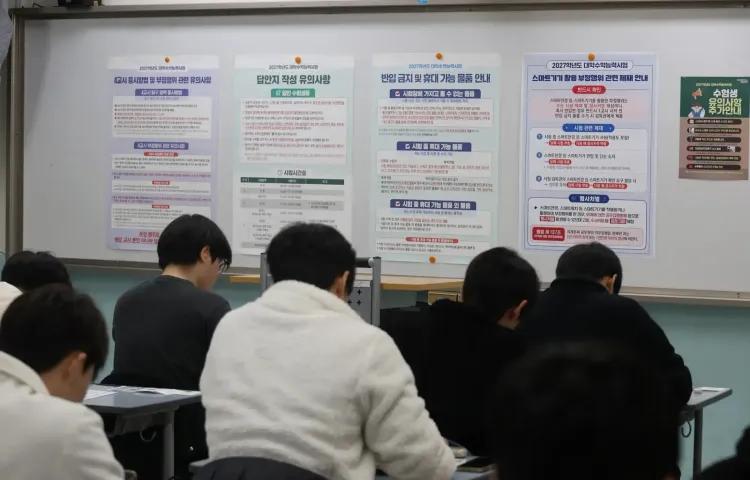
Authorities deployed 75,000 proctors and roughly 8,400 additional personnel to maintain integrity across all test centres. Every pair of glasses worn by candidates was physically inspected for hidden cameras, and clothing buttons were covered with stickers to block potential miniature camera transmissions. All electronic devices were banned from exam rooms, with test-takers permitted to carry only pencils.
Authorities also sent a disaster alert message — designed to trigger a loud alarm on nearly all mobile phones nationwide, even when devices are muted — at 8:30 a.m. to surface any undeclared handsets. A second alert was planned for an unspecified time during the exam.
Why AI Cheating Triggered the Crackdown
The intensified scrutiny follows a high-profile scandal in which the top scorer on this year's certified tax accountant exam confessed to cheating using AI tools and digital devices, sparking widespread public outrage. The government responded by overhauling CSAT anti-cheating protocols ahead of this sitting. Those caught cheating now face a 10-year ban from re-sitting the exam, and informants can claim a reward of up to 100 million won (approximately US$75,000).
Notably, this marks the first CSAT to implement AI-specific surveillance measures, reflecting a broader concern in South Korean education policy about generative AI undermining high-stakes assessments.
Student and Parent Reactions
Yoon Seong-hwan, an 18-year-old test-taker outside a high school in southern Seoul, said he switched from glasses to contact lenses to avoid the scrutiny. 'I usually wear glasses, but I wore contact lenses because I felt a bit uneasy about being checked (for misconduct),' he said. 'I hope all students take the CSAT well without any misconduct.'
Lee Jeong-ok, whose son sat the exam at a central Seoul venue, said she removed all buttons from her son's clothes at his own request to spare him the inspection delay. Parents gathered outside test centres, many voicing concern that the heightened security checks could distract students during an already pressurised sitting.
How the Country Pauses for the CSAT
South Korea's institutional response to exam day illustrates the outsized importance of the CSAT in national life. All aircraft takeoffs and landings were prohibited from 1:05 p.m. to 1:40 p.m. to minimise noise during the English listening section; aircraft in flight were required to maintain an altitude of at least 3 kilometres under air traffic control instructions. In Seoul, subway services added 27 extra runs to ease candidate commutes, and the local stock market — typically open from 9 a.m. to 3:30 p.m. — shifted its hours by one hour to reduce morning rush-hour congestion.
The CSAT is widely regarded in South Korea as one of the most consequential events in a young person's life, with university placement heavily shaping career trajectories. The scale of government accommodation — from flight bans to market delays — underscores a societal consensus that the exam demands near-total national attention.
As results are processed in the coming weeks, scrutiny will now turn to whether the new AI-focused anti-cheating framework succeeded in preserving the integrity of the sitting.
Point of View
Taken under controlled conditions, can fairly rank half a million students — and that premise is now under attack from AI tools sophisticated enough to fool human proctors. The tax accountant exam scandal was the warning shot; the question is whether physical checks on glasses and buttons are a durable answer, or a stopgap before the next exploit. If AI cheating tools keep pace with detection, the deeper crisis is not procedural — it is whether high-stakes, one-day exams can remain the dominant gateway to opportunity in a knowledge economy.
NationPress
19 Nov 2026
Frequently Asked Questions
What is the CSAT and why is it important in South Korea?
The College Scholastic Ability Test (CSAT) is South Korea's national college entrance examination, taken by hundreds of thousands of students annually. University placement in South Korea heavily influences career prospects, making the CSAT one of the most consequential events in a student's life — prompting the government to pause flights and adjust stock market hours on exam day.
Why were AI cheating concerns especially high at the 2026 CSAT?
The heightened concern follows a scandal in which the top scorer on South Korea's certified tax accountant exam confessed to cheating with AI tools and digital devices. The public backlash prompted the government to overhaul CSAT security protocols for the November 2026 sitting.
What anti-cheating measures were introduced for the 2026 CSAT?
Every pair of glasses was inspected for hidden cameras, and clothing buttons were covered with stickers to block miniature cameras. A nationwide mobile-phone alert was broadcast before the exam to detect undeclared devices, and a second alert was planned mid-exam. All electronic devices were banned from exam rooms.
What penalties do cheaters face under the new CSAT rules?
Anyone caught cheating at the CSAT can be banned from re-sitting the exam for 10 years. The government also offers a reward of up to 100 million won (approximately US$75,000) to those who report cheating incidents.
How did the South Korean government accommodate students on CSAT day?
Aircraft takeoffs and landings were prohibited nationwide from 1:05 p.m. to 1:40 p.m. during the English listening test, while planes in flight had to maintain an altitude of at least 3 kilometres. Seoul's subway added 27 extra runs, and the local stock market delayed opening and closing by one hour to ease morning traffic.