Exam Amendment Bill 2026: India's toughest law yet against paper leaks
Synopsis
Sparked by the NEET 2026 paper leak, India's Lok Sabha has passed its toughest-ever anti-exam-fraud law — tripling fines for individuals to ₹50 lakh, hitting organised syndicates with ₹10 crore penalties, and mandating trials be wrapped up in three months. It is the most ambitious legislative overhaul of the country's examination integrity framework since independence.
Key Takeaways
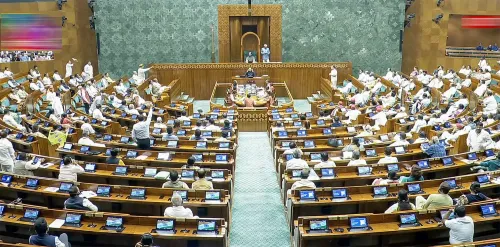
The Public Examinations (Prevention of Unfair Means) Amendment Bill, 2026 was passed in Lok Sabha on 29 July 2026 .
Individual penalties raised to ₹50 lakh and 5–10 years imprisonment, up from ₹10 lakh and 3–5 years under the 2024 Act.
Organised crime syndicates face fines of up to ₹10 crore , up from a minimum of ₹1 crore .
Investigations must be completed within two months ; trials must conclude within three months of chargesheet filing.
Institutions including UPSC , NTA , SSC , Railway Recruitment Boards , and IBPS are explicitly covered.
The Bill follows the NEET 2026 paper leak and delivers on a commitment made by Prime Minister Narendra Modi .
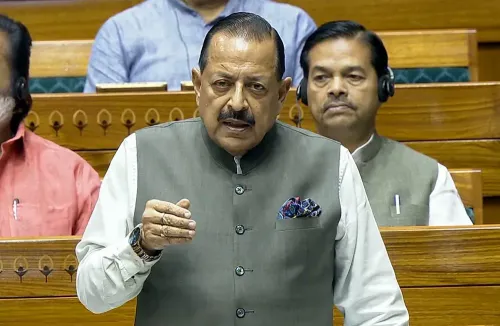
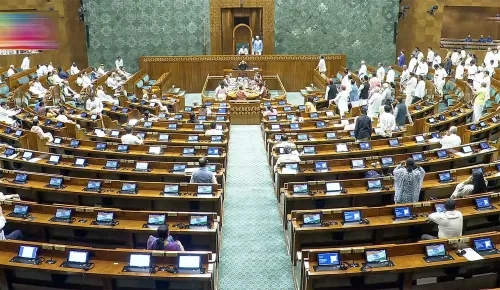
The Public Examinations (Prevention of Unfair Means) Amendment Bill, 2026, passed in Lok Sabha on Wednesday, 29 July, marks the Union government's most sweeping legislative response to examination fraud in India's history. The Bill, triggered in large part by the NEET 2026 paper leak and the public outrage that followed, substantially raises penalties, mandates time-bound investigations, and establishes fast-track courts — all aimed at restoring trust in the country's high-stakes competitive examination system.
Steeper Penalties for Individuals and Institutions
The 2026 Amendment significantly escalates punishment across the board. Individuals caught using unfair means now face imprisonment of five to ten years, up from the three to five years prescribed under the original Public Examinations (Prevention of Unfair Means) Act, 2024. Fines for such individuals have been raised from ₹10 lakh to ₹50 lakh.
Service providers — including exam-conducting agencies and technology firms — found complicit in malpractice face fines of up to ₹5 crore and a debarment from conducting examinations for eight years, double the period allowed under the 2024 Act. Persons-in-charge of such service providers now face a minimum imprisonment of five years and a fine of ₹5 crore, compared to the earlier range of three to ten years and a ₹1 crore fine.
Organised crime syndicates — frequently identified as the architects of large-scale paper leaks — face fines raised to ₹10 crore, up from a minimum of ₹1 crore under the 2024 Act, alongside extended minimum prison terms. The escalation signals that the Centre intends to treat examination fraud as a serious economic and social crime, not merely administrative misconduct.
Faster Investigations and Dedicated Task Forces
Beyond stiffer penalties, the Bill introduces structural enforcement mechanisms. Investigations under the Act must now be led by an officer of at least the rank of Deputy Superintendent of Police (DSP) or Assistant Commissioner of Police (ACP). The Union government retains the power to refer cases to any central investigating agency and can constitute a Special Task Force (STF) specifically to probe paper leaks and organised examination-related crimes.
Crucially, investigations must be completed within two months — a provision that directly addresses concerns about cases dragging on while students remain in limbo over their results and futures.
Fast-Track Courts and Day-to-Day Trials
Delivering on a commitment made by Prime Minister Narendra Modi, the Bill mandates fast-track judicial proceedings. Trials must be conducted on a day-to-day basis until all witnesses are examined and must conclude within three months of the chargesheet being filed. Special Fast Track Courts, designated by states in consultation with their respective High Courts and supported by Special Public Prosecutors, will also try connected offences under the Bharatiya Nyaya Sanhita, 2023.
This framework is designed to ensure that justice is both swift and visible — a direct response to criticism that delayed verdicts in past exam fraud cases weakened deterrence.
Institutional Accountability Under the Lens
The Amendment explicitly brings major public examination authorities within its ambit, including the Union Public Service Commission (UPSC), Staff Selection Commission (SSC), Railway Recruitment Boards, Institute of Banking Personnel Selection (IBPS), and the National Testing Agency (NTA). Senior officials of these bodies can now be held personally accountable for malpractice — whether arising from negligence or collusion — closing a gap that critics argued the 2024 Act left open.
Why This Bill Matters
Millions of young Indians depend on competitive public examinations for education and employment. Repeated leaks and malpractice scandals have not only derailed individual careers but also eroded systemic trust. The 2026 Amendment attempts to address both the supply side of fraud — by targeting organised syndicates and complicit institutions — and the demand for accountability, by making outcomes visible through time-bound trials. India's ambition to position itself as a global education hub also rests, in part, on the credibility of its examination infrastructure. The Bill now moves toward further legislative stages before becoming law.
Point of View
Yet leaks continued. The real test is whether the STF mechanism and two-month investigation mandate will be resourced and enforced, or become paper provisions like many before them. Bringing UPSC and NTA under explicit institutional accountability is overdue, but holding senior officials personally liable will require prosecutorial will that India's exam-fraud cases have historically lacked. The fast-track court model is promising — if states actually designate the courts and appoint special prosecutors rather than letting the mandate sit unfulfilled.
NationPress
13 Sept 2026
Frequently Asked Questions
What is the Public Examinations (Prevention of Unfair Means) Amendment Bill, 2026?
It is a legislative amendment passed in Lok Sabha on 29 July 2026 that strengthens the original 2024 Act by raising penalties for exam fraud, mandating time-bound investigations and fast-track trials, and expanding institutional accountability. The Bill was introduced following the NEET 2026 paper leak and widespread public outrage over examination malpractice.
What are the new penalties under the 2026 Amendment?
Individuals using unfair means now face 5–10 years in prison and fines of ₹50 lakh, up from 3–5 years and ₹10 lakh. Service providers face fines of up to ₹5 crore and an 8-year debarment, while organised crime syndicates face fines of up to ₹10 crore.
How does the Bill ensure faster justice in exam fraud cases?
The Bill mandates that investigations be completed within two months and that trials be conducted on a day-to-day basis and concluded within three months of chargesheet filing. Special Fast Track Courts, designated by states in consultation with High Courts, will handle these cases with the support of Special Public Prosecutors.
Which exam bodies are covered under the amended law?
The Bill explicitly covers the UPSC, SSC, Railway Recruitment Boards, IBPS, and the NTA, among other public examination authorities. Senior officials of these institutions can now be held personally accountable for malpractice, whether through negligence or collusion.
Why was the 2026 Amendment introduced?
The Amendment was triggered primarily by the NEET 2026 paper leak and a broader pattern of examination fraud that eroded public confidence in India's competitive exam system. Prime Minister Narendra Modi had earlier pledged stronger deterrents and faster justice mechanisms to address the crisis.