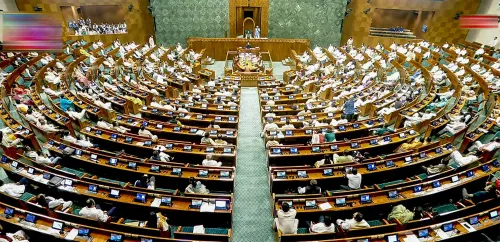
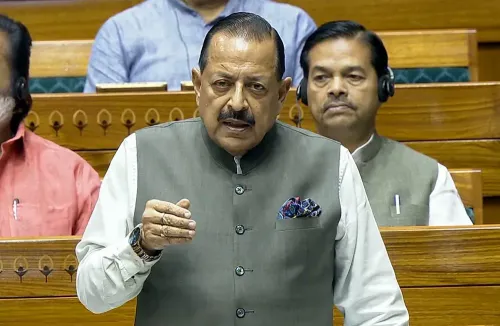
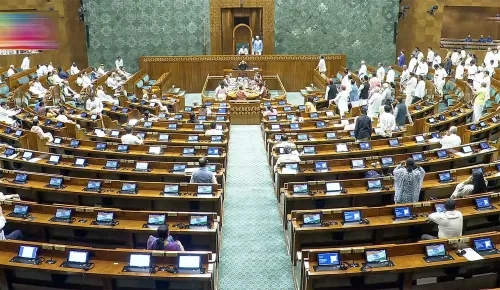
Lok Sabha passes exam paper leak Bill, penalties up to 10 years
Synopsis
India's Lok Sabha has passed a law that could send paper leak offenders to prison for up to 10 years and fine them ₹50 lakh — a direct legislative fallout of the NEET-UG scandal. The real test is whether the new fast-track courts are set up fast enough to make the deterrent credible.
Key Takeaways
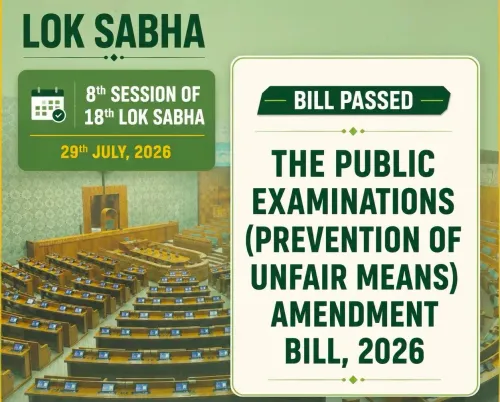
The Lok Sabha passed the Public Examinations (Prevention of Unfair Means) Amendment Bill, 2026 on 29 July 2026 by voice vote.
Minimum sentence for exam fraud raised from 3 years to 5 years , extendable to 10 years ; maximum fine hiked from ₹10 lakh to ₹50 lakh .
Bill introduces special fast-track courts and special public prosecutors for time-bound disposal of exam fraud cases.
Covers examinations by UPSC, SSC, RRBs, NTA, IBPS and other notified central agencies.
Amendment follows the NEET-UG paper leak controversy that led to the cancellation and re-conduct of the examination.
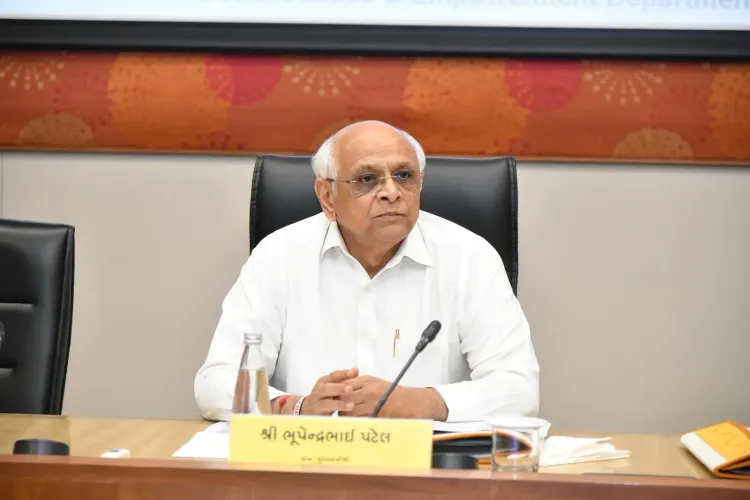
Gujarat CM Bhupendra Patel and Deputy CM Harsh Sanghavi welcomed the legislation on social media platform X.
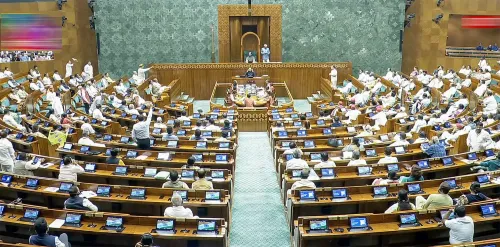
The Lok Sabha on Wednesday, 29 July 2026 passed the Public Examinations (Prevention of Unfair Means) Amendment Bill, 2026, significantly tightening penalties for paper leaks, organised cheating, and related offences in a bid to restore credibility to India's public examination system. The Bill was cleared by a voice vote following a debate in the House.
What the Amendment Changes
The legislation amends the Public Examinations (Prevention of Unfair Means) Act, 2024, which governs examinations conducted by the Union Public Service Commission (UPSC), Staff Selection Commission (SSC), Railway Recruitment Boards (RRBs), National Testing Agency (NTA), Institute of Banking Personnel Selection (IBPS), central government ministries, and other notified agencies.
Under the amended provisions, the minimum sentence for individuals found using unfair means rises from three years to five years, extendable up to 10 years. The maximum fine has been increased from ₹10 lakh to ₹50 lakh. Penalties for organised exam fraud and complicit institutions have also been substantially enhanced, with higher prison terms and stiffer financial penalties.
Faster Justice Through Special Courts
Beyond enhanced punishment, the Bill introduces special fast-track courts, special public prosecutors, and mandates time-bound disposal of appeals — structural reforms designed to ensure that prosecution moves swiftly rather than languishing for years, as has been the pattern in past examination fraud cases.
The NEET-UG Backdrop
The amendment comes directly in the wake of a series of high-profile paper leak controversies, most notably the cancellation and re-conduct of the NEET-UG examination. The government has maintained that stronger legal provisions are necessary to deter organised malpractice networks — often described as 'paper leak mafias' — that have repeatedly compromised competitive examinations affecting millions of aspirants. This is the first major legislative response to those controversies.
Gujarat Leaders Welcome the Bill
Gujarat Chief Minister Bhupendra Patel, reacting on social media platform X, called it 'a significant step towards safeguarding the aspirations of millions of students across India.' He added that the legislation 'sends a clear message that those who seek to undermine the future of our youth through paper leaks, organised cheating or other unfair practices will face the strictest consequences.' Patel described the Bill as a move that 'would further reinforce the confidence of every sincere student and contribute to building a transparent, fair and accountable education ecosystem for a Viksit Bharat.'
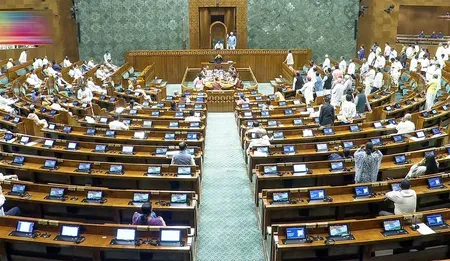
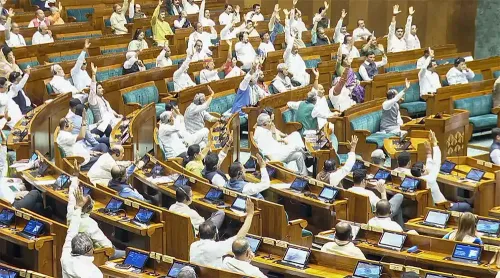
Deputy Chief Minister Harsh Sanghavi described the amendment as 'a powerful affirmation that merit, honesty, and hard work will always be protected,' and said it represented 'a strong commitment to fairness, transparency, and justice for every deserving student.' Sanghavi also alleged that Congress and other opposition parties disrupted Lok Sabha proceedings while the Bill was being passed.
What Comes Next
With the Lok Sabha clearing the Bill, it will now proceed through the legislative process before receiving presidential assent. Once enacted, the strengthened framework will apply across all centrally notified examination bodies. Analysts and student groups will watch closely whether the fast-track court mechanism is operationalised swiftly — the credibility of the law will ultimately rest on its enforcement, not its text.
Point of View
But its credibility depends entirely on how quickly those courts are constituted and staffed. The NEET-UG crisis exposed not just legal gaps but systemic failures in examination administration at the NTA; a sentencing amendment does not fix those. Opposition disruptions during passage, if accurate, are also worth scrutiny — this is precisely the kind of legislation that should command cross-party consensus, and the political theatre around it risks obscuring whether the law's implementation details are actually sound.
NationPress
28 Oct 2026
Frequently Asked Questions
What is the Public Examinations (Prevention of Unfair Means) Amendment Bill, 2026?
It is a parliamentary amendment passed by the Lok Sabha on 29 July 2026 that tightens penalties for paper leaks, organised cheating, and exam fraud across centrally notified examinations. It raises the minimum sentence from 3 years to 5 years (up to 10 years) and the maximum fine from ₹10 lakh to ₹50 lakh, and introduces fast-track courts for speedier prosecution.
Which examinations does this law cover?
The law applies to examinations conducted by the UPSC, SSC, Railway Recruitment Boards, NTA, IBPS, central government ministries, and other notified agencies. It does not automatically cover state-level examinations unless they are specifically notified under the Act.
Why was this amendment brought in now?
The government cited a series of paper leak controversies, most prominently the NEET-UG examination which had to be cancelled and re-conducted. Officials argued that existing penalties were insufficient to deter organised malpractice networks and that faster prosecution mechanisms were needed.
What are the new penalties under the amended law?
Individuals using unfair means now face a minimum of 5 years in prison, extendable to 10 years, and a maximum fine of ₹50 lakh — up from 3 years and ₹10 lakh respectively. Penalties for institutions and organised fraud networks have also been enhanced, though specific figures for those categories were not detailed in the Bill's public summary.
What did Gujarat's Chief Minister and Deputy Chief Minister say about the Bill?
Gujarat Chief Minister Bhupendra Patel, posting on social media platform X, called it 'a significant step towards safeguarding the aspirations of millions of students.' Deputy Chief Minister Harsh Sanghavi described it as 'a powerful affirmation that merit, honesty, and hard work will always be protected,' and alleged that Congress and opposition parties disrupted proceedings during the Bill's passage.