Sri Lanka's new govt trapped in structural dependency on Chinese capital
Synopsis
Sri Lanka's new government campaigned against opaque Chinese deals — then fast-tracked a $3.7 billion Sinopec refinery at Hambantota within weeks of taking office. A new report lays bare why: Beijing's leverage is structural, spanning logistics, energy, and long-term finance, and Colombo's near-empty foreign exchange reserves leave it with almost no room to say no.
Key Takeaways
Sri Lanka's NPP government faces deep structural dependency on Chinese capital despite campaigning on a platform of reviewing legacy foreign deals.
The government fast-tracked a $3.7 billion oil refinery agreement with China's Sinopec at Hambantota in January 2025 .
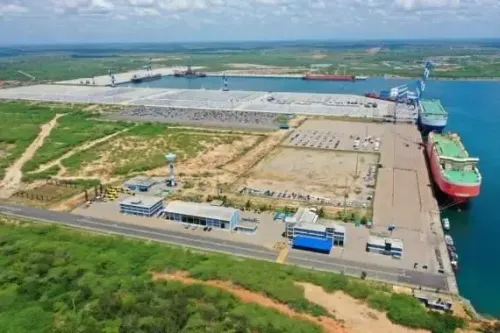
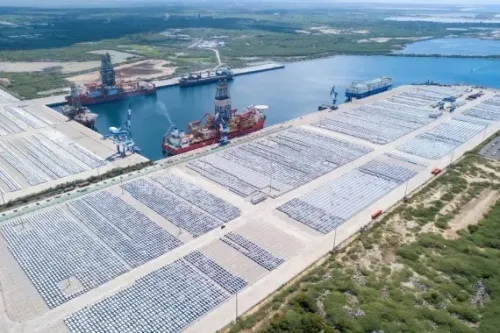
Hambantota Port , leased to a Chinese state firm for 99 years in 2017 , remains a flashpoint symbolising compromised sovereignty.
China's leverage is described as structural — embedded across logistics, energy, and development finance — rather than purely military.
Rolling back tax concessions in the Colombo Port City risks deterring investors Sri Lanka urgently needs, according to the report.
Sri Lanka's new government is grappling with a deep structural dependency on Chinese capital — the same entanglement that constrained its predecessors — yet feels unable to break free given the fragility of the country's ongoing economic recovery, according to a new report by The Asian. The administration faces the delicate task of renegotiating economic and political ties with Beijing without triggering a relapse into crisis.
The Structural Bind
The National People's Power (NPP) administration came to power on a wave of public anger over opaque foreign deals and foreign-funded infrastructure projects that critics argued had eroded national sovereignty. According to the report, Chinese-backed projects became 'the lightning rod for this discontent' precisely because of their scale and visibility across the island nation.
Yet the contradiction is stark: Beijing remains one of the very few partners both willing and capable of financing Sri Lanka's large-scale infrastructure needs. With foreign exchange reserves at dismal levels, Colombo has little room to turn away Chinese capital, however contentious the terms.
Fast-Tracking the Hambantota Refinery Deal
The tension between campaign rhetoric and economic reality became apparent almost immediately. Despite having campaigned on a platform of reviewing legacy deals, the NPP government moved swiftly in January 2025 to fast-track an agreement with China's Sinopec for a proposed $3.7 billion oil refinery at Hambantota — a decision the report attributes directly to this structural dependency.
The report also highlighted Hambantota Port — handed to a Chinese state-owned firm on a 99-year lease in 2017 — as 'a permanent symbol of compromised sovereignty and strategic dependency,' a deal that continues to define public and political discourse around Chinese investment in Sri Lanka.
Pressure From Below and Above
Domestic voices are growing louder. Locals are increasingly demanding stricter oversight of Chinese-controlled strategic assets and a revision of tax concessions extended to the Colombo Port City. Under post-IMF restructuring, Colombo has reportedly attempted to tighten incentive structures and reclaim certain tax exemptions within the Port City framework.
However, the report cautioned that rolling back these concessions risks deterring the very investors Sri Lanka urgently needs. The dilemma captures the government's broader predicament: any assertive policy shift carries the risk of scaring away capital in an economy still stabilising.
Beijing's Strategic Leverage
The report argued that China's leverage over Sri Lanka is structural rather than purely military, embedded across logistics, energy, and long-term development finance. Beijing has little structural incentive to fundamentally renegotiate agreements that already serve its long-term commercial and strategic interests.
Chinese firms remain actively engaged in expanding industrial zones and emerging energy projects across the country, deepening integration even as political tensions simmer. This comes amid a broader regional pattern of smaller economies struggling to recalibrate relationships with China after periods of heavy debt-financed infrastructure investment.
How Colombo navigates this bind — balancing sovereign assertion with economic survival — will be a defining test of the NPP government's first term and a closely watched case study for the wider Indo-Pacific region.
Point of View
From Pakistan to Laos. What makes Colombo's case instructive is the speed of capitulation: a government elected explicitly to push back against Chinese terms found itself fast-tracking a $3.7 billion Chinese refinery deal before it had settled into office. The deeper question mainstream coverage misses is whether IMF-backed fiscal reform can generate enough sovereign fiscal space to give future Sri Lankan governments a genuine alternative — or whether the structural lock-in is already too deep to reverse without a second crisis.
NationPress
26 Oct 2026
Frequently Asked Questions
Why is Sri Lanka's new government dependent on Chinese capital?
Sri Lanka's foreign exchange reserves remain critically low following its 2022 economic crisis, leaving the government with few alternatives to Chinese financing for large-scale infrastructure projects. Beijing is one of the only partners both willing and able to fund such projects, making dependency structural rather than a matter of political preference.
What is the Sinopec refinery deal at Hambantota?
In January 2025, Sri Lanka's NPP government fast-tracked an agreement with China's Sinopec for a proposed $3.7 billion oil refinery at Hambantota. The decision came despite the government having campaigned on reviewing legacy deals with Chinese firms, highlighting the tension between political promises and economic necessity.
Why is Hambantota Port significant in this context?
Hambantota Port was handed to a Chinese state-owned firm on a 99-year lease in 2017 after Sri Lanka struggled to service the associated debt. The report describes it as a permanent symbol of compromised sovereignty and strategic dependency, making it central to public debate about Chinese investment in the country.
What is the Colombo Port City controversy about?
The Colombo Port City, a Chinese-financed development, has been granted significant tax concessions that critics argue undermine Sri Lanka's fiscal sovereignty. Post-IMF restructuring, the government has attempted to claw back some exemptions, but the report warns that doing so risks deterring the investors the country urgently needs.
How does China's leverage over Sri Lanka operate?
According to the report, China's leverage is structural rather than military, embedded across Sri Lanka's logistics, energy, and long-term development finance sectors. Chinese firms remain actively involved in expanding industrial zones and energy projects, deepening integration even as political tensions over sovereignty persist.