Is China's Role in Sri Lanka’s Port Infrastructure a Global Warning?
Synopsis
The US Senate has raised alarms over China's financial engagements in Sri Lanka's port projects, labeling them as cautionary tales against compromising national sovereignty in the Indo-Pacific. This situation not only highlights concerns about foreign investments but also emphasizes the importance of strategic independence for nations like Sri Lanka.
Key Takeaways
US Senate warns of risks from China’s financing .
Lawmakers emphasize sovereignty and strategic independence.
Eric Meyer pledges support for transparent partnerships .
Sri Lanka is interested in economic reforms.
Port of Colombo is a key strategic asset.
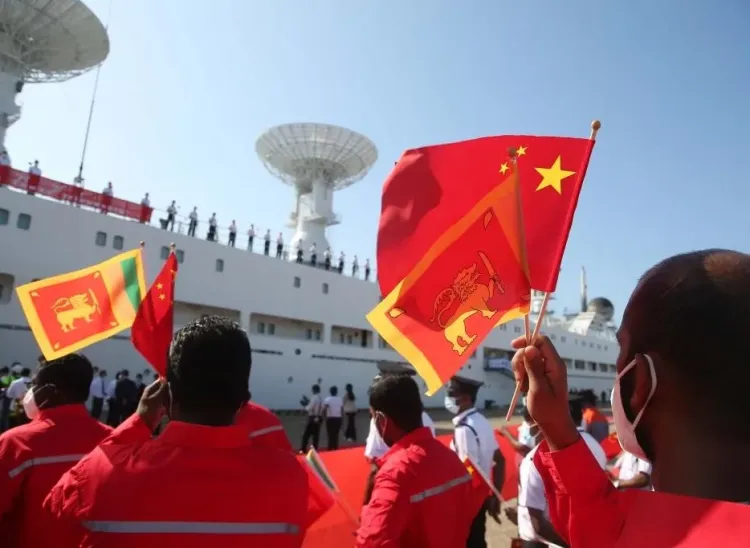
Washington, Dec 13 (NationPress): The US Senate has identified China’s involvement in the port infrastructure of Sri Lanka during a recent hearing as a significant cautionary tale regarding Beijing’s practices in overseas financing. Lawmakers cautioned that such initiatives could threaten both sovereignty and strategic independence in the Indo-Pacific.
In a session of the Senate Foreign Relations Committee, Chairman Jim Risch referred to China’s engagement in Sri Lanka as “a prime example globally for why nations should avoid partnerships with China,” particularly emphasizing Beijing’s funding of large-scale port projects.
The nominee for US Ambassador to Sri Lanka, Eric Meyer, expressed that the United States would assist Colombo in maintaining control over critical infrastructure and pursuing transparent partnerships.
“We have a very open and transparent relationship with Sri Lanka, and bilateral interactions should be characterized by that transparency,” said Meyer. “Upon my confirmation, I eagerly anticipate collaborating with the government of Sri Lanka to reinforce their sovereignty, especially concerning ports.”
Risch questioned Meyer on whether Sri Lanka had learned from its experiences with Chinese financing.
“They ensnared Sri Lanka with financial incentives,” Risch remarked.
Meyer acknowledged that Sri Lanka is keen on enhancing its ties with the United States, emphasizing the necessity of economic reforms.
“Sri Lanka has demonstrated interest in closer collaboration with the United States,” he stated, while encouraging Colombo to maintain its IMF-backed program because “economic sovereignty and independence are crucial.”
Meyer highlighted that reforms could pave the way for new investment opportunities.
“By adhering to their reforms, this can also foster increased US investments,” he added.
The nominee underscored Sri Lanka’s geographic significance in the Indian Ocean.
“Sri Lanka is located along some of the busiest shipping routes in the Indian Ocean,” Meyer noted, pointing out that two-thirds of the world’s seaborne crude oil passes through nearby waters.
He also mentioned the Port of Colombo, which is expected to enhance its capacity in the upcoming year, portraying it as a vital economic asset.
The economic turmoil faced by Sri Lanka in 2022 and the subsequent leasing of the Chinese-built Hambantota port have attracted ongoing scrutiny from the US and neighboring powers, including India. For Washington, Sri Lanka’s situation is increasingly viewed as a broader cautionary tale regarding infrastructure financing and strategic dependence in the Indo-Pacific.
Point of View
The ongoing scrutiny of China's financial maneuvers in Sri Lanka serves as a critical reminder of the broader implications of foreign investments. As nations navigate their strategic interests, it becomes increasingly important to prioritize sovereignty and transparency in international partnerships.
NationPress
10 Oct 2026
Frequently Asked Questions
What was discussed in the US Senate hearing about Sri Lanka?
The US Senate hearing focused on China's involvement in Sri Lanka's port infrastructure, highlighting potential risks to sovereignty and strategic independence.
Who is the US Ambassador nominee for Sri Lanka?
Eric Meyer is the nominee for the US Ambassador to Sri Lanka.
What did lawmakers say about China's financing practices?
Lawmakers described China's financing practices as a cautionary example, warning that such investments could undermine national sovereignty.
What is the significance of the Port of Colombo?
The Port of Colombo is strategically located along major shipping routes and is expected to expand capacity, making it a vital economic asset for Sri Lanka.
How has Sri Lanka responded to its experiences with Chinese financing?
Sri Lanka has shown interest in strengthening ties with the US and focusing on economic reforms to enhance sovereignty and independence.