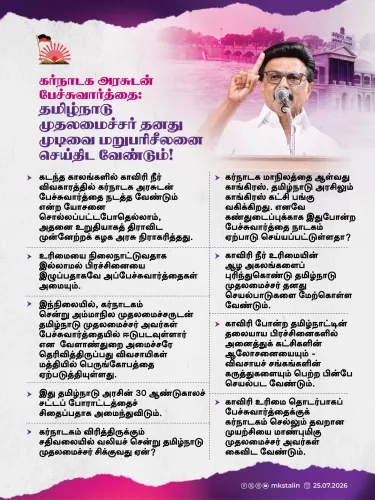
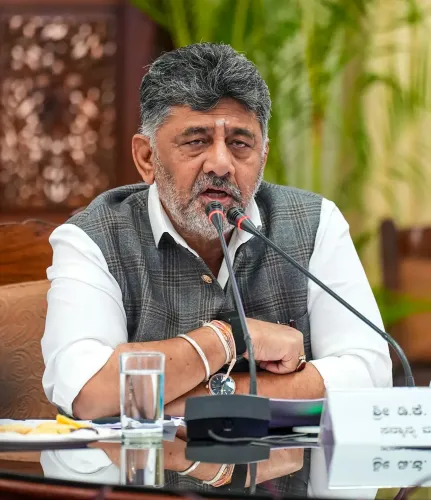
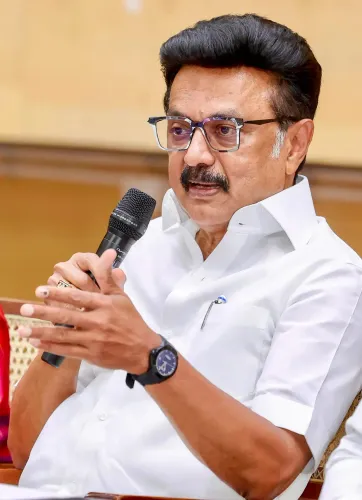
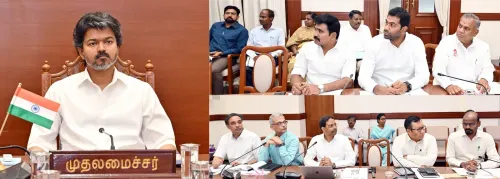
Cauvery row: Stalin urges CM Vijay to scrap Karnataka visit, call all-party meet
Synopsis
DMK chief M.K. Stalin has called CM C. Joseph Vijay's planned Karnataka visit over the Cauvery dispute a 'misguided' trap — pointing out that Congress governs both states and warning that direct talks could erode Tamil Nadu's hard-won Supreme Court verdict. With delta farmers already restless, the political pressure on Vijay is mounting fast.
Key Takeaways
Stalin on 25 July urged Tamil Nadu CM C.
Joseph Vijay to cancel his proposed visit to Karnataka over the Cauvery water dispute .
Stalin warned that bilateral talks risk undermining Tamil Nadu's legal position established by the Supreme Court's final verdict.
He flagged a political contradiction: Congress governs Karnataka and is also a ruling coalition partner in Tamil Nadu .
The DMK leader alleged the visit was an 'eyewash' serving Karnataka's agenda to dilute Tamil Nadu's Cauvery rights.
Stalin demanded an all-party meeting and consultation with Cauvery delta farmers before any further steps are taken.
He reiterated that Karnataka's Mekedatu reservoir project violates the Supreme Court judgment on the dispute.
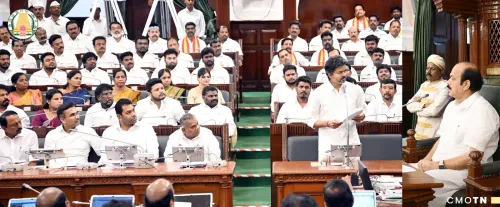
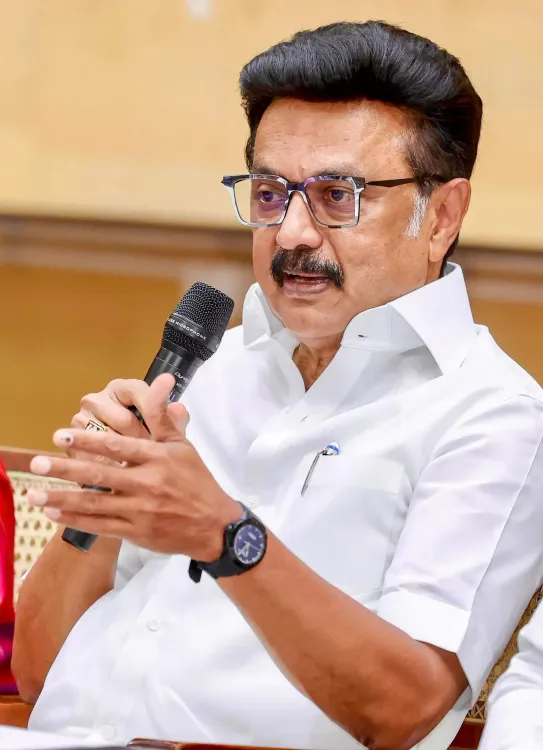
Dravida Munnetra Kazhagam (DMK) president and former Tamil Nadu Chief Minister M.K. Stalin on Saturday, 25 July sharply criticised Chief Minister C. Joseph Vijay's planned visit to Karnataka for direct talks on the long-standing Cauvery water dispute, calling it a 'misguided decision' and demanding it be called off immediately. Stalin insisted that before any bilateral engagement, the Chief Minister must first convene an all-party meeting and consult farmers' organisations.
Stalin's Core Objection
The DMK leader argued that Tamil Nadu's rights over the Cauvery have already been conclusively established through the judicial process, and that reopening the matter through direct bilateral discussions risks undermining the State's legal standing. He maintained that Karnataka's continued failure to release Cauvery water to Tamil Nadu amounted to contempt of the Supreme Court's final verdict on the issue.
Stalin also reiterated the DMK's long-held position that Karnataka's proposed Mekedatu balancing reservoir project itself constitutes a violation of the Supreme Court's judgment — a charge Karnataka disputes — and that pursuing informal negotiations would only lend the project unwarranted legitimacy.
Political Contradictions Flagged
In a pointed observation, Stalin questioned the optics of the proposed visit, noting that the Indian National Congress (Congress) — which governs Karnataka — is also a coalition partner of the ruling dispensation in Tamil Nadu. He alleged that the visit was effectively an 'eyewash' that would allow the State government to claim diplomatic effort without delivering any concrete benefit to Tamil Nadu or its farmers.
'The exercise,' he argued, would only serve Karnataka's objective of diluting Tamil Nadu's established rights over Cauvery waters, accusing the Tamil Nadu government of walking into what he described as 'Karnataka's trap.'
Farmers' Concerns at the Centre
Stalin stressed that farmers in the Cauvery delta — the region most directly dependent on the river's flows — were deeply dissatisfied with the decision to pursue direct talks. He called their concerns non-negotiable and said no initiative on the Cauvery dispute should proceed without their explicit representation through an all-party consultative process.
DMK's Historical Stance
Recalling his own tenure as Chief Minister, Stalin said the previous DMK government had consistently refused bilateral negotiations with Karnataka, on the grounds that repeated rounds of direct talks had yielded no results because Karnataka had not honoured its commitments. He reaffirmed that position, arguing there was no basis to expect a different outcome now. This comes amid a broader pattern of inter-state river water disputes in peninsular India where judicial verdicts have frequently failed to translate into compliance on the ground.
With the Cauvery dispute entering another politically charged phase ahead of the farming season, the pressure on Chief Minister Vijay to either proceed with or abandon the Karnataka visit is set to intensify in the coming days.
Point of View
Yet Karnataka's compliance has been selective for years. The real question is what leverage Tamil Nadu actually holds, and whether an all-party meeting — however symbolically reassuring — changes that calculus. Neither side has answered it.
NationPress
24 Oct 2026
Frequently Asked Questions
Why is M.K. Stalin opposing CM Vijay's visit to Karnataka?
Stalin argues that Tamil Nadu's rights over Cauvery water are already settled by a Supreme Court verdict and that direct bilateral talks risk weakening that legal position. He also alleges the visit will produce no concrete benefit and amounts to falling into Karnataka's strategy of diluting Tamil Nadu's established rights.
What is the Cauvery water dispute between Tamil Nadu and Karnataka?
The Cauvery dispute is a decades-old inter-state conflict over the sharing of water from the Cauvery river, which originates in Karnataka and flows through Tamil Nadu. The Supreme Court issued a final allocation verdict, but compliance — particularly Karnataka's timely release of water — has remained contentious.
What is the Mekedatu project and why is it controversial?
The Mekedatu balancing reservoir is a proposed dam project by Karnataka on the Cauvery river. Tamil Nadu, including the DMK, has consistently opposed it, arguing it violates the Supreme Court's Cauvery verdict by giving Karnataka additional control over water flows that are legally allocated to Tamil Nadu.
What does Stalin want CM Vijay to do instead?
Stalin has called on Chief Minister C. Joseph Vijay to first convene an all-party meeting involving leaders of all political parties and representatives of farmers' organisations from the Cauvery delta before pursuing any initiative related to the Cauvery dispute.
Why does Stalin highlight Congress governing both Karnataka and being part of Tamil Nadu's ruling coalition?
Stalin contends that since Congress governs Karnataka and is also a coalition partner in Tamil Nadu's ruling alliance, the visit is unlikely to yield genuine concessions from Karnataka. He argues this political overlap makes the exercise an 'eyewash' that benefits Karnataka's negotiating position rather than Tamil Nadu's interests.