CM Vijay Chairs Emergency Meet on Mekedatu Dam Threat
Synopsis
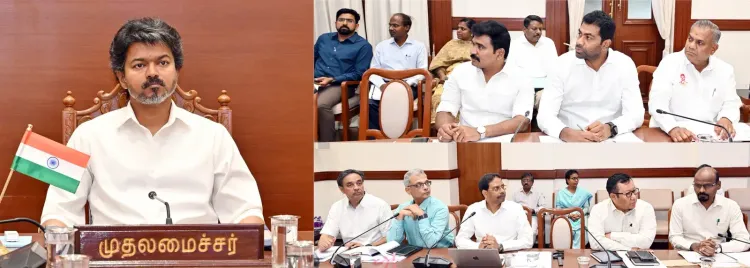
Tamil Nadu Chief Minister C. Joseph Vijay on 25 May 2026 chaired an emergency meeting at the Secretariat with Cauvery water and legal experts to respond to Karnataka's planned Mekedatu dam ground-breaking, directing swift and continuous legal action to protect the state's water rights and farmers' interests.
Key Takeaways
Tamil Nadu Chief Minister C.
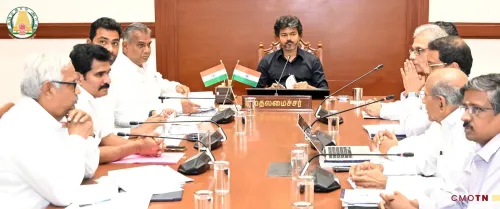
Joseph Vijay chaired an emergency meeting at the Secretariat in Chennai on 25 May 2026 over Karnataka's planned Mekedatu dam ground-breaking.
The meeting involved Cauvery river water experts and legal experts ; CM Vijay directed that continuous legal action be initiated swiftly.
The Mekedatu reservoir is a Karnataka project on the Cauvery river intended for Bengaluru's drinking water and power generation.
Tamil Nadu's opposition is rooted in the 1991 Cauvery Water Disputes Tribunal award , upheld with modifications by the Supreme Court in 2018 .
Cauvery delta farmers in Thanjavur, Tiruvarur and Nagapattinam districts stand to be most directly affected by any reduction in upstream water releases.
Tamil Nadu is expected to approach the Supreme Court of India and the Cauvery Water Management Authority to seek relief against the project proceeding.
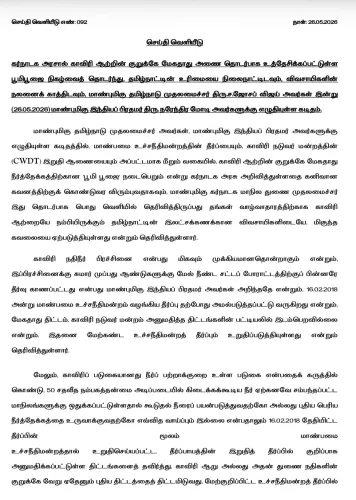
The Chief Minister's Office of Tamil Nadu announced on Monday, 25 May 2026 that Chief Minister C. Joseph Vijay chaired an emergency consultation at the Secretariat in Chennai to respond to Karnataka's proposed bhoomi puja (ground-breaking ceremony) for the Mekedatu dam across the Cauvery river, directing officials to initiate swift and continuous legal action to protect Tamil Nadu's water rights and the interests of its farming communities.
Context
The CMO's post states that CM Vijay held extensive consultations with Cauvery river water experts and legal experts to formulate Tamil Nadu's response to Karnataka's planned ground-breaking for the Mekedatu reservoir. The meeting was convened specifically because Karnataka is understood to be preparing a ceremonial launch of the project. CM Vijay instructed that 'continuous legal steps be taken swiftly' to assert Tamil Nadu's rights and safeguard farmers' welfare.
The Mekedatu project is a proposed balancing reservoir and drinking-water scheme Karnataka intends to build downstream of its existing reservoirs on the Cauvery. Tamil Nadu has consistently opposed the project, arguing that any upstream storage structure would reduce flows into its territory, particularly to the agriculturally critical Cauvery delta districts.
Policy Backdrop
The Cauvery dispute is governed by the 1991 award of the Cauvery Water Disputes Tribunal, which prescribed annual water-sharing quotas among Tamil Nadu, Karnataka, Kerala and Puducherry. The Supreme Court of India upheld the tribunal framework in 2018, revising Tamil Nadu's share downward by 14.75 TMC ft while directing the formation of the Cauvery Water Management Authority to oversee compliance.
Karnataka has periodically revived the Mekedatu proposal since the mid-2010s, each time drawing formal objections from successive Tamil Nadu governments on the ground that it would impair downstream flows guaranteed under the tribunal award. Tamil Nadu's standard legal arsenal has included petitions before the Supreme Court and representations to the Cauvery Water Management Authority.
Stakeholders and Impact
Cauvery delta farmers in districts such as Thanjavur, Tiruvarur and Nagapattinam — often called the 'rice bowl of Tamil Nadu' — are the most directly affected stakeholders. Any reduction in upstream releases during the kuruvai and samba crop seasons can translate into acute irrigation shortfalls and economic distress for hundreds of thousands of cultivators.
Urban water-supply planners in Bengaluru are Karnataka's primary beneficiaries of the proposed project, which is projected to address the city's long-term drinking-water deficit. The competing demands of the two states mean the dispute carries both agrarian and urban-development dimensions, complicating any negotiated settlement.
What's Next
Following CM Vijay's directive, Tamil Nadu's legal team is expected to move quickly before the Supreme Court of India and the Cauvery Water Management Authority to seek an injunction or stay against Karnataka proceeding with the Mekedatu ground-breaking. The existing inter-state monitoring committee under the Authority may also be convened.
The episode signals that the Cauvery dispute — one of India's longest-running inter-state water conflicts — is entering a fresh confrontational phase. How the Supreme Court responds to any emergency petition from Tamil Nadu will set the immediate legal trajectory and determine whether the bhoomi puja can proceed as planned.
Point of View
Rather than a single petition. Coming early in Vijay's tenure, the move also serves to establish his administration's credentials on a dispute that has historically defined Tamil Nadu's relationship with New Delhi and Bengaluru. The broader pattern — Tamil Nadu reflexively reaching for judicial remedy whenever Karnataka advances the Mekedatu file — underlines how thoroughly the two states have outsourced this conflict to the courts rather than negotiating a durable engineering solution.
NationPress
20 Oct 2026
Frequently Asked Questions
What is the Mekedatu dam project?
The Mekedatu project is a proposed balancing reservoir and drinking-water scheme that Karnataka plans to build across the Cauvery river downstream of its existing reservoirs, primarily to meet Bengaluru's water needs and generate hydropower.
Why is Tamil Nadu opposing the Mekedatu dam?
Tamil Nadu argues that any new upstream storage structure on the Cauvery would reduce water flows into its territory, threatening irrigation for Cauvery delta farmers and violating the water-sharing quotas set by the 1991 Cauvery Water Disputes Tribunal award.
What legal options does Tamil Nadu have against the Mekedatu project?
Tamil Nadu can file a petition before the Supreme Court of India seeking a stay on construction, and can also raise the matter before the Cauvery Water Management Authority, which was established to oversee compliance with the 2018 Supreme Court order.
What did the Supreme Court rule on Cauvery water sharing?
In 2018 the Supreme Court upheld the 1991 Cauvery Water Disputes Tribunal framework with modifications, reducing Tamil Nadu's annual share by 14.75 TMC ft and directing the formation of the Cauvery Water Management Authority to monitor inter-state releases.
Who are the states involved in the Cauvery water dispute?
The four parties to the Cauvery water dispute are Tamil Nadu, Karnataka, Kerala and Puducherry, with Tamil Nadu and Karnataka being the principal disputants over annual release quantities and upstream storage projects.