TN CM moves resolution against Mekedatu dam in Assembly
Synopsis
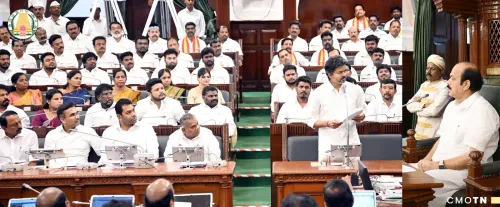
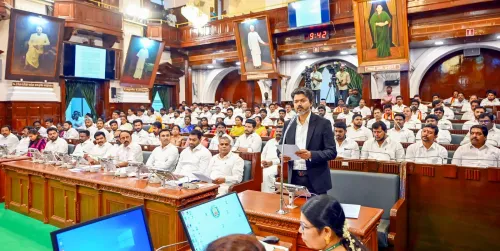
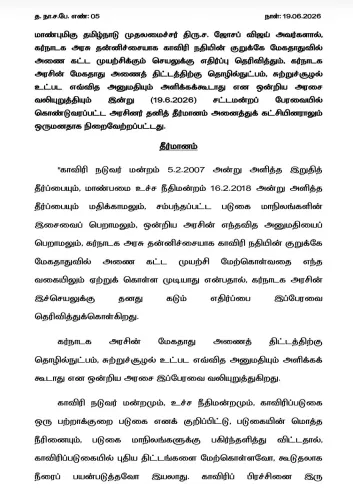
Chief Minister Joseph Vijay moved a special resolution in the Tamil Nadu Legislative Assembly on 19 June 2026 opposing Karnataka's Mekedatu dam project on the Cauvery river, continuing the state's long-standing legislative opposition to upstream storage projects that it says threaten its constitutionally allocated water share.
Key Takeaways
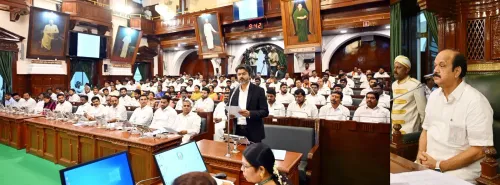
CM Joseph Vijay moved a special resolution in the Tamil Nadu Legislative Assembly on 19 June 2026 opposing the Mekedatu dam project .
The Mekedatu project is proposed by Karnataka on the Cauvery river for drinking water supply and power generation.
Tamil Nadu's Assembly had previously passed a similar resolution in 2017–18 , making this a continuation of consistent cross-party legislative opposition.
The Supreme Court's 2018 ruling upheld the Cauvery tribunal award and mandated the Cauvery Water Management Authority to oversee water sharing.
Cauvery delta farmers across districts such as Thanjavur , Tiruvarur , and Nagapattinam are the primary stakeholders cited in Tamil Nadu's opposition.
Central statutory clearances — environmental and wildlife — remain the key bottleneck for the Mekedatu project's progress.
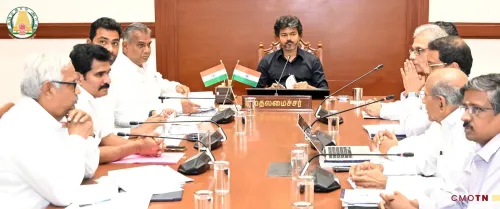
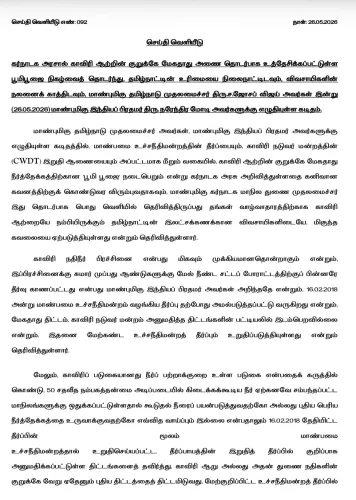
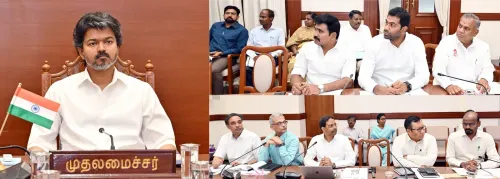
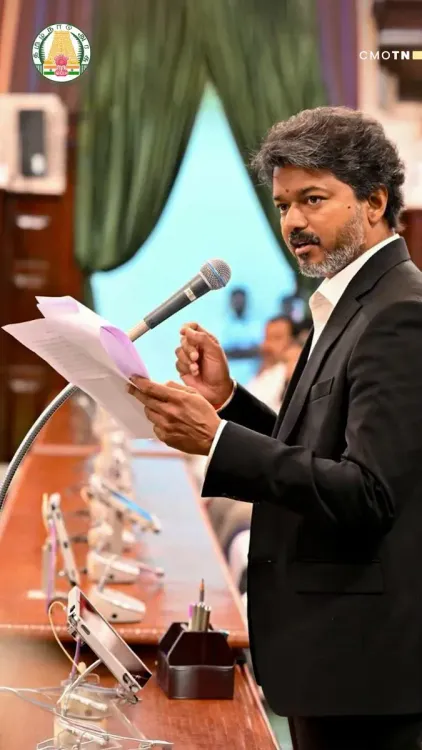
The Chief Minister's Office of Tamil Nadu announced on Friday, 19 June 2026 that Chief Minister Joseph Vijay moved a special resolution in the Tamil Nadu Legislative Assembly opposing the Mekedatu dam project proposed by the neighbouring state of Karnataka on the Cauvery river.
Context
The Mekedatu project envisages a multi-purpose reservoir at the Mekedatu gorge on the Cauvery, within Karnataka's territory. Karnataka's stated objectives include drinking water supply for Bengaluru and power generation. Tamil Nadu has consistently argued that any new upstream storage would reduce the river's flow into its territory and undermine its allocated water share.
Chief Minister Joseph Vijay placed the resolution before the full House, signalling the state government's intent to formally register its opposition through the legislature — a step that carries constitutional and political weight in inter-state water disputes.
Policy Backdrop
The Cauvery water-sharing dispute has a long legal and administrative history. A tribunal constituted under the Inter-State River Water Disputes Act delivered its final award in 2007, apportioning flows among Karnataka, Tamil Nadu, Kerala, and Puducherry. The Supreme Court of India modified and upheld that award in 2018, simultaneously directing the formation of the Cauvery Water Management Authority to oversee compliance.
The Tamil Nadu Assembly had previously passed a resolution in 2017–18 opposing the Mekedatu project and urging the Central government to withhold environmental and other statutory clearances. The fresh resolution moved by CM Vijay continues that legislative tradition, reinforcing the state's stance across successive governments and parties.
Central clearances for large dam projects require environmental impact assessments, wildlife approvals, and — in inter-state river contexts — often demand consensus or specific tribunal sanction, processes that have historically resulted in prolonged delays for contested projects.
Stakeholders and Impact
The resolution directly reflects the concerns of Cauvery delta farmers, who depend on regulated river flows for cultivation of paddy and other crops across districts including Thanjavur, Tiruvarur, and Nagapattinam. Any reduction in upstream releases, farmers' groups argue, would jeopardise kharif and rabi cropping seasons.
The Tamil Nadu agriculture sector as a whole regards upstream storage projects with deep suspicion, given past episodes of shortfalls during drought years. A legislative resolution strengthens the state's legal and diplomatic position when engaging with the Centre, the Cauvery Water Management Authority, and any future tribunal proceedings.
What's Next
Attention will now turn to the Cauvery Water Management Authority's next scheduled meeting, where Tamil Nadu is expected to formally present the Assembly resolution as part of its objections. Karnataka's response — and whether it proceeds with fresh applications for environmental or wildlife clearances at the Mekedatu site — will determine the pace of any escalation.
The Central government's position on granting or withholding statutory clearances will be the critical variable. Historically, such resolutions have preceded diplomatic exchanges between the two state governments and formal communications to the Union Ministry of Jal Shakti.
Point of View
CM Vijay has signalled that opposition to the Mekedatu project is not a partisan position but a settled consensus of Tamil Nadu's political class — a message aimed as much at New Delhi as at Bengaluru. The move follows a well-established playbook: legislative resolutions in Tamil Nadu have historically preceded formal objections at the Cauvery Water Management Authority and shaped the Centre's calculus on granting clearances. With Karnataka periodically reviving its clearance applications, Tamil Nadu's pre-emptive legislative action is designed to raise the political cost of Central approval. The broader pattern reflects how southern states continue to use their legislatures as instruments of inter-state water diplomacy, even after judicial finality on water shares.
NationPress
19 Sept 2026
Frequently Asked Questions
What is the Mekedatu dam project?
The Mekedatu dam is a proposed multi-purpose reservoir by Karnataka on the Cauvery river at the Mekedatu gorge, designed to supply drinking water to Bengaluru and generate hydroelectric power. Tamil Nadu opposes it, arguing it would reduce downstream water flows guaranteed under the 2007 Cauvery tribunal award.
Why did the Tamil Nadu Assembly pass a resolution against Mekedatu?
The Tamil Nadu Assembly passed the resolution to formally register the state's opposition to any new upstream storage on the Cauvery that could reduce water flows into Tamil Nadu. Such resolutions strengthen the state's legal and diplomatic position before the Cauvery Water Management Authority and the Central government.
Has Tamil Nadu opposed Mekedatu before?
Yes. The Tamil Nadu Assembly passed a resolution opposing the Mekedatu project in 2017–18 and urged the Centre to withhold clearances. Governments of different parties in Tamil Nadu have maintained consistent opposition to the project over the years.
What is the Cauvery Water Management Authority?
The Cauvery Water Management Authority is a body directed by the Supreme Court in its 2018 judgment to oversee and ensure compliance with the Cauvery water-sharing award among Karnataka, Tamil Nadu, Kerala, and Puducherry.
What happens next after the Tamil Nadu Assembly resolution on Mekedatu?
Tamil Nadu is expected to present the resolution at the next Cauvery Water Management Authority meeting and communicate it formally to the Union Ministry of Jal Shakti. Karnataka's decision on whether to pursue fresh environmental or wildlife clearances at the Mekedatu site will determine the next phase of the dispute.