CM Dhami Backs 'Operation Regime Change' Sting, Warns Against Destabilising Plots
Synopsis
Uttarakhand CM Pushkar Singh Dhami on 3 November 2026 backed the 'Operation Regime Change' sting, warning that conspiracies to destabilise constitutional institutions under the guise of free speech will not be tolerated and demanding legal accountability.
Key Takeaways
Uttarakhand Chief Minister Pushkar Singh Dhami posted on 3 November 2026 backing a sting operation called 'Operation Regime Change' .
Dhami stated the sting exposed 'several serious aspects of attempts to spread unrest in the country.' He specifically called out efforts to spread anarchy under the cover of protest and to tarnish the image of the police.
He demanded that those who 'play with the nation's unity, integrity and democratic dignity' be held accountable under the law.
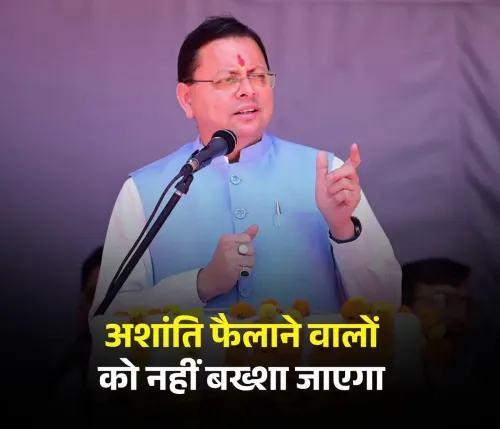
No conspiracy cloaked as freedom of expression or democracy will be tolerated, Dhami declared.
Opposition party and civil-society responses to the statement were awaited as of the time of posting.
No conspiracy dressed up as free speech will be tolerated — that is the unambiguous message Uttarakhand Chief Minister Pushkar Singh Dhami fired on Tuesday, 3 November 2026, as he threw his weight behind revelations from a sting operation called 'Operation Regime Change', demanding accountability for those he says are working to destabilise India's constitutional order.
'Operation Regime Change' and What Dhami Says It Exposed
In his post, Dhami stated: 'Operation Regime Change' sting mein rashtra mein ashaanti failane ke kai gambheer pahaluon ko ujaagar kiya gaya hai — ('The 'Operation Regime Change' sting has exposed several serious aspects of attempts to spread unrest in the country'). He argued that the sting reveals a coordinated effort to weaponise dissent: spreading anarchy under the cover of protest, tarnishing the image of the police, and delegitimising the democratic system itself. His core demand — that those who 'play with the nation's unity, integrity and democratic dignity must be held accountable within the framework of the law' — is pointed and explicit.
The BJP's Long-Running Battle Over Protest and Public Order
Dhami's statement lands squarely within a pattern that has defined ruling-party messaging for years. BJP leaders at the state and national level have repeatedly framed certain protest movements as existential threats to institutional stability rather than legitimate democratic expression. The recurring charge — that bad actors use the cover of democracy and free speech to pursue anti-national agendas — has been deployed in debates ranging from student protests to farmer agitations to civil-society campaigns.
What gives this statement sharper edges is the invocation of a specific sting operation. By anchoring his argument to 'Operation Regime Change', Dhami moves beyond generalised political rhetoric and points to what he characterises as documented evidence. The claim that 'the country's public understands everything' is a populist signal — an appeal to an implied silent majority that he suggests sees through the façade of principled opposition.
Police Credibility and the Stakes for Law Enforcement
One concrete target Dhami names is the deliberate 'tarnishing' of police credibility. For a Chief Minister, this carries operational weight: a police force perceived as illegitimate by a significant section of the public faces real challenges in maintaining order. Whether the sting operation's contents support that specific charge remains unverified from independent sources, but the political framing is unmistakable — Dhami is positioning state law enforcement as a victim of orchestrated reputational attacks, not merely a tool of the ruling party.
Opposition and Civil Society Responses Awaited
Opposition parties, press-freedom advocates, and civil-society groups have yet to formally respond to Dhami's broadside. The coming days will test whether the sting operation's claimed revelations gain traction with central BJP leadership or trigger a pushback from those who argue that accountability journalism and street protest are protected under the very constitutional order Dhami says he is defending. India's courts have, historically, been the ultimate arbiter of where democratic expression ends and legally actionable sedition begins.
If the 'Operation Regime Change' footage circulates widely and survives scrutiny, Dhami's intervention may prove prescient. If it does not, his opponents will have their own headline — that a Chief Minister used unverified material to cast dissent itself as conspiracy.
Point of View
He elevates a media or investigative event into an official political flashpoint, pressuring opponents to respond on terrain he has chosen. The sub-text — that protest, press criticism of police, and opposition to the democratic system are part of a single coordinated conspiracy — is a framing that courts, civil-liberty advocates, and opposition parties will contest vigorously. The statement also arrives as a signal to state law enforcement in Uttarakhand: the Chief Minister's political cover for aggressive policing of dissent is firmly in place.
NationPress
3 Nov 2026
Frequently Asked Questions
What is 'Operation Regime Change' that CM Dhami mentioned?
'Operation Regime Change' appears to be a sting operation whose footage or findings were circulating publicly around November 2026. Dhami stated it exposed serious attempts to spread unrest in India, though independent verification of the sting's specific contents was not available at the time of this report.
What exactly did Uttarakhand CM Pushkar Singh Dhami say in his post?
Dhami said that no conspiracy to destabilise national peace, social harmony, and constitutional institutions — disguised as democracy or free expression — can be tolerated. He demanded legal accountability for those who, in his words, play with India's unity, integrity and democratic dignity.
Is Dhami's statement directed at a specific political party or group?
Dhami did not name any specific party or individual, but his references to spreading anarchy 'under the cover of protest' and tarnishing the image of the police signal the statement is aimed at opposition-aligned protest movements and civil-society critics of law enforcement.
What is the BJP's broader stance on protests and constitutional institutions?
BJP leaders have consistently argued that certain protest movements weaponise democratic freedoms to pursue destabilising agendas. Dhami's statement follows this established party line, framing institutional stability and national unity as values that override unchecked expressions of dissent.
What could happen next after Dhami's statement?
Opposition parties, press-freedom groups, and civil-society organisations are expected to respond. If the 'Operation Regime Change' sting gains wider circulation and withstands scrutiny, it could prompt action by central BJP leadership or law enforcement agencies. Legal challenges in courts are also possible.