How is the Shift to Later Stubble Burning Affecting Air Quality Monitoring in Northern India?
Synopsis
Recent shifts in the timing of stubble burning in northern India could hinder air quality monitoring efforts, as highlighted by NASA and satellite observations. Understanding this transformation is crucial for addressing pollution issues in the region.
Key Takeaways
Stubble burning is increasingly occurring later in the day, affecting monitoring efforts.
The shift in timing has been observed through satellite data.
Air quality in major cities like Delhi deteriorates significantly during peak burning seasons.
Understanding these changes is vital for effective pollution management .
Farmers' practices are evolving, which may require updated monitoring strategies.
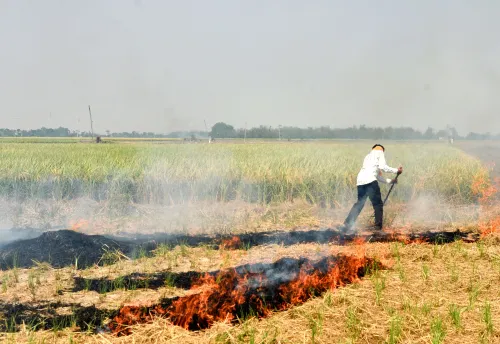
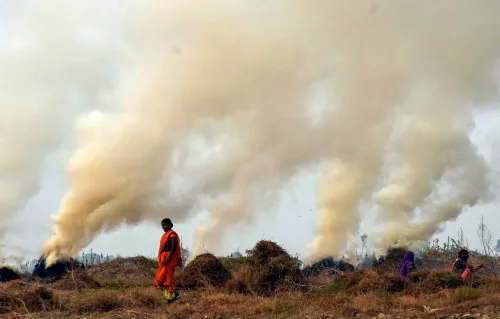
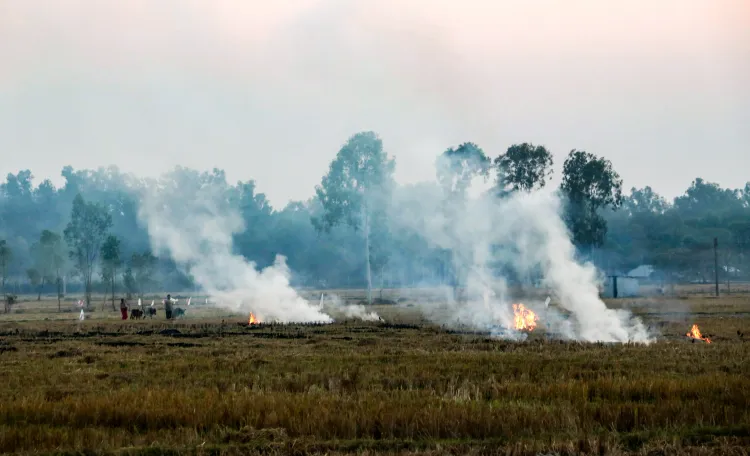
Washington, Dec 16 (NationPress) Recent observations indicate that seasonal crop fires in northern India are increasingly being ignited later in the day. This change, as noted by scientists, may pose challenges in monitoring stubble burning and evaluating its effects on air quality. NASA has highlighted these findings based on satellite data and recent research.
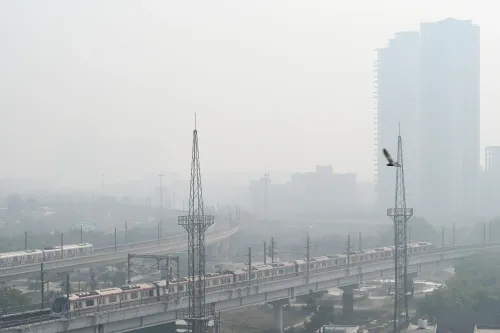
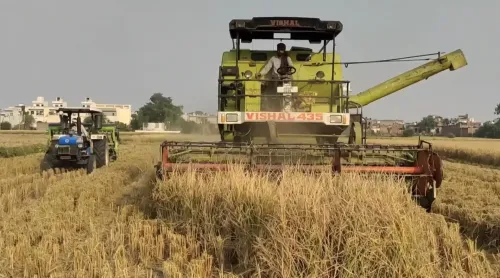
For many years, extensive smoke and haze have blanketed the Indo-Gangetic Plain from October through December as farmers dispose of crop residue post-harvest. In 2025, while the overall pattern of the stubble-burning season aligned with expectations, the timing of these fires exhibited a significant shift from historical norms, according to a NASA release.
Seasonal stubble fires in 2025 somewhat adhered to established patterns, remarked Hiren Jethva, an atmospheric scientist from Morgan State University at NASA’s Goddard Space Flight Center. He observed that air quality in Delhi and several surrounding cities worsened for about a month following a surge in crop fires during the last week of October.
Jethva has been monitoring stubble burning in India using satellite data for nearly a decade, using vegetation observations to predict fire season intensity. Historically, most fires were initiated in the early afternoon, around 1 p.m. to 2 p.m. local time.
However, this trend is evolving. “In recent years, stubble fires have been occurring progressively later in the day,” Jethva stated. His analysis indicates that most of these fires now take place between 4 p.m. and 6 p.m. “Farmers have altered their practices,” he added.
This alteration was identified by scrutinizing data from the GEO-KOMPSAT-2A, a South Korean geostationary satellite launched in late 2018, which provides observations every 10 minutes. In contrast, fire-monitoring systems like MODIS or VIIRS, which collect data just once or twice daily, may overlook many of these fires that occur later in the day.
Satellite imagery demonstrates the magnitude of the challenge. On November 11, 2025, the MODIS instrument aboard NASA’s Aqua satellite captured an extensive plume of smoke and haze drifting across Punjab, Haryana, Uttar Pradesh, and Madhya Pradesh.
Reports noted it was the first of several days in 2025 when pollution levels soared beyond 400 on India’s air quality index, the highest rating possible.
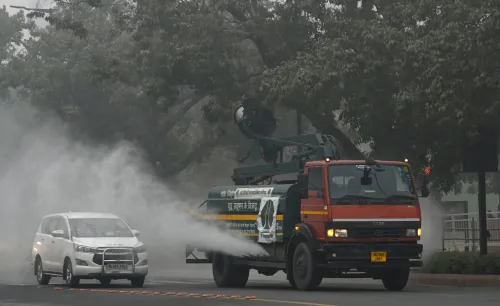
As seen in prior years, this pollution spike led authorities in certain regions to close schools and implement stricter regulations on construction activities. When winds are weak and atmospheric conditions remain stagnant, the resulting haze can elevate pollution levels significantly above World Health Organization standards.
Jethva’s analysis reveals that stubble-burning activity in Punjab and Haryana in 2025 was moderate compared to recent years. He reported fire counts higher than in 2024, 2020, and 2019, yet lower than those in 2023, 2022, and 2021.
Indian researchers have independently observed a similar shift in timing. A study published in Current Science in 2025 noted that Meteosat Second Generation satellite observations showed peak fire activity shifting from around 1:30 p.m. in 2020 to approximately 5:00 p.m. in 2024. In December 2025, a multi-satellite analysis from the International Forum for Environment, Sustainability, & Technology supported these findings.
While the correlation between stubble burning and air pollution in Delhi is well recognized, scientists are still debating the exact contribution of crop fires alongside other pollution sources like vehicles, industry, domestic cooking and heating, fireworks, and dust storms. “Studies estimate contributions between 10 to 50 percent,” stated Pawan Gupta, a NASA air quality research scientist.
Gupta suggests that stubble burning accounts for 40 to 70 percent of pollution on peak days, decreasing to 20 to 30 percent when averaged monthly, and under 10 percent annually. “Meteorological conditions—such as low boundary layer height and temperature—during the burning season complicate matters further,” he explained.
Scientists believe the later fire timings may affect how pollution accumulates overnight, as evening burns could coincide with lighter winds and a shallower boundary layer, facilitating more efficient pollutant accumulation.
Point of View
It is essential to recognize the complexities surrounding air quality in India, especially with the recent shift in stubble burning practices. This change underscores the need for more advanced monitoring systems and proactive measures to safeguard public health and environmental standards.
NationPress
23 Sept 2026
Frequently Asked Questions
What is stubble burning?
Stubble burning is the practice of setting fire to the leftover straw from cereal crops after harvest, primarily to prepare the land for the next planting season.
How does stubble burning affect air quality?
Stubble burning releases a significant amount of smoke and particulate matter into the atmosphere, contributing to air pollution and health issues in surrounding areas.
Why are farmers burning stubble later in the day?
Farmers have altered their practices for various reasons, including weather conditions and possibly changes in agricultural guidelines.
What technologies are used to monitor stubble burning?
Satellite technologies like GEO-KOMPSAT-2A, MODIS, and VIIRS are used to detect and monitor stubble burning activities.
What are the health impacts of air pollution from stubble burning?
Air pollution from stubble burning can lead to respiratory problems, cardiovascular diseases, and other health issues among the population exposed to high pollution levels.