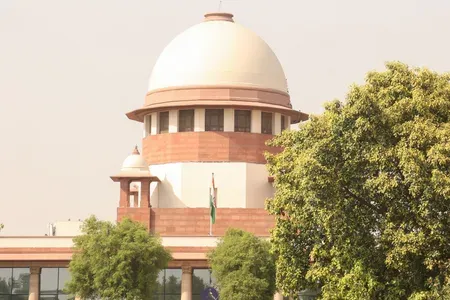
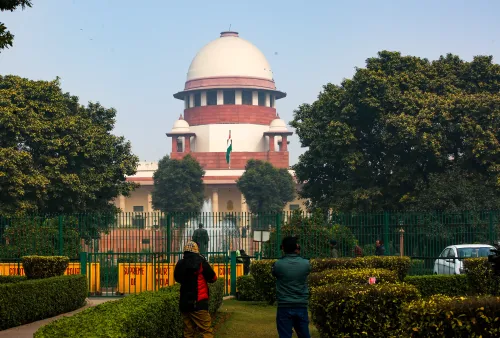
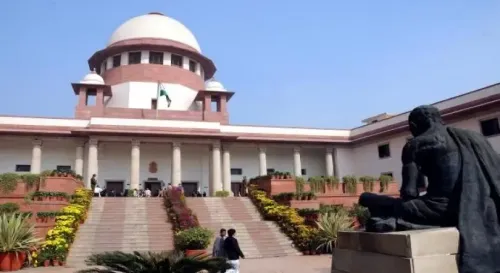
Supreme Court Dismisses Petition for Hate Speech Protections for Brahmins
Synopsis
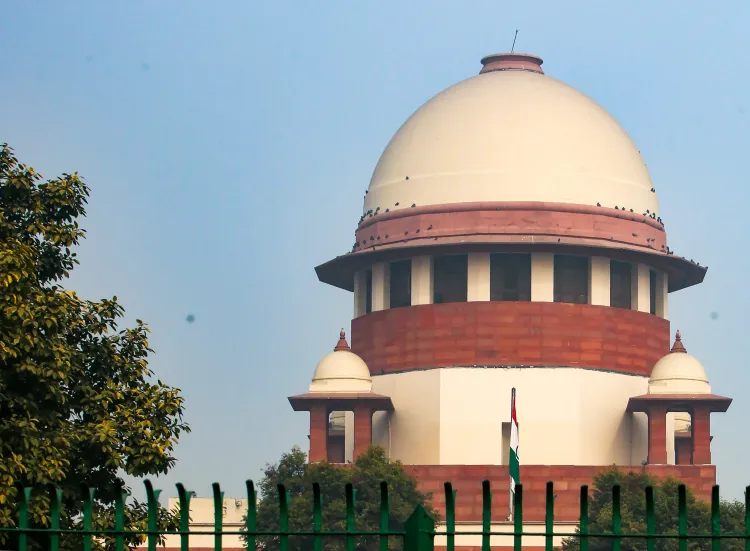
In a recent ruling, the Supreme Court of India dismissed a petition aiming to classify hate speech against the Brahmin community as a punishable offense. The court highlighted the need for a uniform approach to hate speech and emphasized broader societal values in combating discrimination.
Key Takeaways
The Supreme Court dismissed the petition regarding hate speech against Brahmins.
The ruling promotes a universal approach to addressing hate speech.
The petition highlighted significant historical injustices faced by the Brahmin community.
Societal values like fraternity were emphasized by the court as crucial in combating hate speech.
Future legal remedies were left open for the petitioner to explore.
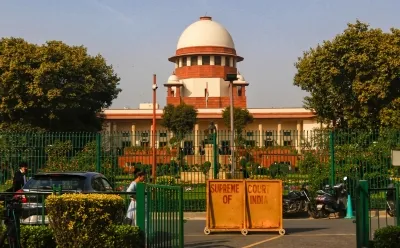
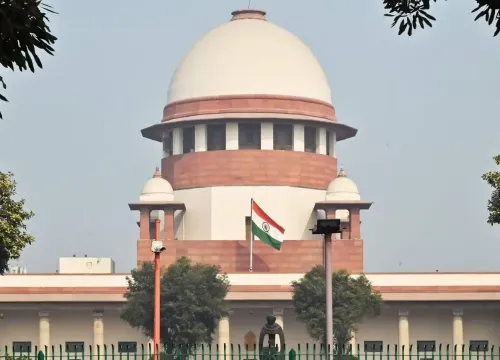
New Delhi, March 20 (NationPress) On Friday, the Supreme Court rejected a writ petition that sought acknowledgment of alleged hate speech against the Brahmin community, termed as “Brahmophobia”, as a punishable form of caste-based discrimination.
A bench comprising Justices B.V. Nagarathna and Ujjal Bhuyan allowed the petitioner, Mahalingam Balaji, representing himself, to withdraw the plea while granting him the right to approach an appropriate forum in the future.
“The petitioner, who appeared in person, has requested to withdraw this petition. His request has been duly noted. The writ petition is dismissed as withdrawn,” the Supreme Court stated in its order.
During the proceedings, the Justice Nagarathna-led Bench highlighted that hate speech, regardless of the targeted community, should be actively discouraged and addressed through overarching societal principles.
“We oppose hate speech against any group. It relies on education, intellectual growth, tolerance, and patience. When everyone adheres to fraternity, naturally, hate speech will diminish,” they remarked.
The Court also scrutinized the request for tailored legal recognition and protection for a single community, suggesting that laws should apply uniformly and cannot be adjusted to address the concerns of one group in isolation.
The petition aimed for extensive directives, including a declaration that hate speech against Brahmins represents a unique form of caste-based discrimination that necessitates penal repercussions. It also called for the Union and State governments to swiftly act against such incidents across mainstream and social media platforms.
Additionally, the petitioner sought a thorough investigation by Central and state bodies into alleged coordinated domestic and international campaigns intended to incite caste-based hatred or violence against Brahmins. Among other requests, the petitioner aimed for the establishment of a high-level “truth and justice commission” to examine historical occurrences, such as the 1948 Maharashtra Brahmin killings and the 1990 exodus of Kashmiri Pandits, along with measures for rehabilitation, economic support, and educational resources for affected individuals.
The plea also included calls for the incorporation of chapters on alleged historical injustices in school curricula, the creation of memorial museums, and the designation of January 19 as “Genocide Victims Solidarity Day”. Furthermore, requests were made for disqualifying public officials who engage in caste-based hate speech, creating conduct guidelines for NGOs, revising educational materials that purportedly depict Brahmins negatively, and publishing a white paper on discrimination experienced by the community.
The Supreme Court noted that constitutional values, such as fraternity, should guide societal interactions and stated that such matters are more effectively dealt with through expansive social and policy measures, leaving it open for the petitioner to explore alternative legal remedies.
Point of View
The Supreme Court's ruling underscores the importance of addressing hate speech universally rather than through isolated legal frameworks. This approach promotes societal values of fraternity and tolerance, essential for cohesive community relations.
NationPress
1 Oct 2026
Frequently Asked Questions
What was the Supreme Court's decision regarding the petition?
The Supreme Court dismissed the petition seeking recognition of hate speech against Brahmins as a punishable form of discrimination, allowing the petitioner to withdraw it with the option to approach another forum.
What are the broader implications of this ruling?
The ruling emphasizes the need for a uniform approach to hate speech across all communities, advocating for societal values over specific legal protections for individual groups.
What did the petitioner seek in the original petition?
The petitioner sought various directives, including declaring hate speech against Brahmins as caste-based discrimination and initiating investigations into campaigns inciting violence against the community.