Supreme Court Emphasizes Issue Identification in Ex Parte Civil Cases
Synopsis
The Supreme Court has ruled that even though framing issues is not mandatory in ex parte civil suits, courts must identify key determinations and provide a reasoned judgment, emphasizing adherence to the Code of Civil Procedure.
Key Takeaways
Courts must identify key points in ex parte cases.
Reasoned judgments are mandatory under the CPC.
Failure to frame issues can lead to prejudice.
Judgments must comply with legal standards.
Cases should be resolved expeditiously.
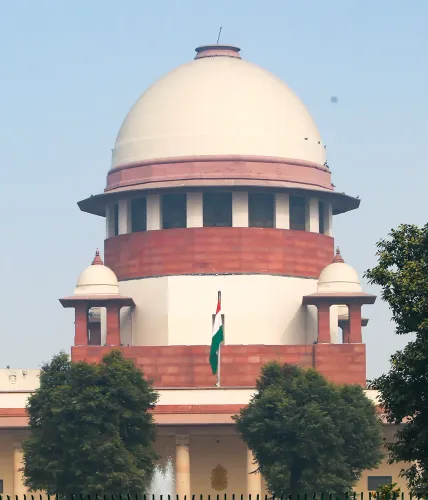
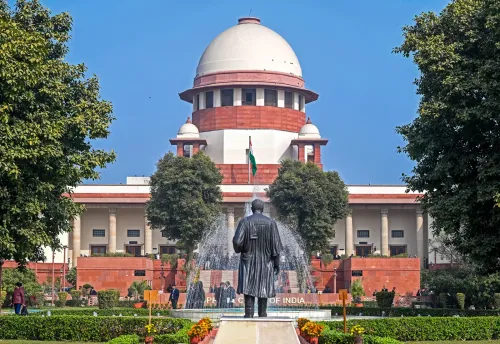
New Delhi, April 17 (NationPress) The Supreme Court has affirmed that while it is not compulsory to frame issues in an ex parte civil case, courts are required to pinpoint and resolve the "points for determination", ensuring a reasoned judgment consistent with the Code of Civil Procedure (CPC).
A bench led by Justices Sanjay Karol and AG Masih overturned the findings of both the trial court and the Calcutta High Court, which had rejected a lawsuit for specific performance of a sales agreement, arguing that the process was flawed due to the failure to frame issues, thereby prejudicing the plaintiff.
This case involved a civil appeal from Pramod Shroff, who contested the dismissal of his suit regarding a 1977 agreement for the sale of a flat in Kolkata.
In clarifying the legal stance, Justice Karol's Bench stated: "Although the creation of issues is not mandated when the defendant does not present a defense, the significance of framing issues cannot be overstated."
The court emphasized that even in ex parte situations, judgments should be constructed around well-defined questions requiring resolution.
"The court must ascertain the 'points for determination' and systematically address these points in the ex parte judgment," the Supreme Court noted.
The apex court reiterated that a legitimate judgment must adhere to Order XX Rule 4(2) CPC, which stipulates a succinct case statement, determination points, decisions on those points, and the rationale behind such decisions.
"Whether contested or proceeding ex parte, a court must draft a judgment that aligns with the Code's provisions," it remarked, warning that neglecting to do so could lead to a "material irregularity".
In this instance, the trial court dismissed the suit on grounds that the plaintiff did not prove the defendant's title to the property, despite no issue being framed on this matter.
Upholding the appellant’s argument, the Supreme Court indicated that the lack of such an issue deprived the plaintiff of the chance to present evidence.
"Without any issues being framed, especially regarding title contestation... the Appellant was not expected to prove such title," the ruling stated, noting that the failure to frame issues had indeed prejudiced the plaintiff.
The Justice Karol-led Bench clarified that while the omission of issues does not automatically invalidate proceedings, it hinges on whether the parties were aware of the specific issues at stake and had the chance to present evidence.
"While framing issues is not compulsory, if this omission results in prejudice to the parties, it may invalidate the trial," the court held.
By overturning the decisions of the lower courts, the Supreme Court has sent the case back to the trial court for reevaluation. It mandated the framing of issues, the opportunity for parties to finalize pleadings and present evidence, and a swift resolution of the suit, which dates back to 2007.
"The court will frame issues and allow the parties to present evidence... and must reach a decision as soon as possible," the bench instructed.
Point of View
Reinforcing the principles of justice and procedural fairness. This decision holds significant implications for future civil litigation, ensuring that all parties are afforded an equitable opportunity to present their cases.
NationPress
19 Sept 2026
Frequently Asked Questions
What is the significance of the Supreme Court's ruling?
The Supreme Court's ruling emphasizes that even in ex parte cases, courts are obligated to identify and adjudicate key points for determination, ensuring a reasoned judgment that complies with legal standards.
What happens if issues are not framed in a civil suit?
If issues are not framed, it can lead to prejudice against a party, as seen in this case, where the absence of issues deprived the plaintiff of the chance to present evidence.
Can the omission of issues invalidate a trial?
While not automatically, the omission of issues can invalidate a trial if it results in prejudice to the parties involved.
What should courts do in ex parte cases?
Courts should identify the 'points for determination' and structure their judgments around these points to ensure clarity and fairness.
What is the role of the Code of Civil Procedure (CPC) in this context?
The CPC provides the framework for civil proceedings, including requirements for judgments and the necessity of addressing points for determination.