Will the Supreme Court Hear the Plea Against Sonam Wangchuk's Detention on Monday?
Synopsis
On February 9, the Supreme Court will hear a pivotal plea from Dr. Gitanjali J. Angmo, challenging the detention of her husband, Sonam Wangchuk, under the National Security Act. This case raises significant questions about justice and human rights in India.
Key Takeaways
The Supreme Court will hear a plea regarding Sonam Wangchuk's detention on February 9.
His wife argues that the detention is unlawful and violates fundamental rights.
Wangchuk has been in custody since September 2025.
The case underscores the tension between national security and individual rights.
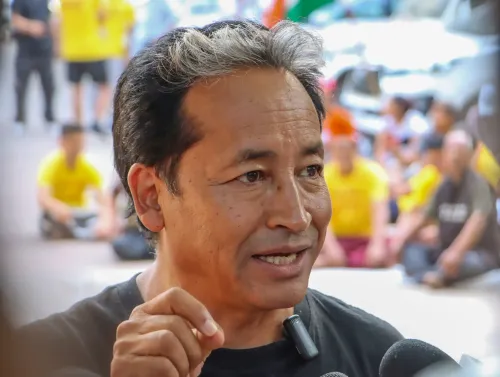
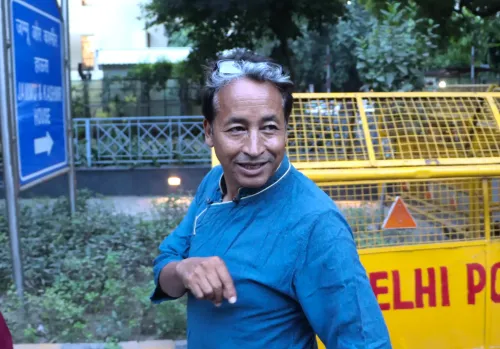
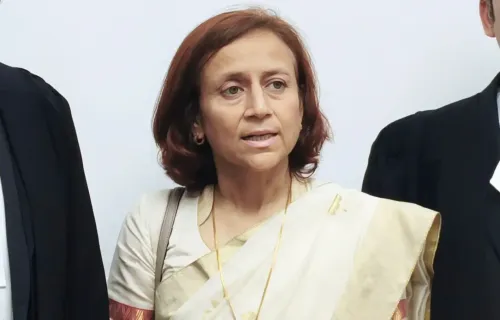
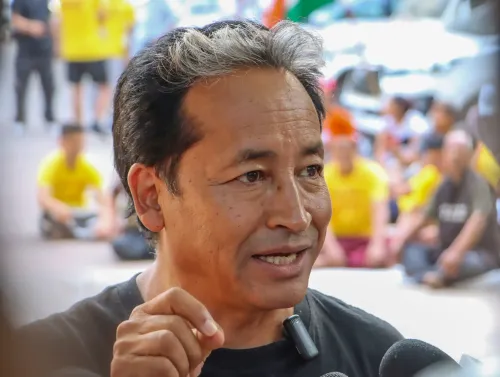
New Delhi, Feb 8 (NationPress) The Supreme Court is set to deliberate on a plea on Monday submitted by Dr. Gitanjali J. Angmo, the spouse of climate activist Sonam Wangchuk, contesting his ongoing preventive detention under the National Security Act (NSA).
According to the schedule posted on the apex court's official website, a Bench led by Justices Aravind Kumar and Prasanna B. Varale will review the habeas corpus petition filed by Dr. Angmo, who describes her husband’s detention as “unlawful” and an “arbitrary exercise infringing upon his fundamental rights,” during the session on February 9.
In a previous session, the Supreme Court had verbally urged the Union government to reassess the ongoing preventive detention of Wangchuk.
During this session, the Justice Aravind Kumar-led Bench noted that Wangchuk had been detained since September 26, 2025, and medical reports presented to the court indicated that his health was “definitely not very good”.
It was proposed to Additional Solicitor General K.M. Nataraj that the government should “consider” whether there was a chance to reevaluate Wangchuk’s detention.
In reply, ASG Nataraj assured the Supreme Court that he would obtain guidance from the authorities. In defense of the detention, he stated that the NSA is a specific law designed for preventive measures.
“The NSA aims to prevent an individual from acting in ways harmful to public order or national security. Preventive detention is not punishment; it relies on the discretion of the detaining authority,” he told the court, emphasizing that the District Magistrate had enacted the order after thoroughly evaluating the evidence presented.
ASG Nataraj further claimed that Wangchuk’s speech on September 24, 2025, was incendiary and incited violent protests in Leh, leading to four fatalities and injuries to 161 individuals.
He also asserted that while Wangchuk had contested the initial detention order, he had not challenged subsequent orders that prolonged the detention. Nonetheless, the Justice Aravind Kumar-led Bench signaled that if the fundamental basis of the detention order was found to be legally unsound, including due to a lack of consideration, subsequent endorsements would not independently uphold it.
The Supreme Court remarked that if the detention order is annulled, all subsequent actions would be rendered void.
Point of View
I believe this case highlights the delicate balance between national security and individual rights. The ongoing detention of Sonam Wangchuk raises serious questions about the application of the National Security Act, especially regarding the implications for civil liberties in India. It is crucial for the judiciary to uphold the principles of justice and ensure that preventive measures do not infringe upon fundamental rights.
NationPress
25 Sept 2026
Frequently Asked Questions
What is the basis of Sonam Wangchuk's detention?
Sonam Wangchuk is detained under the National Security Act, which is intended to prevent actions prejudicial to public order or national security.
Who is challenging the detention?
Dr. Gitanjali J. Angmo, Wangchuk's wife, is challenging his detention in the Supreme Court.
What has the Supreme Court previously suggested regarding Wangchuk's case?
The Supreme Court has previously urged the Union government to reconsider Wangchuk's continued detention.