What’s Next for the RG Kar Rape and Murder Case?
Synopsis
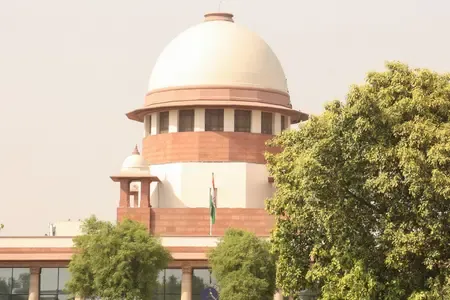
The Supreme Court has transferred the suo motu proceedings of the RG Kar Medical College rape and murder case to the Calcutta High Court, igniting national outrage and concern for hospital safety. The case raises critical systemic issues regarding the protection of medical professionals in India.
Key Takeaways
The Supreme Court has transferred the RG Kar case to the Calcutta High Court.
Significant safety concerns in public hospitals have been highlighted.
Sanjay Roy has been sentenced to life imprisonment for his role in the crime.
A National Task Force has been established to improve hospital safety.
The case has sparked national protests for systemic reform.
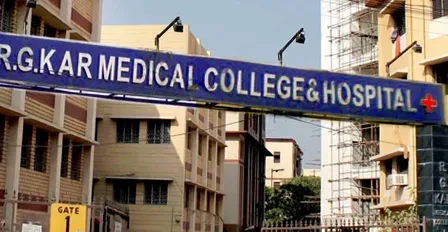
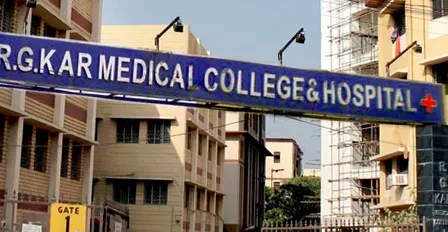
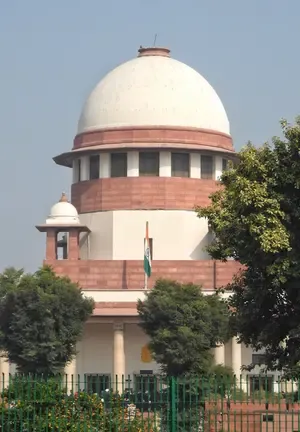
New Delhi, Dec 17 (NationPress) The Supreme Court has officially transferred the suo motu proceedings to the Calcutta High Court, following the horrific rape and murder of a junior female doctor at the state-run R.G. Kar Medical College and Hospital in Kolkata.
A Bench comprising Justices M.M. Sundresh and Satish Chandra Sharma has instructed that the case be assigned to a Division Bench of the Calcutta High Court to ensure compliance with the directives previously issued by the apex court.
“We find it suitable to refer this case to a Division Bench of the Calcutta High Court, requesting the Chief Justice to assign it to the appropriate Bench. The Registry is to forward all relevant documents to the Calcutta High Court,” stated Justice Sundresh.
The Supreme Court has also mandated the Central Bureau of Investigation (CBI) to provide its most recent status reports, which were previously submitted to the Supreme Court, to the victim's parents.
Senior advocate Karuna Nundy, representing various doctors’ associations from West Bengal, highlighted that the Supreme Court had formed a National Task Force (NTF) focused on hospital safety and related issues.
She implored the Justice Sundresh-led Bench to persist with the hearings until the NTF completes its work, noting that the CBI’s status reports raised significant concerns regarding the involvement of other parties. The apex court agreed that the Calcutta High Court is the appropriate forum to continue overseeing the investigation and trial, particularly since a petition from the victim’s parents is already under consideration there.
The court added that maintaining parallel proceedings would be unproductive. The Supreme Court began the suo motu matter titled “In Re: Alleged rape and murder incident of a trainee doctor in R.G. Kar Medical College and Hospital, Kolkata, and related issues” in August 2024, shortly after the brutal crime occurred within the hospital.
This incident ignited nationwide outrage and extensive protests from doctors and medical associations concerning the inadequate safety and basic facilities in public hospitals.
The then Chief Justice of India (CJI) D.Y. Chandrachud called the incident “horrific” and one that “shocked the conscience of the nation”, emphasizing that it raised systemic issues regarding the safety of doctors nationwide, especially in public hospitals.
The court recorded alarming deficiencies in public hospitals, such as insufficient resting rooms for doctors on night duty, the absence of designated duty rooms for males and females, extended working hours without essential hygiene facilities, a lack of security personnel, inadequate CCTV coverage, unrestricted access to hospital premises, and poorly lit areas. To tackle these issues, the Supreme Court established a 10-member NTF to make recommendations regarding the safety, working conditions, and well-being of medical professionals.
Previously, the Calcutta High Court had transferred the investigation in the rape case to the CBI.
In January 2025, a sessions court in Kolkata’s Sealdah sentenced the primary accused, Sanjay Roy, a former civic volunteer with the Kolkata Police, to life imprisonment after convicting him under the Bharatiya Nyaya Sanhita (BNS) provisions concerning rape and murder.
Point of View
I stand firmly with the nation in demanding justice for the victim of this horrific crime. It is crucial that we address the systemic issues that have been highlighted by this tragedy, ensuring the safety and well-being of all medical professionals in public hospitals across India. We must advocate for the necessary reforms to prevent such incidents from occurring in the future.
NationPress
27 Oct 2026
Frequently Asked Questions
What was the Supreme Court's recent decision regarding the RG Kar case?
The Supreme Court transferred the suo motu proceedings of the RG Kar rape and murder case to the Calcutta High Court for further supervision.
Who is the prime accused in the case?
The prime accused is Sanjay Roy, a former civic volunteer with the Kolkata Police, who was sentenced to life imprisonment.
What systemic issues were highlighted by the Supreme Court?
The Supreme Court pointed out serious deficiencies in public hospitals, including safety concerns and inadequate facilities for medical professionals.
What is the National Task Force (NTF)?
The NTF was established by the Supreme Court to make recommendations on safety and working conditions for medical professionals.
What actions are being taken to ensure justice for the victim?
The Calcutta High Court is overseeing the investigation, and the CBI has been instructed to provide updates to the victim's family.