Surat tribal youth eye Army careers as Sainik School drives change in Wadi
Synopsis
In Wadi, one of Gujarat's most underserved tribal belts, a state-backed Sainik School is quietly rewriting the futures of 372 young students — giving them parade drills, Olympic dreams, and a credible shot at the Armed Forces. With ₹50 crore invested in infrastructure and ₹80,000 per student annually, this is tribal empowerment with a uniform attached.
Key Takeaways
A Sainik School in Wadi, Surat is training 372 tribal students from grades 6 to 12 for careers in the Armed Forces .
The 20-acre campus was built at an estimated cost of ₹50 crore by the Gujarat government .
The state provides an annual grant of ₹80,000 per student, including free boarding and lodging.
Retired Army officers, including former Subedar Sham Singh Vasava , provide on-campus physical and military training.
The school is operated by the Gujarat State Tribal Education Society under the Tribal Development Department .
A Sainik School in Wadi, a predominantly tribal belt in Surat district, Gujarat, is transforming aspirations for hundreds of young students from Scheduled Tribe communities, channelling their ambitions toward careers in the Armed Forces. The initiative, backed by the Gujarat government's Tribal Development Department, is providing structured military-oriented education to 372 tribal students across grades 6 through 12, free of cost.
School Background and Scale
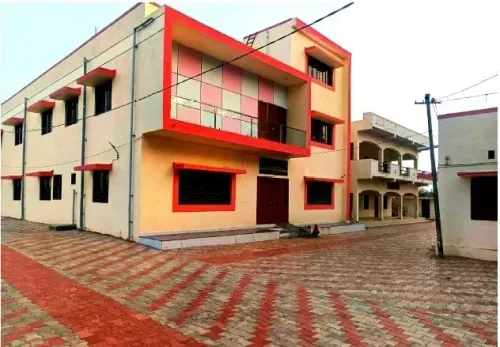
The school is operated by the Gujarat State Tribal Education Society under the aegis of the Tribal Development Department of the Government of Gujarat. Set on a sprawling 20-acre campus built at an estimated cost of approximately ₹50 crore, the facility includes smart classrooms, a mess hall, a library, a 400-metre athletics track, and well-equipped laboratories for Chemistry, Physics, Biology, and Computer Science.
Currently, 349 students reside in the hostel while pursuing their studies, according to school principal Jaideep Singh Rathore. The state government provides an annual grant of ₹80,000 per student, covering boarding and lodging alongside academic expenses.
Military Training and Discipline
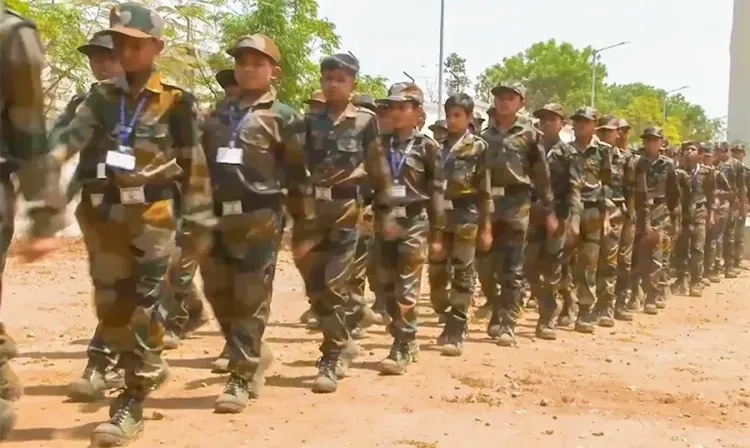
A special drive has been launched to encourage tribal children to excel in sports and prepare for military service. Daily training sessions include one-hour parade drills covering basic commands, PT exercises, flag marching, and flag salutations. Retired Army officers are regularly invited to the campus to deliver specialised training.
Retired Subedar Sham Singh Vasava, who trains students at the school, said, 'We provide them with physical training here to ensure that these tribal children get a fair opportunity to join the defence services.'
Student Divyaben Pangi described the experience: 'We undergo one-hour parade session during which we are taught about discipline, as Army parades are inherently disciplined exercises. During the parade, we are trained in everything from basic commands to comprehensive PT drills, flag marching, and flag salutations.'
Student Aspirations Beyond the Army
The rigorous daily routine has broadened students' ambitions beyond military service. Many enrolled students say the discipline and physical training have strengthened their resolve to become Army officers, while others harbour dreams of winning medals at the Olympics. Special emphasis is placed on discipline, sports, and physical education as pillars of the school's ethos.
Significance for Tribal Communities
Wadi has historically lagged in educational and economic indicators, making the school's outreach particularly significant. This initiative represents a concerted state-level effort to bridge the opportunity gap for tribal youth by providing a pathway into one of India's most respected institutions — the Armed Forces. As the school continues to expand its intake and training infrastructure, it stands as a replicable model for tribal empowerment through structured education and vocational aspiration.
Point of View
Aspirational outcome rather than a statistical footnote. Yet the real measure of success will be how many of these 372 students actually clear Armed Forces selection boards — a number the government has not yet made public. India's tribal communities remain underrepresented in officer-rank military positions; a ₹50 crore campus is a necessary but not sufficient condition for closing that gap. Tracking outcomes, not just enrolments, is what will determine whether this model deserves replication across other tribal belts.
NationPress
26 Sept 2026
Frequently Asked Questions
Where is the Sainik School for tribal students in Gujarat located?
The school is located in Wadi, a predominantly tribal belt in Surat district, Gujarat. It is operated by the Gujarat State Tribal Education Society under the state's Tribal Development Department.
How many students are enrolled at the Wadi Sainik School?
A total of 372 tribal students are currently enrolled across grades 6 to 12, with 349 of them residing in the school hostel. All students belong to Scheduled Tribe communities.
What financial support does the Gujarat government provide to students?
The Gujarat government provides an annual grant of ₹80,000 per student, which covers free boarding and lodging in addition to educational expenses. The school campus itself was built at an estimated cost of ₹50 crore.
What kind of military training do students receive at the school?
Students undergo daily one-hour parade sessions covering basic commands, PT drills, flag marching, and flag salutations. Retired Army officers, including former Subedar Sham Singh Vasava, are regularly brought in to deliver specialised training.
Why is this initiative significant for tribal communities in Gujarat?
Wadi has historically been an educationally and economically backward area. The school provides tribal youth with a structured, state-funded pathway into the Armed Forces — a career avenue that was largely inaccessible to this demographic before the initiative was launched.