Lakshmi Puri's 'Swallowing the Sun' gets multi-season web series adaptation
Synopsis
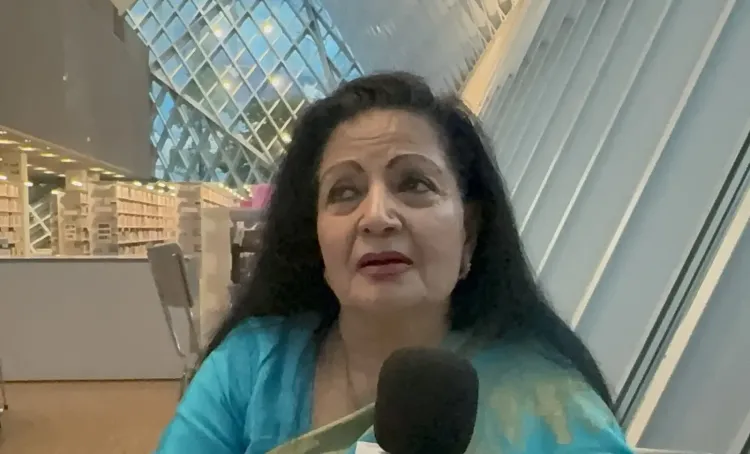
Former UN official Lakshmi Puri has confirmed her bestselling novel 'Swallowing the Sun' — a pan-India epic of women's empowerment set against India's freedom struggle — is being adapted into a multi-season web series, with screenplay writing already under way. No platform or release date has been named yet, but the project is advancing even as Puri takes the book's international edition on a US tour.
Key Takeaways
Lakshmi Puri confirmed a multi-season web series adaptation of 'Swallowing the Sun' is in development, with screenplay work under way.
The project was first announced in September 2025 ; no streaming platform or release date has been named.
The novel's international edition was launched in Britain in February 2026 ; Puri is currently on a US tour covering Seattle, Los Angeles, San Francisco, and Houston.
Marathi and Telugu translations are available and reportedly bestsellers; a Hindi edition is expected soon.
The novel is set against India's independence struggle and draws inspiration from Puri's own family — her mother was among Maharashtra's early women lawyers and her father contributed to India's Constitution alongside B.R.
The title is drawn from a verse by saint-poet Muktabai , with themes of women's empowerment and the human capacity to achieve the impossible.
Former UN assistant secretary-general and author Lakshmi Puri has confirmed that a multi-season web series adaptation of her novel 'Swallowing the Sun' is currently in development, with screenplay writing already under way. Puri disclosed the update during her ongoing United States tour, where she is promoting the book's international edition across cities including Seattle, Los Angeles, San Francisco, and Houston.
Where the Adaptation Stands
Puri said the project, which she noted was first announced in September last year, has made significant progress. 'So they are writing the screenplay and it's, it's, and then, you know, the whole process is ongoing,' she said. While she expressed hope that the series would eventually appear on a major streaming platform, she did not identify a platform or announce a release date, placing the project firmly in the development stage.
The Novel's Journey — From JLF to International Shelves
The novel's public journey began at the Jaipur Literature Festival in early 2024. Its international edition was launched in Britain in February 2026, and the current US tour marks its entry into North American readership. Puri described the novel as an instant bestseller that has also received critical acclaim. Marathi and Telugu translations are already available — both reportedly bestsellers in their respective markets — while a Hindi edition is expected soon.
Two appearances on the US tour are linked to the Jaipur Literature Festival's overseas editions, in Seattle and Houston. Puri also plans to participate in the South Asian Literature and Art Festival and other engagements. One event coincides with Gandhi Jayanti, which she said she will use to discuss how Mahatma Gandhi comes alive in the narrative — the novel is set against the backdrop of India's independence struggle.
The Family Story Behind the Fiction
Asked what inspired the novel after a career spanning diplomacy and international service, Puri traced its origins to her own family. Her mother was among the early women in Maharashtra to pursue postgraduate education and study law. Her father was a lawyer who, she said, contributed to work on India's Constitution in support of B.R. Ambedkar. Both parents wrote poetry, and their values and experiences shaped the world she wanted to recreate in fiction.
Puri was careful to distinguish inspiration from biography, however. The novel pays tribute to her parents' generation but its characters and narrative belong to fiction. 'So I realised that this cause is best promoted through storytelling,' she said, linking her turn to fiction with the gender equality cause she had championed at the United Nations.
A Pan-India Epic Rooted in Maharashtra
The narrative moves across India, taking in Indore, Mumbai, Banaras, Shimla, and Delhi, with its roots firmly in Maharashtra. Puri described it as both an epic romance and a story of women's empowerment, exploring how women a century ago found the confidence to act, pushed against restrictions, and participated in the freedom struggle. The title draws from a verse by the saint-poet Muktabai, whose imagery of extraordinary, seemingly impossible feats underpins the novel's faith in human possibility. 'So, you know, emphasising that if you have faith, if you persist, if you dare, you can achieve the impossible,' she said. 'So it's a pan-India story, quintessentially Indian, but universal in appeal.'
India's Soft Power and the Future of Writing
Puri placed the book's international journey within the wider movement of Indian literature across borders, crediting the Jaipur Literature Festival's organisers for taking Indian writing abroad. 'And that osmosis has been a major contribution to spreading India's soft power around the world,' she said. She also welcomed the festival's expanding presence in the United States, Britain, and Spain. Asked about writing in the age of artificial intelligence, Puri expressed hope that the written word would survive in its original, human conception. The screen adaptation, if it reaches a major platform, would bring the novel's themes of women's resilience and India's freedom struggle to a global streaming audience.
Point of View
No release date, and a screenplay still being written. The real test will come when a streamer commits, given how many celebrated Indian novels have stalled at this exact stage. Puri's dual standing as a former UN official and debut novelist gives the project an unusual profile, but streaming platforms tend to greenlight on story and showrunner, not authorial biography.
NationPress
19 Sept 2026
Frequently Asked Questions
What is 'Swallowing the Sun' and who wrote it?
'Swallowing the Sun' is a debut novel by Lakshmi Puri, a former UN assistant secretary-general, that blends epic romance, poetry, and women's empowerment against the backdrop of India's independence struggle. The title is drawn from a verse by the Marathi saint-poet Muktabai, and the story spans locations including Mumbai, Indore, Banaras, Shimla, and Delhi.
Which streaming platform will carry the web series adaptation?
No platform has been announced. Puri said she hopes the multi-season series will eventually appear on a major streaming platform, but the project is currently in the screenplay-writing stage and no release date has been set.
When was the web series adaptation first announced?
The adaptation was first announced in September 2025, according to Puri. Screenplay writing is under way, but the project has not yet been formally commissioned by a platform.
In which languages is 'Swallowing the Sun' available?
The novel is available in English, Marathi, and Telugu — with the Marathi and Telugu editions reportedly bestsellers. A Hindi translation is expected soon. The international English edition was launched in Britain in February 2026.
What inspired Lakshmi Puri to write the novel?
Puri drew inspiration from her own family: her mother was among Maharashtra's early women to pursue postgraduate education and law, and her father was a lawyer who contributed to India's Constitution alongside B.R. Ambedkar. Her career at the United Nations, focused on gender equality, also shaped the novel's central themes of women's empowerment.