Bansuri Swaraj Slams Kejriwal: Double Standards & AAP's Ideological Crisis

Synopsis
BJP MP Bansuri Swaraj exposed Arvind Kejriwal's alleged hypocrisy on April 25 as seven AAP Rajya Sabha MPs defected to BJP. She invoked the Sheesh Mahal scandal, Punjab taxpayer misuse, and broken austerity promises to declare AAP's 'ideological bankruptcy' — marking one of the party's darkest political days since its founding.
Key Takeaways
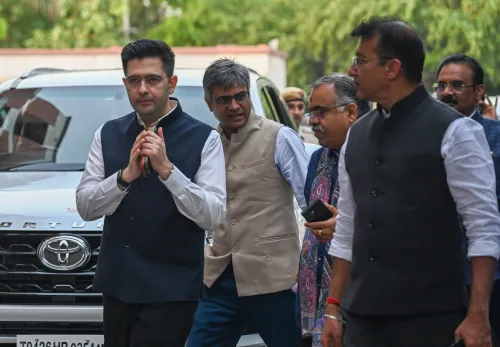
Seven AAP Rajya Sabha MPs merged with the BJP on April 25, 2025 , in one of the biggest defections in AAP's history.
BJP MP Bansuri Swaraj accused Arvind Kejriwal of breaking his explicit promises to never use a government car or official residence.
Swaraj alleged Kejriwal misused Punjab government aircraft for personal travel and election campaigning at Punjab taxpayers' expense.
The Sheesh Mahal renovation controversy was cited as evidence of Kejriwal's alleged hypocrisy during the COVID-19 pandemic .
Swaraj declared AAP's ideological bankruptcy is now visible, noting that founding members have begun quitting the party.
AAP was described as having betrayed the Anna Hazare anti-corruption movement of 2011 from which it originated.
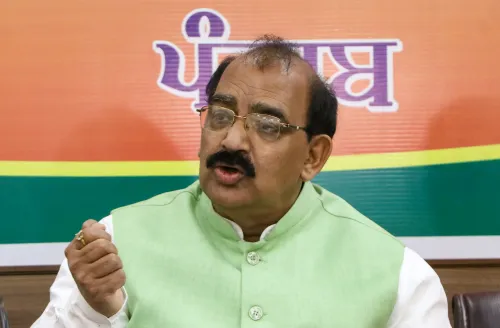
New Delhi, April 25: BJP MP Bansuri Swaraj launched a sharp and comprehensive attack on Aam Aadmi Party (AAP) supremo Arvind Kejriwal on Saturday, accusing him of blatant double standards — preaching austerity while allegedly living lavishly at taxpayer expense. Speaking at a press conference following the dramatic merger of seven AAP Rajya Sabha MPs with the Bharatiya Janata Party (BJP), Swaraj declared that AAP's ideological bankruptcy is now fully exposed before the nation.
Seven AAP Rajya Sabha MPs Defect to BJP
The political earthquake of seven sitting AAP Rajya Sabha MPs switching allegiance to the BJP set the backdrop for Swaraj's press briefing. She described the mass departure as a direct rejection of what she called AAP's "anti-women politics, deception, and lies." The defections represent one of the most significant organisational blows to AAP since its founding, stripping the party of critical upper-house representation.
Swaraj noted that several of these departing leaders were among AAP's founding members, making their exit symbolically devastating. "The ideological bankruptcy within AAP is now visible for all to see," she stated, urging the party leadership to seriously introspect rather than dismiss the wave of resignations.
Kejriwal's 'Common Man' Mask: The Hypocrisy Allegations
Swaraj methodically dismantled what she described as Kejriwal's carefully constructed public persona. She reminded the audience that Kejriwal had explicitly promised Delhi's voters that he would never use an official government car or reside in an official government bungalow — promises she alleged he violated repeatedly once in power.
Taking a pointed jibe at Kejriwal's signature muffler — a long-standing symbol of his common-man image — Swaraj quipped, "He gets a cough just before elections." She argued that his attire and mannerisms were "tools of deception" rather than genuine expressions of simplicity.
She also highlighted that despite holding no position as an MLA or Chief Minister after AAP's defeat in the Delhi Assembly elections, Kejriwal continued to reside at the official government residence of a former Rajya Sabha MP from his party — a privilege she called unjustifiable.
Sheesh Mahal and Punjab Taxpayer Controversy
Swaraj revisited the politically charged "Sheesh Mahal" controversy, alleging that Kejriwal spent public money on a lavish official residence renovation during the COVID-19 pandemic — a period when Delhi's citizens were in desperate need of healthcare infrastructure and government support. "When people needed their Chief Minister the most, he was busy using their money to build his Sheesh Mahal," she charged.
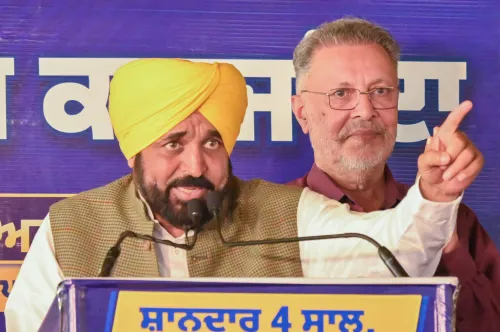
She further alleged that following AAP's loss in Delhi, Kejriwal shifted his political base to Punjab and allegedly misused state government resources — including helicopters and aircraft — for personal travel and election campaigning, burdening Punjab's taxpayers. "Government transport facilities are meant for official purposes of a sitting Chief Minister, not for political tours funded by the public exchequer," Swaraj stated.
Anna Hazare Movement Betrayal and AAP's Origins
Swaraj drew a historical arc back to AAP's founding roots in the Anna Hazare anti-corruption movement of 2011, arguing that the party had fundamentally betrayed the values it was built upon. "They emerged from the Anna Hazare movement, but later, they betrayed Anna Hazare as well," she said, framing the party's trajectory as a classic case of political opportunism replacing genuine ideology.
She described AAP as having initially projected itself as a credible alternative to mainstream politics, only to become, in her words, "old wine in a new bottle" — mimicking the very political culture it had promised to dismantle. This framing resonates with a broader national disillusionment with alternative politics that critics say has been building since AAP's governance record came under scrutiny.
Political Implications and What Comes Next
The defection of seven Rajya Sabha MPs to the BJP significantly weakens AAP's presence in the upper house of Parliament and raises serious questions about the party's future as a national political force. With AAP already having lost power in Delhi and facing mounting internal dissent, the coming months will be critical for Kejriwal as he attempts to consolidate his position in Punjab — the party's last major electoral stronghold.
Political analysts note that the BJP's absorption of these MPs also signals a strategic effort to neutralise AAP as an opposition voice in Parliament ahead of future electoral cycles. Swaraj's press conference, framed around accountability and broken promises, appears designed to deepen public scrutiny of Kejriwal's leadership narrative at a moment of maximum vulnerability for the party.
Point of View
Opportunistic politics it now embodies. With Punjab as its last fortress, Kejriwal faces an existential reckoning — and the BJP is ensuring every crack is visible to the public.
NationPress
16 Sept 2026
Frequently Asked Questions
Why did seven AAP Rajya Sabha MPs join the BJP?
Seven AAP Rajya Sabha MPs merged with the BJP on April 25, 2025, citing opposition to AAP's alleged anti-women politics, double standards, and deception. BJP MP Bansuri Swaraj described their departure as a rejection of Kejriwal's leadership style and ideological drift.
What is the Sheesh Mahal controversy involving Arvind Kejriwal?
The Sheesh Mahal controversy refers to allegations that Arvind Kejriwal spent crores of taxpayer money renovating his official Chief Minister's residence in Delhi, even during the COVID-19 pandemic. BJP leaders have repeatedly used this issue to counter Kejriwal's common-man image.
What double standards is Bansuri Swaraj accusing Kejriwal of?
Bansuri Swaraj accused Kejriwal of promising voters he would never use a government car or official residence, then doing both while in power. She also alleged he used Punjab government aircraft for personal and political travel at taxpayer expense.
How does the AAP MP defection impact the party's strength in Parliament?
The loss of seven Rajya Sabha MPs significantly weakens AAP's parliamentary presence in the upper house, reducing its ability to influence legislation and debates at the national level. Combined with its Delhi election loss, this marks a major decline in AAP's national political footprint.
What is the connection between AAP and the Anna Hazare movement?
AAP was founded in 2012 by Arvind Kejriwal and others who emerged from the Anna Hazare-led anti-corruption movement of 2011. BJP's Bansuri Swaraj alleged that AAP later betrayed Anna Hazare and the values of that movement, reducing it to conventional political opportunism.