Tamil Nadu Appoints 127 Agricultural Officers in Coimbatore to Enhance Farming Services
Synopsis
In a transformative move, Tamil Nadu has appointed 127 Agricultural Extension Officers in Coimbatore district to streamline access to agricultural information and government schemes, promising to empower farmers and improve service delivery.
Key Takeaways
127 AEOs appointed in Coimbatore for streamlined services.
Single-window interface aims to simplify access to information.
Covers 228 village panchayats in the district.
Each AEO will manage agricultural areas of 2,922 to 3,200 acres .
Expected to enhance communication and productivity in agriculture.
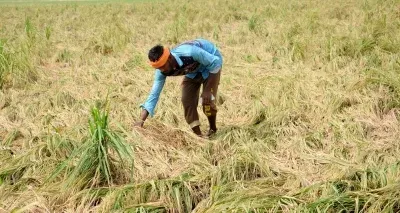
Coimbatore, Feb 28 (NationPress) In a significant advancement aimed at enhancing agricultural services, the Tamil Nadu government has designated 127 Agricultural Extension Officers (AEOs) in Coimbatore district as part of the newly structured Uzhavar Aluvalar Thodarbu Thittam (UATT 2.0). This initiative is focused on establishing a single-point interface for farmers to access comprehensive agricultural information and government schemes.
The appointments span all 228 village panchayats within the district, with each AEO assigned to specific areas at the panchayat level.
Under the plan, one officer will serve at least two village panchayats.
According to government guidelines, each AEO will manage an agricultural area of approximately 2,922 to 3,200 acres, overseeing one to three panchayats within a block.
The UATT 2.0 scheme was launched to address the persistent requests from farmers for a more coherent and accessible system.
In the past, farmers had to approach various departments, such as agriculture, horticulture, agricultural marketing, and agricultural engineering, to gather information on different schemes and technical support.
This revised system consolidates these services, allowing farmers to receive updates and assistance from a single designated officer in their village cluster.
A senior agricultural official from Tamil Nadu stated that these appointments were made following a recent government directive to ensure AEOs are deployed at the community level.
Among the approved positions, 63 officers are from the Agriculture Department, 47 from the Horticulture Department, and 17 from the Agricultural Marketing and Agri-Business Department.
The official noted that the newly appointed AEOs have been allotted two weeks to wrap up any outstanding tasks in their original departments before they fully integrate into their roles under UATT 2.0.
Farmers throughout the district have expressed their support for this initiative, asserting that the single-window system will minimize delays, enhance coordination, and facilitate timely access to information regarding subsidies, crop advisories, market rates, and infrastructure assistance.
They anticipate that having a dedicated extension officer at the panchayat level will improve accessibility and bolster the last-mile delivery of governmental services.
Officials believe this scheme will significantly enhance communication between farmers and the government, ultimately increasing productivity and administrative efficiency in the agricultural sector.
Point of View
Promising improved efficiency and communication in the agricultural sector. The government's commitment to enhancing service delivery at the grassroots level is commendable and reflects a nation-first approach.
NationPress
23 Sept 2026
Frequently Asked Questions
What is the Uzhavar Aluvalar Thodarbu Thittam (UATT 2.0)?
The UATT 2.0 is a revamped initiative by the Tamil Nadu government aimed at providing farmers with a single-point interface for agricultural information and government schemes.
How many Agricultural Extension Officers have been appointed?
A total of 127 Agricultural Extension Officers have been appointed in Coimbatore district.
What areas will the AEOs cover?
The AEOs will cover all 228 village panchayats in the district, with each officer assigned to specific areas.
What is the expected impact of this initiative?
The initiative is expected to reduce delays, improve coordination, and ensure timely access to information regarding subsidies, crop advisories, and infrastructure support for farmers.
How does this initiative address farmers' needs?
This initiative responds to farmers' longstanding demands for a more coordinated and accessible system, consolidating multiple agricultural services under a single interface.