Can Tariff Reversal Improve India–US Relations?
Synopsis
Indian American community leader Dr. Bharat Barai emphasizes the urgent need for Washington to reverse its tariff policies against India to mend bilateral relations. As tensions rise, he questions why India is unfairly targeted amidst broader global trade dynamics, raising concerns about the future of this important relationship.
Key Takeaways
Bharat Barai warns of strained India-US relations .
Recent tariffs may unfairly target India amid global trade dynamics.
India is diversifying its oil sources while facing high tariffs.
Political influences behind tariff decisions have been criticized.
India’s global standing has improved over the past year.
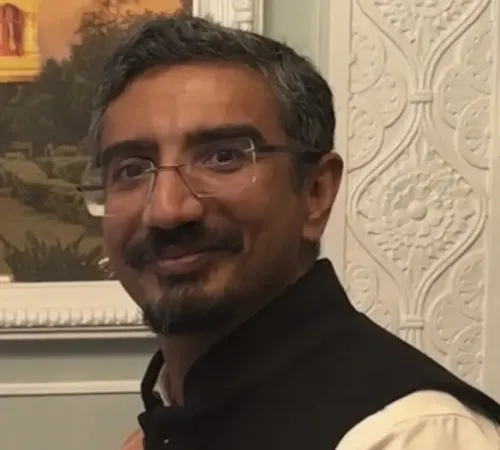
Chicago, Dec 15 (NationPress) Prominent Indian American physician and community advocate Dr Bharat Barai cautioned that the India–US relationship may remain tense for the foreseeable future unless Washington reconsiders its recent tariff policies. He contended that New Delhi has been unjustly targeted within the broader context of global trade and energy issues.
In an interview with IANS, Dr Barai remarked that the positive momentum established in India–US relations over various administrations has been jeopardized since President Donald Trump's return to office, particularly due to trade actions influenced more by political motives than economic rationale.
While acknowledging that the United States faces a trade deficit with India, Dr Barai emphasized that rectifying this should involve a measured economic strategy. He stated, “Implementing a certain level of tariffs strictly for economic reasons to address the trade deficit is one issue, but imposing a hefty 25 percent reciprocal duty to eliminate the trade deficit is another.” He suggested that this rate ought to be more moderate, perhaps around 15 percent.
Dr Barai expressed particular discontent with the additional 25 percent duty imposed as a penalty related to India’s imports of Russian oil. Although he condemned Russia’s actions in Ukraine, he noted that India has become “an innocent bystander casualty” in a policy that appears inconsistent.
“China imports more oil than India does, yet they possess a leverage point in the form of rare earth metals,” he pointed out, highlighting the dependence of the US and Europe on Chinese rare earths for electric vehicle production, defense technologies, and advanced aircraft. He also mentioned that numerous European nations continue to acquire Russian energy without facing similar sanctions.
“Why impose a 25 percent additional import duty on India when China has only a 47 percent tariff? Most European countries hover around 15 percent. There are no extra duties on Hungary or Slovenia for their ongoing imports of Russian oil,” he remarked.
Dr Barai traced the tariff decisions back to a small faction within the administration, identifying President Trump, immigration hardliner Stephen Miller, and trade advisor Peter Navarro as pivotal figures behind the policy. He noted that many legislators privately disapprove but hesitate to voice their concerns.
“Many congressmen and senators express their dissatisfaction in private discussions. They acknowledge the impropriety but fear potential retaliation from President Trump,” he remarked, adding that the fear of primary challenges has kept them from speaking out.
He noted that recent electoral outcomes in states like New Jersey and Virginia, along with a mayoral election in Miami, reflect increasing public discontent. “His policies are becoming highly unpopular. They appear arbitrary, concocted by a small group of individuals within the Oval Office rather than being deliberated by the US Congress,” Dr Barai stated, expressing hope that the Supreme Court will eventually rule that tariffs fall under Congressional authority.
Regarding the future of bilateral ties, Dr Barai suggested that the relationship may remain stagnant unless a trade agreement is reached to eliminate the additional duty. Some Indian companies, including Reliance, have reduced their imports of Russian oil following specific sanctions but acknowledged that India cannot entirely forsake a major energy source.
“For India, catering to a population of 1.4 billion necessitates finding reliable and affordable energy sources,” he emphasized, noting that India sources only about 35 percent of its oil from Russia while diversifying its imports from the Middle East, Africa, and Latin America.
Dr Barai affirmed that Prime Minister Narendra Modi is acting in the best interest of India and has navigated pressure from Washington “very diplomatically, very politely, very gentlemanly,” without yielding. “He is prioritizing what is best for the Indian populace,” he stated.
He also contended that India’s global standing has improved over the past year, citing strengthened ties with Europe, a free trade agreement with the UK, enhanced engagement with Africa, and a recent defense pact with Australia. “India is now more respected than before, except perhaps in the United States,” he concluded.
Point of View
I believe Dr. Barai's insights reflect a significant concern regarding the current state of India-US relations. His call for a reassessment of tariff policies underscores the importance of fair trade practices and international cooperation. The dynamics between powerful nations should prioritize diplomacy and mutual benefit, especially in today's interconnected world.
NationPress
20 Sept 2026
Frequently Asked Questions
What are the implications of the tariff measures on India-US relations?
The tariff measures could lead to a prolonged strain in India-US relations, impacting trade and diplomatic ties.
Who is Dr. Bharat Barai?
Dr. Bharat Barai is a prominent Indian American physician and community leader advocating for fair trade practices.
What percentage of oil does India import from Russia?
India sources about 35 percent of its oil from Russia.
What are Dr. Barai's concerns regarding the US tariff policy?
He argues that the tariffs are politically driven and unfairly target India while other nations face lower tariffs.
How has India improved its global standing recently?
India has strengthened ties with Europe, secured a free trade agreement with the UK, and engaged more with Africa.