Taslima Nasrin backs Uniform Civil Code for India, Bangladesh, Pakistan
Synopsis
Taslima Nasrin, returning to Kolkata after nearly 19 years, used her first major public appearance to call the Uniform Civil Code essential for India, Bangladesh, and Pakistan — and to demand an end to madrasas. Her remarks land just as West Bengal has quietly formed a committee to examine a state-level UCC draft, making the timing anything but coincidental.
Key Takeaways
Taslima Nasrin called the Uniform Civil Code 'essential' for India , Bangladesh , and Pakistan at a Kolkata press conference on 2 August .
She argued that Hindu women in Bangladesh are denied equal inheritance rights and that a UCC is necessary to address this.
West Bengal recently formed a high-level committee to examine a draft UCC Bill for the state, citing its 'wide ramifications.' Nasrin returned to Kolkata after nearly 19 years , having been forced to leave in 2007 over protests against her book Dwikhandito .
She also called for the abolition of madrasas in Bangladesh, echoing former CM Buddhadeb Bhattacharjee 's 2002 remarks on militant activity in such institutions.
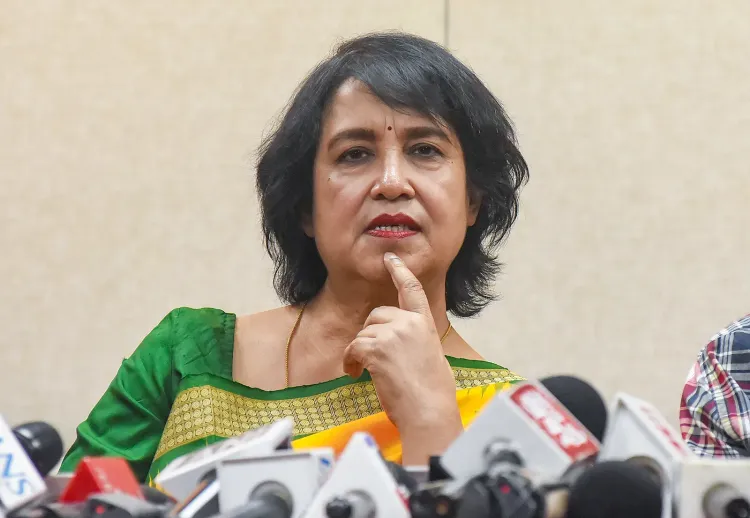
Exiled Bangladeshi writer Taslima Nasrin on Sunday, 2 August declared that a Uniform Civil Code (UCC) is essential for India, Bangladesh, and Pakistan to eliminate discrimination against women — remarks made at a press conference in Kolkata, days after West Bengal constituted a high-level committee to examine a draft UCC for the state.
What Nasrin Said
'All advanced countries have UCC-like laws. Bangladesh, Pakistan and India need a Uniform Civil Code. There should be equal laws for everyone. Women face a great deal of discrimination, and much of it can be removed through a UCC. It is essential,' Nasrin told reporters.
She specifically cited the condition of Hindu women in Bangladesh, arguing that they are denied equal inheritance rights. 'If Hindu women are to enjoy freedom and equal rights, a Uniform Civil Code is necessary,' she said, describing equality as 'the cornerstone of civilisation.'
West Bengal's UCC Committee: The Backdrop
Nasrin's remarks arrive at a politically charged moment. The West Bengal government recently formed a high-level panel to conduct a comprehensive examination of a draft UCC Bill for the state. A government notification cited the 'wide ramifications and voluminous nature' of the proposed legislation as the reason for the committee's formation, indicating that no further steps will be taken until the review is complete.
Nasrin's Return to Kolkata After 19 Years
The timing of her comments carries added weight given her personal history with the city. Nasrin, who had been forced to leave Kolkata in 2007 following protests over her book Dwikhandito (Split: A Life) — which compelled the then Left Front government to move her out — returned after nearly 19 years. She was felicitated at a state government programme at Rabindra Sadan on Saturday.
Nasrin on Madrasas and Religious Fundamentalism
Nasrin also levelled sharp criticism at the madrasa system in Bangladesh. 'The madrasas in Bangladesh should not exist. In many cases, madrasas have been found to be producing jihadists. Imams and madrasa teachers have been arrested and sent to jail. I do not believe there is any need for madrasas. Many graduates do not go on to do productive work; they survive on donations,' she said.
Her remarks effectively echoed those of former West Bengal Chief Minister Buddhadeb Bhattacharjee, who had stated in 2002 that madrasas in the state's border areas had become 'hotbeds of militant activities.' Nasrin's alignment with that position is notable, given the political controversy those comments generated at the time.
What Comes Next
The West Bengal government's UCC committee is expected to submit its findings before any legislative steps are initiated. Nasrin's public endorsement adds a prominent international voice to a debate that is already reshaping political discourse across South Asia.
Point of View
Not a domestic partisan voice. Yet her remarks arrive as West Bengal's ruling establishment, which felicitated her, simultaneously treads carefully on UCC, forming a committee rather than committing to legislation. That tension is worth scrutinising. Her criticism of madrasas, meanwhile, goes further than most mainstream Indian political commentary dares — and her explicit alignment with Bhattacharjee's 2002 position reopens a debate the Left has never fully resolved. The question is whether her return amplifies these ideas or is absorbed into the spectacle of her homecoming.
NationPress
17 Sept 2026
Frequently Asked Questions
What did Taslima Nasrin say about the Uniform Civil Code?
Taslima Nasrin said a Uniform Civil Code is 'essential' for India, Bangladesh, and Pakistan to eliminate discrimination against women. She made the remarks at a press conference in Kolkata on 2 August, arguing that equal laws are a prerequisite for women's freedom.
Why did Taslima Nasrin leave Kolkata in 2007?
Nasrin was forced to leave Kolkata in 2007 after protests erupted over the publication of her book Dwikhandito (Split: A Life), prompting the then Left Front government to move her out of the city. She returned after nearly 19 years and was felicitated at a state government event at Rabindra Sadan.
What is the West Bengal UCC committee formed to do?
The West Bengal government constituted a high-level committee to conduct a comprehensive examination of a draft Uniform Civil Code Bill for the state. A government notification cited the 'wide ramifications and voluminous nature' of the proposed legislation, and no further steps will be taken until the panel completes its review.
What did Nasrin say about madrasas in Bangladesh?
Nasrin called for the abolition of madrasas in Bangladesh, saying they have in many cases been found to produce jihadists. She noted that imams and madrasa teachers have been arrested and that many graduates do not contribute productively to society, surviving instead on donations.
How do Nasrin's madrasa remarks connect to West Bengal politics?
Her criticism echoes former West Bengal Chief Minister Buddhadeb Bhattacharjee's 2002 statement that madrasas in the state's border areas had become hotbeds of militant activities. Nasrin's public alignment with that position revisits a politically sensitive debate in the state.