Bengal UCC Bill: Muslim clerics, TMC say law needs community consent first
Synopsis
West Bengal's BJP government tabled the UCC Bill in the state Assembly, triggering immediate pushback from the All India Muslim Jamaat, TMC, and CPI-M — all of whom argue the law requires community consent before it can be enforced. With BJP framing UCC as an equality imperative and opponents calling it a communal move, the bill sets up one of the sharpest political confrontations in the state this year.
Key Takeaways
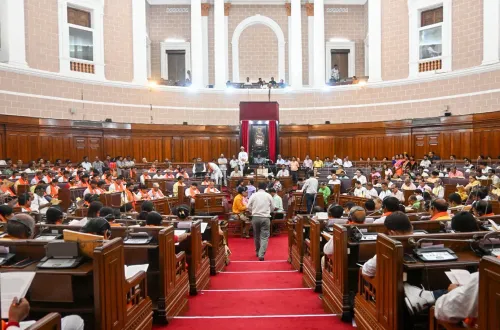
The West Bengal BJP government moved to introduce the Uniform Civil Code (UCC) Bill in the state Assembly on 26 June .
All India Muslim Jamaat President Maulana Shahabuddin Razvi Bareilvi called the UCC 'against the Constitution,' saying implementation requires consent from all communities.
TMC MP Saugata Roy cited late PM Jawaharlal Nehru's assurance to the Muslim community and invoked Article 44 of the Directive Principles.
CPI-M MP Hannan Mollah alleged the bill reflects a longstanding RSS agenda targeting Muslim rights and livelihoods.
BJP MP Praveen Khandelwal defended the bill as a commitment to equality, congratulating West Bengal CM Suvendu Adhikari for the move.
The West Bengal BJP government's move to introduce the Uniform Civil Code (UCC) Bill in the state Assembly on Monday, 26 June drew sharp opposition from the All India Muslim Jamaat and the Trinamool Congress (TMC), both of whom argued the legislation cannot take effect without the consent of the Muslim community. The pushback signals a fresh political flashpoint over the UCC ahead of what promises to be a contentious legislative debate.
Muslim Clerics Reject the Bill
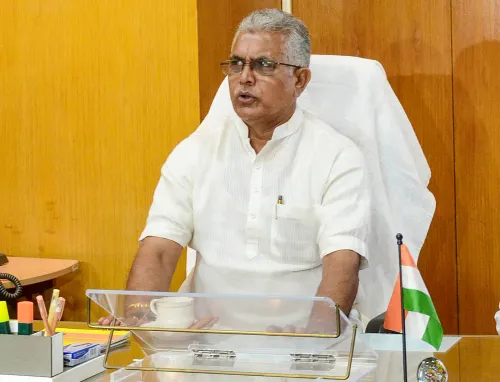
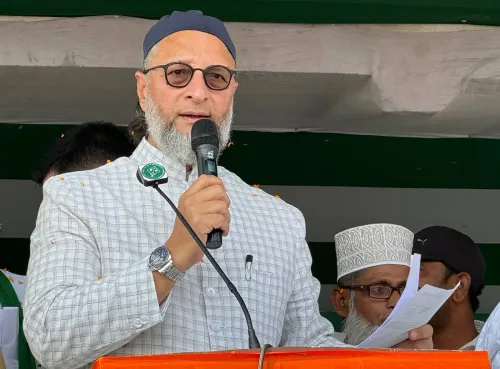
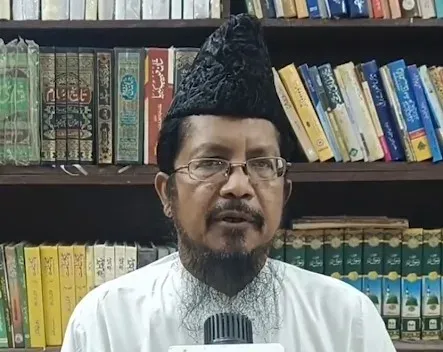
Maulana Shahabuddin Razvi Bareilvi, President of the All India Muslim Jamaat, described the UCC as 'against the Constitution,' asserting that the foundational law permits implementation only after all communities agree. 'But in whichever states UCC has been implemented so far, it is one-sided,' he said. The cleric alleged the bill is being used to 'target the Muslims,' adding: 'The members of the community will keep following the Shariat law; no one can stop them.'
Trinamool Congress Cites Nehru's Assurance
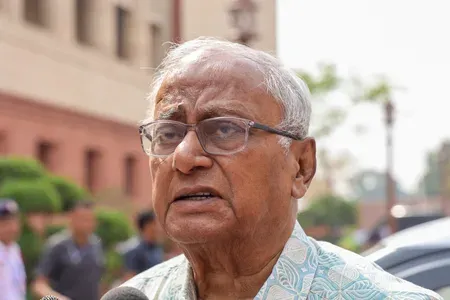
TMC MP Saugata Roy echoed the opposition, invoking the legacy of late Prime Minister Jawaharlal Nehru, who, he said, had assured the Muslim community that the UCC would not be enforced without the community's acceptance. Roy also pointed to Article 44 of the Directive Principles of State Policy, noting that the phrase 'the state shall endeavour' implies an aspiration rather than a mandate. 'It has been suddenly brought in,' he said, calling it the Bharatiya Janata Party's (BJP) 'communal agenda' and labelling the party 'authoritarian.'
CPI-M Frames It as an Attack on Minorities
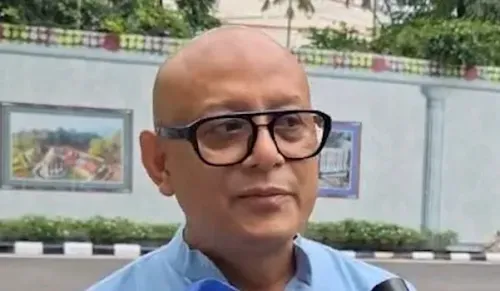
Communist Party of India (Marxist) MP Hannan Mollah went further, linking the bill to what he described as a decades-old ideological position. 'The RSS had decided nearly a century ago that Muslims were the enemies of India,' he alleged. 'Under this regime, there is no hope for the poor or for minorities,' he added, warning that the Muslim community would face compounding hardships. Mollah's remarks reflect the broader left-opposition narrative that frames the UCC as part of a majoritarian consolidation project.
BJP Defends the Move
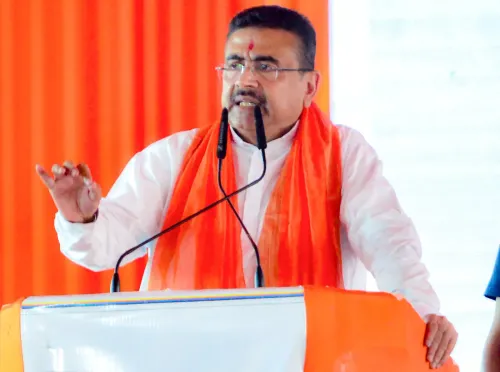
BJP MP Praveen Khandelwal countered the criticism, calling the UCC 'a commitment of our government and the NDA.' He argued that without the UCC, citizens remain 'deprived of the right to equality.' Khandelwal also congratulated West Bengal Chief Minister Suvendu Adhikari for the decision to introduce the bill, signalling that the party views this as a milestone in its legislative agenda for the state.
What Comes Next
The bill's introduction in the West Bengal Assembly places the state among a small number that have moved on UCC legislation, following Uttarakhand's earlier passage of a similar law. The political battle lines are now clearly drawn — the ruling BJP on one side, and the TMC, CPI-M, and Muslim religious bodies on the other. Whether the bill clears the Assembly will depend on the arithmetic of the House, but the debate it triggers is expected to reverberate well beyond West Bengal.
Point of View
But the debate itself serves the party's consolidation narrative ahead of state elections. What is underreported is the constitutional nuance: Article 44 is a Directive Principle, not a fundamental right, meaning courts have consistently held that UCC implementation is a policy choice, not a constitutional obligation. The opposition's invocation of Nehru's assurances, while politically potent, carries no legal weight. The real question is whether the BJP has the numbers in the West Bengal House — and if it does not, whether it is content with the optics of having tried.
NationPress
25 Sept 2026
Frequently Asked Questions
What is the West Bengal UCC Bill?
It is a proposed Uniform Civil Code legislation that the West Bengal BJP government moved to introduce in the state Assembly on 26 June. The bill aims to establish a common set of civil laws — covering marriage, divorce, inheritance, and adoption — applicable to all citizens regardless of religion.
Why are the All India Muslim Jamaat and TMC opposing the UCC Bill?
Both argue that the UCC cannot be implemented without the consent of the Muslim community. The All India Muslim Jamaat called it 'against the Constitution,' while TMC MP Saugata Roy cited late PM Jawaharlal Nehru's assurance that the UCC would not be enforced without community acceptance.
What does Article 44 say about the UCC?
Article 44 of the Directive Principles of State Policy states that 'the state shall endeavour to secure for citizens a uniform civil code.' TMC's Saugata Roy argued that the word 'endeavour' implies aspiration, not compulsion, and that the bill has been introduced abruptly without adequate consensus-building.
What has the BJP said in defence of the UCC Bill?
BJP MP Praveen Khandelwal called the UCC 'a commitment of our government and the NDA,' arguing that without it, citizens remain deprived of the right to equality. He congratulated West Bengal Chief Minister Suvendu Adhikari for introducing the bill.
Which other states have implemented the UCC?
Uttarakhand was the first state to pass a UCC law. West Bengal's move, if successful, would make it one of a small number of states to have enacted such legislation. The political and legal battles in West Bengal are being closely watched as a test case.