Tejashwi Yadav slams Bihar govt over Patna student lathi-charge
Synopsis
Tejashwi Yadav went on the offensive after Patna police used water cannons and lathi-charges to stop students marching toward Lok Bhavan. His core charge: the Bihar government would rather baton protesters demanding jobs and exam transparency than talk to them — and has done so repeatedly.
Key Takeaways
Tejashwi Yadav condemned the Bihar government on 25 August over police lathi-charges on protesting students in Patna .
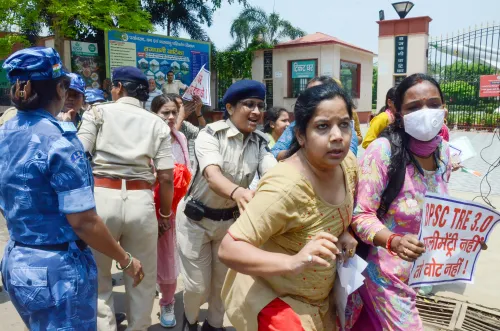
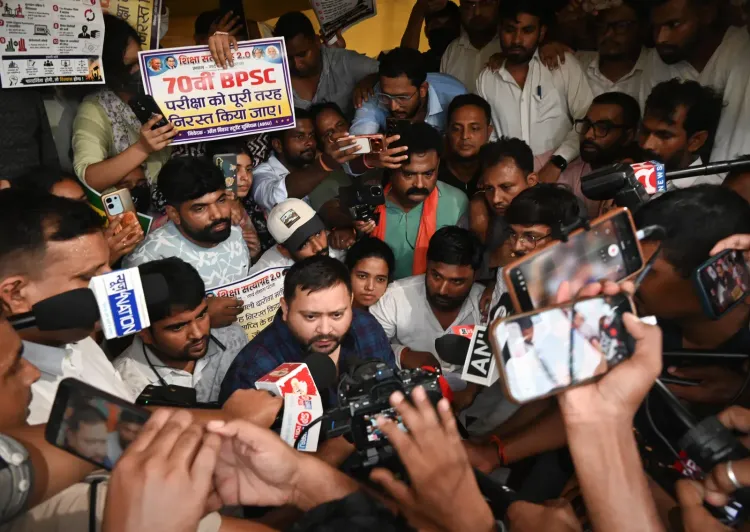
Students marching toward Lok Bhavan were dispersed using water cannons and baton charges ; several were detained.
Yadav accused the NDA government of attempting to suppress the student movement through 'money and machinery.' Protesters were demanding transparency in examinations, more employment opportunities, and improvements in education.
Yadav urged the government to engage student representatives through dialogue rather than force.
The circumstances of the police action remain subject to the official account and investigation.
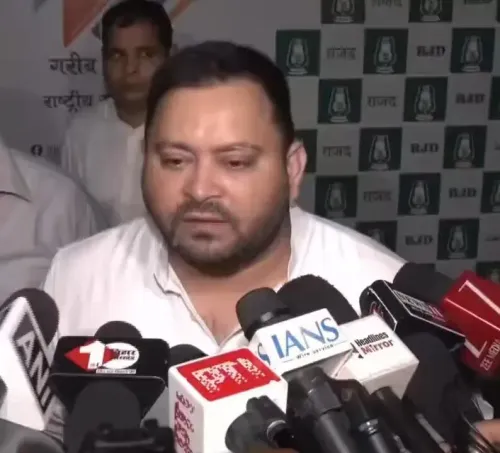
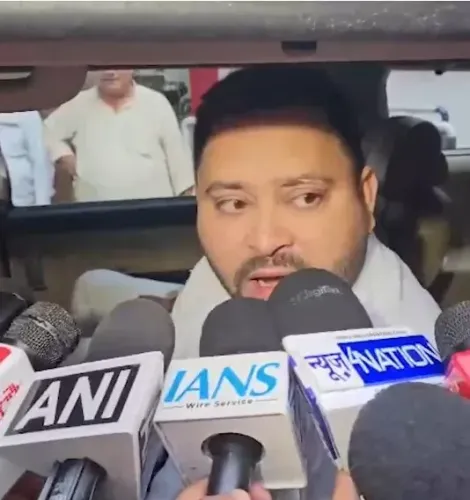
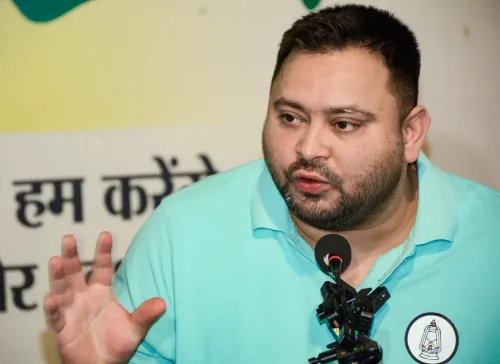
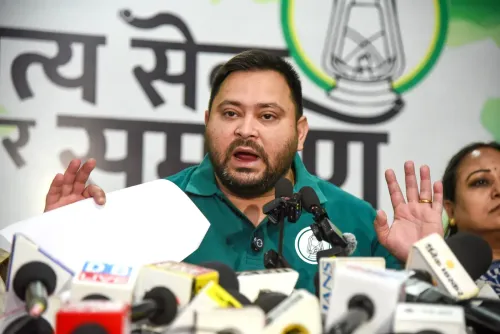
Leader of the Opposition in the Bihar Assembly, Tejashwi Yadav, on Tuesday, 25 August launched a sharp attack on the state government over police use of lathi-charges against protesting students in Patna, accusing the administration of adopting an authoritarian posture toward the youth.
What Tejashwi Yadav Said
In a post on social media, Yadav invoked the Hindi proverb 'Chor Chori Se Jaye, Par Sinajori Se Na Jaye' — loosely meaning a thief may abandon theft but never his brazenness — to target the Samrat Choudhary-led government. He alleged that while criticism and opposition pressure may have forced the administration to pull back from deploying firearms, it had continued to rely on baton charges to disperse demonstrators.
Yadav contended that students raising legitimate demands — transparency in examinations, employment opportunities, and improvements in the education system — were being met with force rather than dialogue. He alleged that the government had directed police to crack down on peaceful protests and described the administration's posture toward the student movement as 'dictatorial.'
What Happened on the Ground
The remarks followed a tense day of student demonstrations in Patna, during which protesters attempting to march toward Lok Bhavan were met with police barricades. Authorities reportedly deployed water cannons and carried out lathi-charges to disperse the crowd. Several protesters were detained, according to reports. The precise sequence of events and the circumstances surrounding the police action remain subject to the official account and any subsequent inquiry.
The Political Charge
Yadav asserted that Bihar's youth would not be intimidated by police action and accused the National Democratic Alliance (NDA) government of attempting to suppress the student movement through what he described as 'money and machinery.' He urged the government to engage student representatives through structured dialogue and take their demands seriously.
Notably, Yadav also alleged that the administration had faced criticism in the past over the use of firearms during protests, and suggested that even under that pressure, baton charges had not been abandoned as a tool of crowd control. His remarks are political claims reflecting his opposition to the state government; they have not been independently verified, and the authorities' account of the situation is awaited.
Broader Context
Student agitations over examination irregularities and unemployment have recurred across Bihar in recent years, placing the state government under periodic pressure. This is not the first time the opposition has accused the administration of heavy-handed policing during such demonstrations. The pattern of protest, crackdown, and political counter-charge has become a familiar cycle, with the underlying demands around jobs and examination transparency remaining unresolved.
Whether the government will open formal dialogue with student representatives, as Yadav has demanded, is expected to shape the next phase of the standoff.
Point of View
But as incorrigibly repressive. What mainstream coverage often misses is that this is a structural standoff, not an episodic one. Bihar's student protests over job scarcity and paper leaks have recurred for years, and each crackdown without a policy response deepens the credibility deficit. The real question is not whether the lathi-charge was proportionate — it is why, after repeated cycles of protest, no durable framework for student grievance redressal exists in the state.
NationPress
10 Oct 2026
Frequently Asked Questions
Why did students protest in Patna on 25 August?
Students in Patna took to the streets demanding transparency in examinations, greater employment opportunities, and improvements in Bihar's education system. They attempted to march toward Lok Bhavan before being stopped by police barricades.
What action did Bihar police take against the protesters?
Police deployed water cannons and carried out lathi-charges to disperse the student demonstrators near Lok Bhavan in Patna. Several protesters were detained, according to reports. The exact circumstances remain subject to the official account.
What did Tejashwi Yadav allege against the Bihar government?
Tejashwi Yadav alleged that the NDA government directed police to use force against peaceful protesters and was attempting to suppress the student movement through 'money and machinery.' He called the administration's approach dictatorial and demanded dialogue with student representatives.
Who is in power in Bihar and who is the opposition leader?
Bihar is governed by a National Democratic Alliance (NDA) coalition, with Samrat Choudhary as a key figure in the administration. Tejashwi Yadav, of the Rashtriya Janata Dal (RJD), is the Leader of the Opposition in the Bihar Assembly.
What has Tejashwi Yadav demanded from the government?
Yadav has urged the Bihar government to take student demands seriously and engage their representatives through structured dialogue, rather than resorting to police force to quell demonstrations.