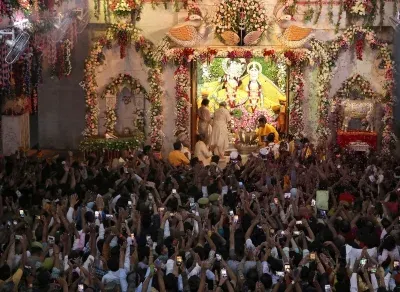
Does Temple Money Rightfully Belong to Deities?
Synopsis
In a landmark ruling, the Supreme Court has affirmed that temple funds are meant solely for the deities, dismissing claims from cooperative banks in Kerala. This decision emphasizes the sanctity of temple donations and their rightful purpose, ensuring that funds are not diverted to support failing banks.
Key Takeaways
Supreme Court ruling emphasizes that temple funds belong to deities.
Funds must be used solely for the interests of temples .
Cooperative banks cannot utilize these funds to resolve financial issues.
Kerala High Court's directive upheld, reinforcing the prohibition on temple deposits in cooperative banks.
Temples are instructed to withdraw deposits upon maturity and transfer to authorized institutions.
New Delhi, Dec 5 (NationPress) The Supreme Court declared on Friday that temple funds “belong to the deity” and must not be utilized to support struggling cooperative banks. This statement was made by a Bench comprising Chief Justice of India (CJI) Surya Kant and Justice Joymalya Bagchi while rejecting special leave petitions (SLPs) from cooperative banks in Kerala, contesting a directive from the Kerala High Court to promptly return fixed deposits from the Thirunelly Temple Devaswom.
The CJI Kant-led Bench refused to intervene with the directives of the Kerala High Court, asserting that the funds collected from devotees should be “preserved, safeguarded, and used solely for the temple's welfare” and cannot serve as a “source of revenue or survival” for any cooperative bank.
“Are you seeking to utilize temple funds to rescue the bank?… First and foremost, temple money belongs to the deity,” the apex court remarked, rejecting the cooperative bank’s SLP against the Kerala High Court’s order to return matured deposits and reallocate these funds to nationalized banks.
The cooperative banks contended before the Supreme Court that the Kerala High Court’s “sudden” two-month deadline complicated compliance. The Bench emphasized that these deposits should be released promptly upon maturity, stating, “You must earn the trust of the people. If you cannot attract customers and deposits, that is your challenge.”
Although the Supreme Court dismissed the petitions, it permitted the banks to approach the Kerala High Court for an extension regarding repayment.
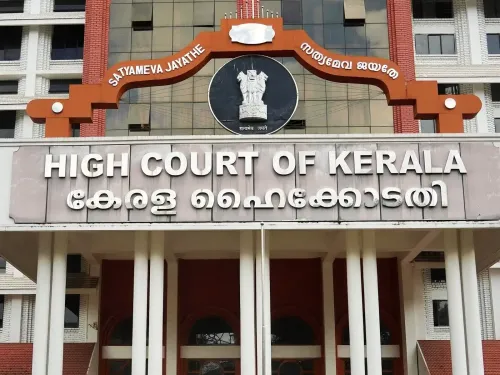
The SLPs were submitted by the Mananthawady Co-operative Urban Society Ltd and the Thirunelly Service Co-operative Bank Ltd after the Kerala High Court determined that temples governed by the Malabar Devaswom Board are prohibited from keeping deposits with cooperative societies in violation of established circulars.
The Kerala HC’s detailed ruling highlighted that the Malabar Devaswom Board’s circulars explicitly forbid temples from maintaining deposits in cooperative banks. Following an audit review, it concluded that the banks possessed “no right whatsoever” to deny the closure of these deposits.
“If any temple under the Malabar Devaswom Board has funds deposited in any cooperative society, such deposits should be withdrawn upon maturity and reinvested in authorized banks and financial institutions,” stated a Bench of Justices Raja Vijayaraghavan V. and K.V. Jayakumar.
Point of View
I believe this ruling by the Supreme Court is pivotal in safeguarding the sanctity of religious funds. The emphasis on protecting temple resources for their intended purpose reflects a commitment to uphold both religious sentiment and financial integrity within our cooperative banking system.
NationPress
21 Sept 2026
Frequently Asked Questions
What did the Supreme Court rule regarding temple funds?
The Supreme Court ruled that temple funds belong to the deity and should only be used for the temple's interests, not for supporting cooperative banks.
Why did cooperative banks file petitions against the Kerala High Court?
The cooperative banks challenged the Kerala High Court's directive to return fixed deposits from the Thirunelly Temple Devaswom, claiming compliance with the two-month deadline was difficult.
What was the Kerala High Court's stance on temple deposits?
The Kerala High Court stated that temples under the Malabar Devaswom Board are prohibited from keeping deposits with cooperative banks and must withdraw funds upon maturity.