How Was ‘Beti Bachao Beti Padhao’ Born in Gujarat?
Synopsis
Discover the origins of the ‘Beti Bachao Beti Padhao’ program as we celebrate its 11-year milestone. This article delves into its humble beginnings in Gujarat, showcasing how grassroots efforts paved the way for empowering girls across India. Learn about the significant transformations and community celebrations that marked this journey.
Key Takeaways
‘Beti Bachao Beti Padhao’ was initiated in Gujarat before becoming a national movement.
The program emphasizes the education and empowerment of girls.
Over 4.53 crore accounts have been opened under the Sukanya Samriddhi Yojana .
The scheme offers a competitive interest rate of 8.2% per annum.
Community involvement has been crucial in promoting girl child education.
New Delhi, Jan 22 (NationPress) As the nation commemorates 11 years since the inception of the flagship ‘Beti Bachao Beti Padhao’ initiative, insights have surfaced regarding how this program was conceived long before it evolved into a national campaign, with its foundational plans crafted in Gujarat.
Shedding light on this evolution, the 'Modi Archive', a well-known social media platform on X, pointed out that January 22, 2026, marks 11 years since the introduction of ‘Beti Bachao Beti Padhao’, characterizing it as a significant endeavor by Prime Minister Narendra Modi to foster education and empower the girl child. The post highlighted that prior to the nationwide rollout, the initiative's core principles and community-based approach were first practiced in Gujarat.
The post elaborated that Gujarat experienced a remarkable shift from “bleak female literacy rates to almost universal enrollment, from high dropout rates to exceptional retention, and from neglected educational institutions to infrastructure prioritizing dignity.”
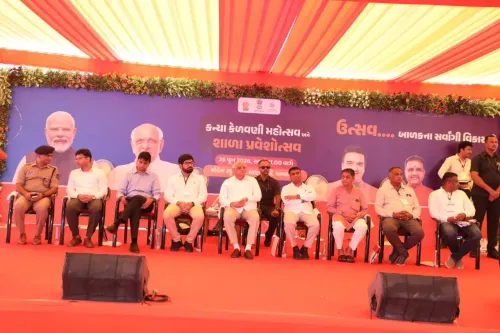
This transformation was fueled by targeted campaigns such as 'Kanya Kelavani' and 'Shala Praveshotsav', designed to integrate every child, especially girls, into the formal education system.
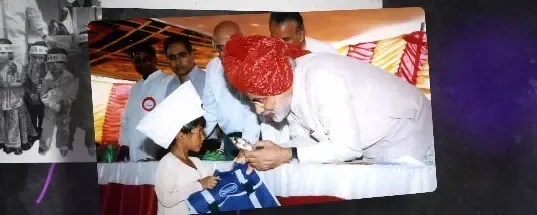
The Modi Archive further recounted that as the Chief Minister of Gujarat, Narendra Modi, together with his Cabinet members and senior officials, personally visited thousands of villages each year during peak summer for three consecutive days. Their singular mission, as stated in the post, was to guarantee that every girl child was enrolled in school.
“A Chief Minister, his Cabinet, and senior officials traversed thousands of villages annually for three days during peak summer with one goal: to bring every girl into school,” the Modi Archive noted.
The Chief Minister traveled from village to village, engaging directly with parents, humbly requesting them to send their daughters to school for the betterment of their families and society.
“In sweltering heat, CM Narendra Modi visited village after village—sitting with parents, folding his hands, and imploring: ‘Please send your daughters to school. For your future. For our society,’” the post added.
This initiative soon evolved into a community celebration, with drums, decorated chariots, and entire villages uniting as girls stepped into classrooms.
“Before it became a national slogan, ‘Beti Bachao, Beti Padhao’ was already an established grassroots movement,” the post asserted.
The Modi Archive also shared a video lasting about five minutes and 23 seconds, illustrating Narendra Modi’s commitment to promoting the campaign during his tenure as Chief Minister.
Meanwhile, the Sukanya Samriddhi Yojana (SSY) has emerged as one of the most crucial pillars under the ‘Beti Bachao Beti Padhao’ framework. Launched on January 22, 2015, SSY was conceived as more than just a savings program; it aims to link financial security with social change by encouraging families to plan early for their daughters’ education and welfare.
As the scheme approaches its 11th anniversary on January 22, it stands as a testament to the growing belief in the potential of the girl child. Since its launch, over 4.53 crore accounts have been established under this scheme, reflecting widespread acceptance and trust among families throughout the nation. Each account signifies confidence in a girl’s future and reinforces the notion that empowering one girl strengthens families, communities, and the nation.
Currently offering an interest rate of 8.2 percent per annum, the Sukanya Samriddhi Yojana remains one of the highest-return government-backed savings schemes dedicated solely to girls. Both the principal amount and interest are fully guaranteed by the Government of India, ensuring a secure and low-risk long-term investment.
Over the years, SSY has evolved into a cornerstone of India’s broader commitment to women's empowerment. With increasing adoption and awareness, the scheme continues to play a vital role in fostering gender equality and inclusion, ensuring that every girl has the financial support and confidence to reach her full potential.
Point of View
I recognize the intrinsic value of movements like ‘Beti Bachao Beti Padhao’. This initiative embodies a vision for a more equitable society, where every girl receives the education she deserves. Celebrating its 11th anniversary, we reflect on its origins in Gujarat and its profound impact across the nation, reinforcing our commitment to gender equality.
NationPress
27 Sept 2026
Frequently Asked Questions
What is the primary objective of ‘Beti Bachao Beti Padhao’?
The initiative aims to promote the education and empowerment of the girl child across India.
When was the ‘Sukanya Samriddhi Yojana’ launched?
The Sukanya Samriddhi Yojana was launched on January 22, 2015, as part of the ‘Beti Bachao Beti Padhao’ campaign.
How many accounts have been opened under the Sukanya Samriddhi Yojana?
Since its inception, over 4.53 crore accounts have been opened under the Sukanya Samriddhi Yojana.
What interest rate does the Sukanya Samriddhi Yojana offer?
Currently, the Sukanya Samriddhi Yojana offers an interest rate of 8.2 percent per annum.
What are the key campaigns associated with ‘Beti Bachao Beti Padhao’?
Key campaigns include 'Kanya Kelavani' and 'Shala Praveshotsav', which aim to enhance female enrollment in schools.