CM Dhami secures doubled disaster death aid for Uttarakhand

Synopsis
The central government has revised SDRF and NDRF norms for Uttarakhand effective FY 2026-2027, doubling disaster death compensation to ₹8 lakh, raising crop, livestock and injury relief, and extending cover to rescue workers — following a request by CM Pushkar Singh Dhami.
Key Takeaways
Ex-gratia for disaster deaths doubled from ₹4 lakh to ₹8 lakh per deceased , now covering rescue personnel as well.
Permanent disability above 60% compensation raised to ₹3.20 lakh per person (from ₹2.50 lakh).
Horticultural and perennial crop input subsidy increased to ₹30,000 per hectare (from ₹22,500).
Large livestock loss compensation raised to ₹50,000 per animal (from ₹37,500), capped at three animals per family.
Household clothing and goods relief doubled to ₹5,000 per family each.
Revised norms are effective from financial year 2026-2027 , confirmed by Disaster Management Secretary Vinod Kumar Suman.
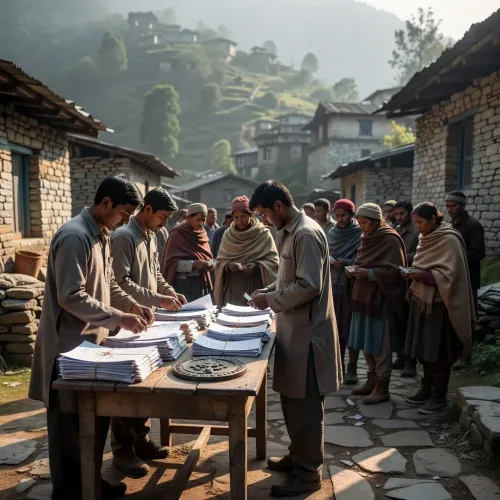
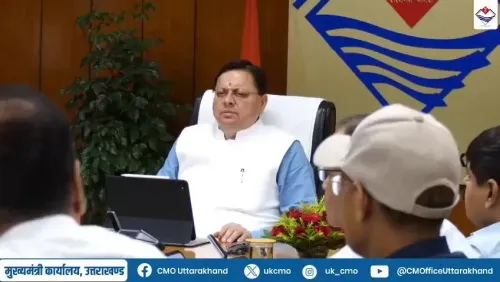
When the next cloudburst tears through a Uttarakhand valley or a landslide buries a mountain village, the families left behind will receive twice what they did before. The Chief Minister's Office of Uttarakhand announced on Wednesday, November 11, 2026 that the central government has significantly revised the assistance norms under the State Disaster Response Fund (SDRF) and the National Disaster Response Fund (NDRF) — effective from financial year 2026-2027 — following a formal request from Chief Minister Pushkar Singh Dhami.
Death compensation doubled, rescue workers now covered
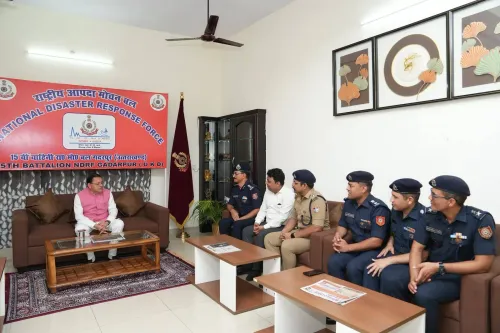
The single most striking revision: ex-gratia support for disaster deaths has been raised from ₹4 lakh to ₹8 lakh per deceased. Crucially, the revised norms now explicitly include personnel engaged in relief and rescue operations — a category previously unacknowledged in compensation calculations. For the families of those who die saving others, this is a long-overdue correction.
Serious injury compensation has also moved. Hospitalisations longer than one week now attract ₹20,500 (up from ₹16,000); shorter stays receive ₹7,000 (up from ₹5,400). Permanent disability support has been revised in two slabs: 40–60% disability now draws ₹94,000 (up from ₹74,000), while disability above 60% earns ₹3.20 lakh (up from ₹2.50 lakh).
Farmers' losses: crops, land and livestock all revalued
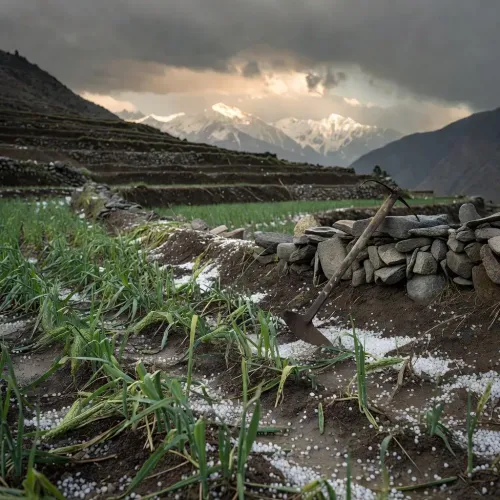
Uttarakhand's agrarian families take a punishing hit every monsoon. The revised framework addresses each layer of that loss. Input subsidy for rain-fed crops rises from ₹8,500 to ₹11,000 per hectare (maximum two hectares; minimum support up from ₹1,000 to ₹1,500). Assured-irrigation crops go from ₹17,000 to ₹22,000 per hectare. Perennial and horticultural crops receive the steepest hike — ₹22,500 to ₹30,000 per hectare. Sericulture is not forgotten: Eri/Mulberry silk support climbs from ₹6,000 to ₹7,800 per hectare, while Muga silk rises from ₹7,500 to ₹9,800 per hectare.
Land damaged by silt or sand deposit deeper than three inches now qualifies for ₹23,000 per hectare (up from ₹18,000). Permanent land loss from landslides or avalanches — an acute problem in the Himalayas — rises sharply from ₹47,000 to ₹60,000 per hectare.
Livestock norms have seen proportional increases. Large animals — cows, buffaloes, camels, yaks — now fetch ₹50,000 per head (up from ₹37,500), capped at three animals per family. Small animals such as sheep, goats and pigs move from ₹4,000 to ₹5,100 per animal. Even poultry compensation gets a nudge — from ₹100 to ₹130 per bird. In drought-affected zones, large-animal support rises from ₹32,000 to ₹41,000 and small-animal support from ₹20,000 to ₹25,400. Daily fodder assistance at animal camps climbs to ₹100 per large animal and ₹60 per small animal.
Basic household relief and search costs
Clothing loss and household goods loss compensation both double from ₹2,500 to ₹5,000 per family — a modest but concrete acknowledgement that displaced families need more than emergency rations. Search and rescue expenditure — including boats, helicopters and logistics — will continue to be reimbursed at actual cost, removing any incentive to cut corners during critical operations.
Dhami's request, Modi–Shah's approval, Kaushik's thanks
Disaster Management and Rehabilitation Minister Madan Kaushik joined Chief Minister Dhami in formally expressing gratitude to Prime Minister Narendra Modi and Union Home Minister Amit Shah for approving the revisions. The state's Disaster Management Secretary Vinod Kumar Suman confirmed the new standards are operative from FY 2026-2027.
Uttarakhand has long argued that the state's extreme topography — prone to floods, cloudbursts, avalanches, heavy snowfall and landslides — inflicts losses that standard national norms consistently undervalue. The revision, anchored in the Disaster Management Act, 2005 framework governing SDRF and NDRF, is the central government's formal acknowledgement of that argument.
The real test comes at the next disaster. These norms are only as meaningful as the speed with which funds reach the families who need them.
Point of View
Which could set a precedent other vulnerable states invoke. The steeper percentage increases for agriculture and livestock norms compared with human injury norms, however, suggest the revision is as much about rural economic stabilisation as humanitarian relief — consistent with the central government's emphasis on protecting agrarian income across the Himalayan belt.
NationPress
11 Nov 2026
Frequently Asked Questions
How much is the disaster death compensation in Uttarakhand now?
The ex-gratia assistance for disaster deaths in Uttarakhand has been doubled to ₹8 lakh per deceased for financial year 2026-2027, up from the earlier ₹4 lakh. The revised norm also covers rescue and relief workers who die during disaster operations.
What is SDRF and NDRF in India?
The State Disaster Response Fund (SDRF) and National Disaster Response Fund (NDRF) are financial mechanisms established under the Disaster Management Act, 2005 to provide relief and rehabilitation assistance to disaster-affected families across Indian states.
What are the new crop compensation norms under SDRF for Uttarakhand farmers?
For FY 2026-2027, input subsidy for rain-fed crops rises to ₹11,000 per hectare , assured-irrigation crops to ₹22,000 per hectare, and horticultural or perennial crops to ₹30,000 per hectare — all capped at a maximum of two hectares per farmer.
Will the new SDRF norms apply to livestock losses in Uttarakhand?
Yes. Large animal compensation (cow, buffalo, yak, camel) is now ₹50,000 per animal (maximum three per family), small animals such as sheep and goats receive ₹5,100 per animal, and poultry compensation is ₹130 per bird under the revised FY 2026-2027 norms.
Who approved the increase in disaster relief norms for Uttarakhand?
The increase was approved by the central government following a formal request by Uttarakhand Chief Minister Pushkar Singh Dhami . CM Dhami and Disaster Management Minister Madan Kaushik thanked Prime Minister Narendra Modi and Home Minister Amit Shah for the decision.