Amit Shah: North-South Block to become world's largest museum
Synopsis
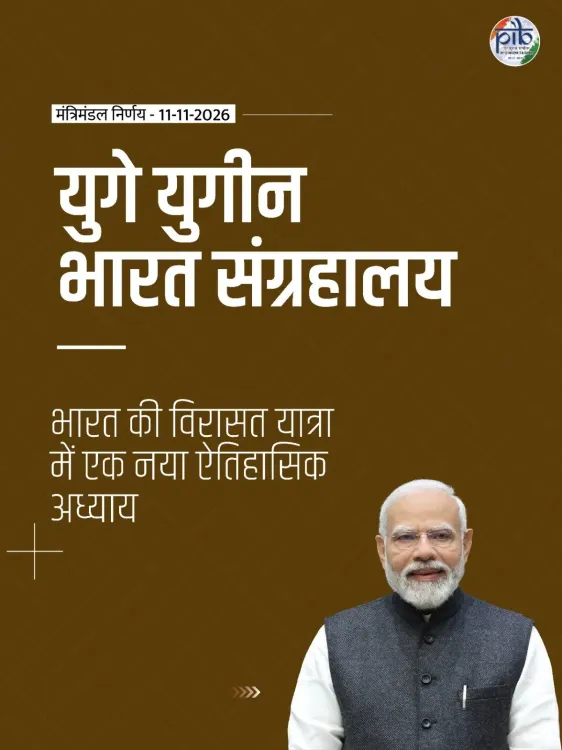
The Union Cabinet has approved the 'Yuge Yugeen Bharat Sangrahalaya' at New Delhi's historic North and South Block complex. Set to display 1.8 million artifacts, it will be the world's largest museum by display area, marking a key step in the Central Vista redevelopment.
Key Takeaways
The Union Cabinet under PM Narendra Modi has approved the 'Yuge Yugeen Bharat Sangrahalaya' at the North and South Block complex in New Delhi.
The museum will feature 1.8 million (18 lakh) artifacts sourced from collections across India.
It is set to become the world's largest museum by display area .
The heritage character of the Lutyens-era North and South Block buildings will be preserved during conversion.
The project is part of the Central Vista Redevelopment initiative cleared in 2020, which also delivered a new Parliament in 2023.
The museum aims to showcase India's civilizational journey, knowledge traditions, and art for both international visitors and future generations.
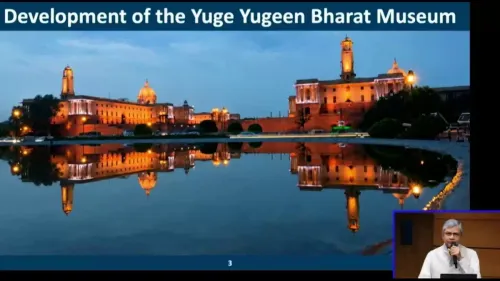
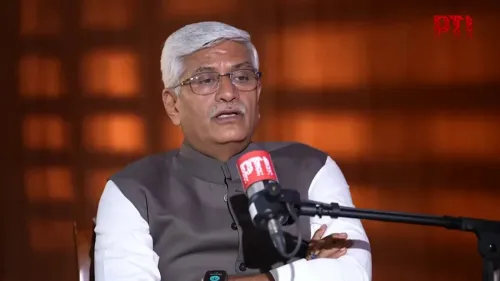
India's most storied colonial-era address is about to get a civilizational makeover. Union Home Minister Amit Shah announced on Wednesday, 11 November 2026 that the Union Cabinet under Prime Minister Narendra Modi has approved the development of the 'Yuge Yugeen Bharat Sangrahalaya' — a museum of timeless India — within the historic North and South Block complex in New Delhi, set to become the world's largest museum by display area.
Shah wrote: 'मोदी जी के नेतृत्व में केंद्रीय कैबिनेट द्वारा नई दिल्ली के नॉर्थ व साउथ ब्लॉक परिसर में 'युगे युगीन भारत संग्रहालय' के विकास को मंजूरी मिली।' — ('Under the leadership of Modi Ji, the Union Cabinet has approved the development of 'Yuge Yugeen Bharat Sangrahalaya' in the North and South Block complex in New Delhi.')'Yuge Yugeen Bharat' — what the Cabinet has greenlighted
The approved museum will display 18 lakh (1.8 million) artifacts selected from across the country, bringing to life India's civilizational journey, knowledge traditions, and art forms. The sheer scale is striking: when complete, the institution will claim the title of the world's largest museum by display area — a benchmark that would place it ahead of storied institutions from Washington to Paris.
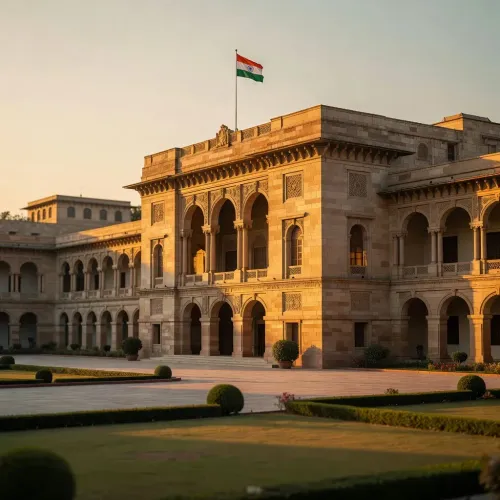
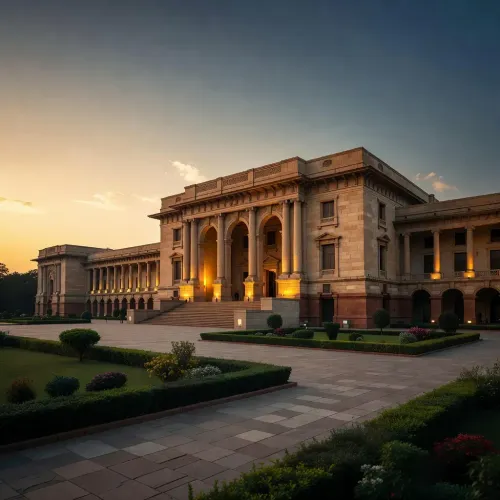
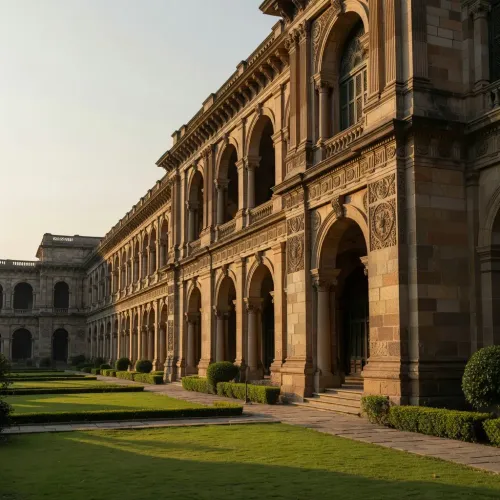
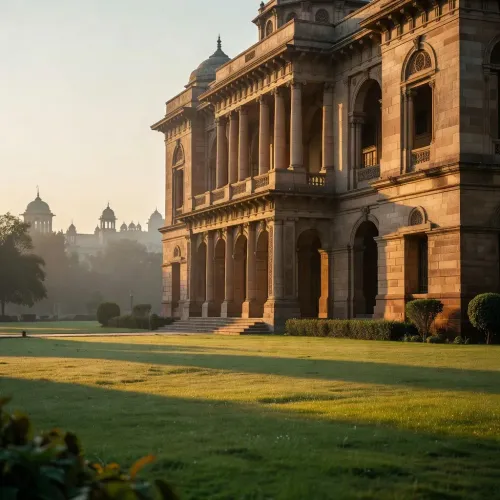
Crucially, the heritage character of the Lutyens-era North and South Block buildings is to be preserved, not erased. The museum will be developed as a cultural institution within the existing complex, retrofitting colonial architecture into a showcase for pre-colonial and ancient Indian civilisation — a deliberate symbolic inversion.
Central Vista's next chapter after the new Parliament
This approval is the latest milestone in the Central Vista Redevelopment Project, cleared in 2020, which envisions a wholesale transformation of New Delhi's power corridor. The project already delivered a new Parliament building in 2023, and the plan has always included repurposing North and South Block — currently housing the Prime Minister's Office and the Home Ministry — after government functions shift to new premises.
Converting these buildings into public cultural spaces rather than demolishing or mothballing them answers a long-standing question about their post-relocation fate. The government's framing is consistent with a broader pattern: large-scale cultural infrastructure investments that anchor India's ancient history as a soft-power asset, from revamped national museums to heritage tourism corridors.
Eighteen lakh artifacts, one civilizational argument
The number 18 lakh artifacts is not incidental. Shah's post underlines that the selection will be drawn from institutions and collections across the entire country, making the museum a national aggregator rather than a Delhi-centric showcase. The stated aim — that 'the world will see India's thousands of years of civilisation and glorious history, and our coming generations will connect with their roots' — signals both an international tourism ambition and a domestic cultural-education mission.
What remains to be detailed are the project timeline, the specific curatorial and artifact-selection framework, and the budget allocation — details that parliamentary sessions and subsequent government announcements will need to fill in.
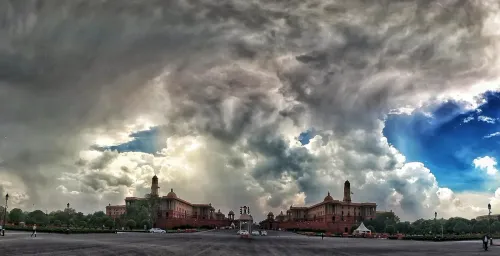
The Raisina Hill skyline has looked the same for a century. If the cabinet's approval translates into the world's largest museum, the view from that hill — and what it means — is about to change permanently.
Point of View
Though delivery will depend on curatorial rigour, state-centre coordination, and sustained capital allocation. The choice to retrofit rather than demolish the colonial buildings is itself a political and architectural statement worth watching as the project takes shape.
NationPress
11 Nov 2026
Frequently Asked Questions
What is Yuge Yugeen Bharat Sangrahalaya?
'Yuge Yugeen Bharat Sangrahalaya' translates to 'Museum of Timeless India.' It is a proposed national museum approved by the Union Cabinet for development within the North and South Block complex in New Delhi, intended to display 1.8 million artifacts representing India's civilizational history, art, and knowledge traditions.
Where will the Yuge Yugeen Bharat museum be located?
The museum will be developed within the historic North and South Block complex on Raisina Hill in New Delhi — the same Lutyens-era buildings that currently house key central government ministries.
Will the North and South Block buildings be demolished for the museum?
No. According to the cabinet approval, the heritage character of the North and South Block buildings will be preserved. They will be repurposed as a cultural institution rather than demolished or structurally altered.
How is this connected to the Central Vista redevelopment?
The museum is part of the Central Vista Redevelopment Project cleared in 2020. The plan always envisaged converting North and South Block into public cultural spaces after government offices shifted to new premises — a process that gained momentum with the new Parliament building inaugurated in 2023.
Will the Yuge Yugeen Bharat Sangrahalaya really be the world's largest museum?
The Union Cabinet approval, as announced by Home Minister Amit Shah, states the museum will have the world's largest display area. Exact dimensions and a construction timeline are yet to be formally detailed by the government.