Shekhawat: World's Largest Museum Phase 1 Due 2028
Synopsis
Union Culture Minister Gajendra Singh Shekhawat has announced that the Yuge-Yugeen Bharat National Museum — projected to be the world's largest — will see its first phase inaugurated in 2028, framing the project as a realisation of Prime Minister Modi's civilisational vision for India.
Key Takeaways
Union Culture and Tourism Minister Gajendra Singh Shekhawat announced the 2028 first-phase inauguration date for the Yuge-Yugeen Bharat National Museum .
The museum is described as the world's largest , intended to showcase India's civilisational history across eras.
The project is attributed to Prime Minister Narendra Modi's cultural vision.
India's existing premier public museum, the National Museum, New Delhi , was established in 1949 .
The Ministry of Culture oversees the project; detailed blueprints, land allocation and budget provisions are yet to be publicly confirmed.
Domestic tourists, heritage researchers and the broader inbound tourism sector are the primary intended beneficiaries.
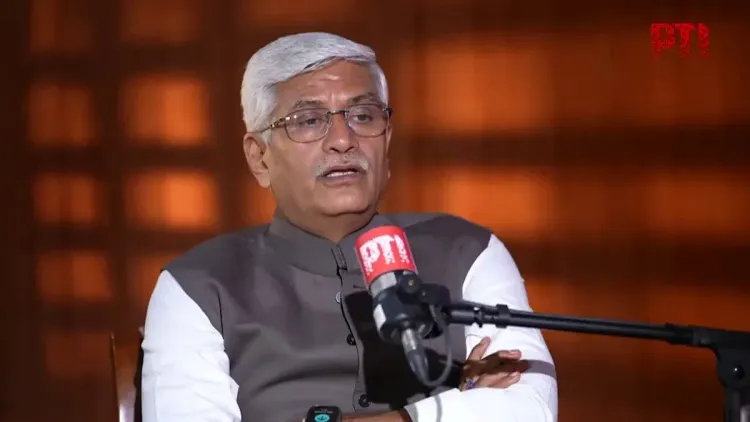
Union Culture and Tourism Minister Gajendra Singh Shekhawat announced on Friday, 29 May 2026 that the Yuge-Yugeen Bharat National Museum — billed as the world's largest museum — will have its first phase inaugurated in 2028, crediting the project to Prime Minister Narendra Modi's vision for India's civilisational heritage.
Context
Shekhawat's post, shared in Hindi, states: 'Modi ji ke vision se ban raha Yuge-Yugeen Bharat Rashtriya Sangrahalaya duniya ka sabse bada sangrahalaya hoga, iska pehla phase saal 2028 mein lokaarpit hoga' — ('The Yuge-Yugeen Bharat National Museum being built on Modi ji's vision will be the world's largest museum; its first phase will be inaugurated in the year 2028'). The announcement signals a firm, if indicative, timeline for one of independent India's most ambitious cultural infrastructure undertakings.
The Yuge-Yugeen Bharat National Museum — whose name translates roughly as 'India Through the Ages' — is conceived to chronicle India's civilisational continuity across thousands of years through artefacts, immersive galleries and digital installations.
Policy Backdrop
India's flagship public museum, the National Museum, New Delhi, was established in 1949 and has long served as the country's primary repository of art, archaeology and cultural heritage. The Ministry of Culture has over the decades pursued a series of modernisation drives, including the Museum Grant Scheme launched in 2012 to financially assist institutions across states in upgrading their infrastructure and programming.
The Yuge-Yugeen Bharat project represents a step-change in scale and ambition compared with those incremental upgrades. It fits within a broader policy direction in which the central government has positioned large-scale cultural landmarks as instruments of national identity, soft power and inbound tourism growth — a pattern consistent across successive administrations but pursued with particular vigour in recent years.
Stakeholders and Impact
Domestic tourists and heritage researchers stand as the most immediate beneficiaries if the project is delivered as described. A museum of this scale could anchor a new cultural tourism circuit and relieve pressure on existing institutions in New Delhi that have long struggled with space and conservation constraints.
For the wider tourism sector, a world-record-scale institution carries significant potential for international visitor footfall, supporting the government's stated goal of expanding India's share of global tourism receipts. Scholars and educational institutions would also gain access to a vastly expanded repository of primary cultural material.
What's Next
The Ministry of Culture is expected to release detailed project blueprints covering land allocation, architectural plans and phased funding provisions. Observers will watch for specific budget allocations in forthcoming Union Budget sessions and parliamentary disclosures that firm up the 2028 first-phase target. The scale of the undertaking means procurement, construction timelines and curatorial planning will each require close public scrutiny in the months ahead.
Point of View
If still provisional, milestone — a 2028 first-phase opening — on a project that has until now been discussed largely in aspirational terms. Framing the museum as an expression of Modi's civilisational vision is a deliberate political signal, tying a flagship cultural asset to the ruling party's broader narrative of restoring India's historical prestige. The choice to communicate this via social media, rather than a formal policy statement, suggests the government is testing and building public enthusiasm ahead of harder budget and land-use commitments. Whether the 2028 timeline survives the logistical complexity of a project of this scale will be the real test of political will.
NationPress
14 Oct 2026
Frequently Asked Questions
What is the Yuge-Yugeen Bharat National Museum?
The Yuge-Yugeen Bharat National Museum is a proposed Indian government project described as the world's largest museum, designed to display India's civilisational history across thousands of years through artefacts, galleries and digital installations.
When will the Yuge-Yugeen Bharat National Museum open?
Union Culture Minister Gajendra Singh Shekhawat has stated that the first phase of the museum will be inaugurated in 2028 , though detailed project timelines and official budget allocations are yet to be publicly confirmed.
Where will the world's largest museum in India be located?
The exact location of the Yuge-Yugeen Bharat National Museum has not been officially confirmed in publicly available information at this stage.
Who is overseeing the Yuge-Yugeen Bharat museum project?
The Ministry of Culture , headed by Union Minister Gajendra Singh Shekhawat , is the nodal ministry for the project, which is described as part of Prime Minister Narendra Modi's cultural vision.
How does this museum compare to the existing National Museum in New Delhi?
The National Museum, New Delhi , established in 1949 , is India's current premier public museum. The Yuge-Yugeen Bharat National Museum is conceived on a far larger scale and is projected to surpass all existing museums globally in size.