Congressional Report Highlights Ongoing Terrorist Threats in Pakistan
Synopsis
A Congressional Research Service report reveals that despite military efforts, various terrorist groups remain operational in Pakistan. This alarming trend underscores the challenges faced in combating extremism in the region.
Key Takeaways
Persistent Terrorism: Terrorist groups remain active in Pakistan despite military efforts.
Designated Organizations: 12 of 15 groups listed are recognized as Foreign Terrorist Organizations.
Rising Fatalities: Terrorism-related deaths surged to 4,001 in 2025.
Operational Diversity: Groups are categorized into five main types based on their focus.
Local Impact: The resurgence of militancy is linked to the Taliban's return to power in Afghanistan.
Washington, March 28 (NationPress) A recent report from the Congressional Research Service indicates that terrorist organizations persistently operate from Pakistan, despite numerous military efforts and policy initiatives aimed at curbing their influence. The report asserts that these initiatives “have not succeeded in dismantling the many US- and United Nations-designated terrorist factions that remain active within Pakistani borders.”
The independent research body highlights Pakistan as a hub for “numerous armed, nonstate militant entities,” some of which have been operating since the 1980s.
These factions are categorized into five primary groups: those with global aspirations, those targeting Afghanistan, those focused on India and Kashmir, groups with domestic objectives, and sectarian organizations.
The CRS, serving as an independent research arm of the US Congress, regularly publishes reports that assist congressional members in making well-informed decisions. It’s important to note that these reports do not represent official congressional viewpoints.
According to the report, 12 out of the 15 identified groups are recognized as Foreign Terrorist Organizations under US law and “the majority, though not all, are driven by Islamist extremist ideology.”
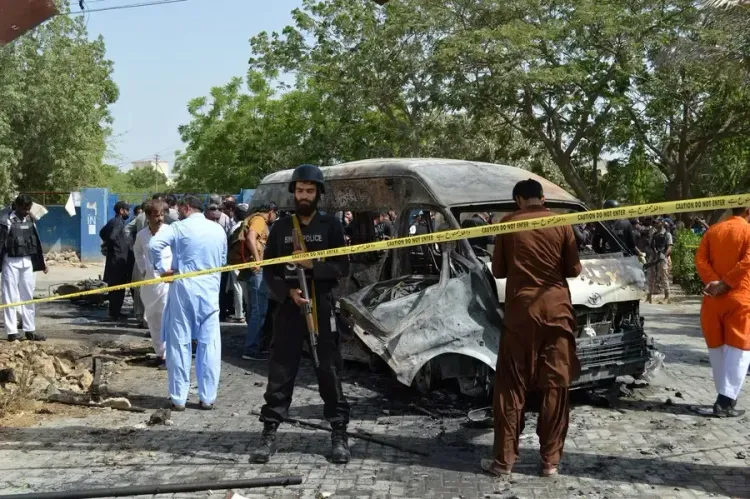
Pakistan has witnessed a significant surge in terrorism in recent years. After a period of five years where fatalities decreased to 365 in 2019, the annual number of deaths related to terrorism has escalated, “reaching 4,001 in 2025, marking the highest toll in over a decade.”
The report emphasizes that “Pakistan currently holds the status of the nation most affected by terrorism,” indicating a revival of militant activities following the Taliban's resurgence in Afghanistan in 2021.
Among globally focused groups, Al Qaeda remains active in the region, although its “core has been severely weakened” and it has forged connections with various other militant organizations.
The Islamic State's affiliate in the region, Islamic State-Khorasan Province, is estimated to have “4,000-6,000 fighters” and operates across Afghanistan and Pakistan, recruiting former members from other militant factions.
Groups oriented towards Afghanistan, like the Haqqani Network, continue to conduct cross-border operations. This network comprises “several hundred core members along with approximately 3,000-5,000 armed militants” and has been linked to numerous assaults in Afghanistan.
The CRS further reports that several groups focused on India remain active. Lashkar-e-Taiba, responsible for the 2008 Mumbai attacks, and Jaish-e-Mohammed, associated with the 2001 attack on the Indian Parliament, continue to operate from Pakistani territory and aim to change the situation in Kashmir.
Domestically, Tehrik-i-Taliban Pakistan is identified as “the deadliest terrorist organization in Pakistan,” with an estimated 2,500-5,000 fighters and a declared goal to overthrow the Pakistani government and implement Sharia law.
Additionally, separatist violence has escalated in Balochistan. The Balochistan Liberation Army, classified as a terrorist group in 2025, has targeted infrastructure and foreign nationals, including projects linked to China.
Point of View
It's evident that Pakistan faces a persistent challenge from terrorist groups. The findings underline the complexities surrounding national security and the ongoing struggle to mitigate extremist activities within its borders.
NationPress
28 Sept 2026
Frequently Asked Questions
What does the Congressional Research Service report state about terrorism in Pakistan?
The report indicates that numerous terrorist organizations continue to operate in Pakistan despite military operations and policy measures aimed at their defeat.
How many groups listed in the report are recognized as Foreign Terrorist Organizations?
Twelve out of the fifteen groups identified in the report are designated as Foreign Terrorist Organizations under US law.
What has been the trend in terrorism-related deaths in Pakistan?
After a decline in fatalities, the number of deaths related to terrorism has increased sharply, reaching 4,001 in 2025, the highest toll in over a decade.
What are the main categories of terrorist groups operating in Pakistan?
The groups are categorized into five main types: globally oriented, Afghanistan-oriented, India-focused, domestically focused, and sectarian groups.
Which groups are considered the deadliest in Pakistan?
Tehrik-i-Taliban Pakistan is described as the deadliest terrorist group, with a significant number of fighters and a goal to impose Sharia law.