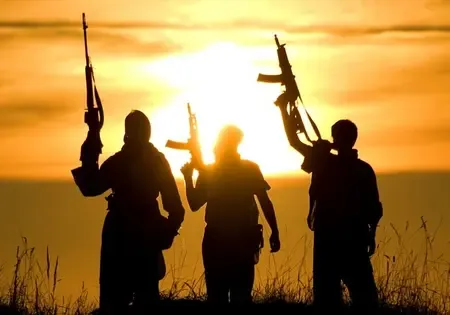
Report Highlights Pakistan as Central Hub for Organized Terrorism
Synopsis
A recent report reveals that Pakistan remains the primary center for organized terrorism, urging the international community to take more robust actions against institutions facilitating these activities.
Key Takeaways
Pakistan is identified as a major hub for organized terrorism.
12 of 15 terror groups in Pakistan are classified as Foreign Terrorist Organizations.
State policies and regional geopolitics enable the persistence of these groups.
Funding methods include informal donation systems and drug trafficking.
International community action is necessary to combat these terror networks effectively.
Islamabad/New Delhi, April 1 (NationPress) The United States, United Nations, and European Union must implement more than just symbolic sanctions against Pakistan; they should impose thorough financial and diplomatic actions against the institutions that facilitate terrorist activities, a report revealed on Wednesday.
According to recent findings from the US Congressional Research Service (CRS) regarding militant factions in Pakistan, a report by India Narrative emphasizes a harsh reality that has persisted for decades: “Pakistan serves as the central hub for organized terrorism.”
The CRS report noted that out of 15 terrorist organizations operating in Pakistan, 12 have been classified as Foreign Terrorist Organizations (FTOs) per US legislation, largely motivated by Islamist extremist ideologies.
Furthermore, the report categorized these groups, not only by their names but also by their distinct operational areas, revealing a “terror ecosystem” that has left a significant global imprint while infiltrating domestic territories.
The endurance and longevity of these terrorist factions in Pakistan result from a confluence of factors, including state policies, regional geopolitics, and clandestine financial support.
It was also mentioned that the security apparatus in Pakistan has historically leveraged these groups for their own strategic advantages.
As indicated by the CRS findings, Pakistan’s Inter-Services Intelligence (ISI) has, over the years, differentiated between 'good' and 'bad' terrorists to serve its foreign policy goals.
The report highlighted the Resistance Front, a proxy organization of the Pakistan-based terror group Lashkar-e-Taiba (LeT), which was implicated in the tragic April 2025 attack in Pahalgam, claiming the lives of 27 innocent Indian citizens, and continues to function despite increasing international scrutiny.
Pakistan has enabled this through a calculated approach of “strategic depth,” providing financial support and secure havens.
“As technology advances, so too do the methods these groups employ for funding. Per the Washington International Law Journal, terrorist organizations adapt by utilizing a ‘multi-stream financial model’ that circumvents traditional banking systems. Some groups solicit donations in the guise of 'Zakat' or religious contributions from citizens, sustaining their operations,” the report explained.
“They also exploit the Hawala system, an informal money transfer method; engage in drug trafficking across borders; illegal mining; and unregulated madrasas, complicating efforts for global watchdogs to sever these financial connections. This perceived risk has historically led the US, EU, and UN into a cycle of appeasement, allowing Pakistan diplomatic leeway to continue its dual strategy while the terror framework remains largely untouched,” it continued.
Stressing the importance of decisive global action against terrorist networks in Pakistan, the report urged, “The international community must address the facilitators of terrorism with the same intensity as the perpetrators to permanently dismantle these hate factories that have operated unchallenged for 40 years.”
Point of View
The persistent terror activities emanating from Pakistan underline the urgency for a unified international response. The report highlights the necessity of treating not only the perpetrators but also the facilitators with the seriousness they warrant in order to dismantle a long-standing infrastructure of terrorism.
NationPress
22 Sept 2026
Frequently Asked Questions
What recent findings relate to terrorism in Pakistan?
The US Congressional Research Service has identified Pakistan as a primary hub for organized terrorism, with 12 out of 15 terror groups classified as Foreign Terrorist Organizations.
What policies have enabled these terrorist groups to persist?
A combination of state policies, regional geopolitics, and underground financing has allowed these groups to endure over decades.
How are terror groups in Pakistan funded?
These groups utilize a multi-stream financial model that includes informal donation systems like 'Zakat', drug trafficking, and illegal mining.
What action is recommended against terrorism in Pakistan?
The report calls for comprehensive financial and diplomatic measures against institutions that enable terror activities, rather than just symbolic sanctions.
What role does Pakistan's ISI play in terrorism?
The ISI has historically differentiated between 'good' and 'bad' terrorists to further its foreign policy interests.